
24/7 Customer Support

Free returns

Same-day & Next-day Delivery

Quality Guaranteed

Unlock Your Welcome Offers: FREE Delivery | Up to 80% OFF | Free 30-day JoyPlus trial
Download the APP
Bringing the rich aroma and taste of a café-quality coffee into your home is an appealing thought. Yet, choosing the right appliance can feel overwhelming. With so many models available, it is difficult to know where to start. This guide is designed to help you navigate the options by providing clear, practical information on the De'Longhi coffee machine range, helping you find a model that fits your kitchen, budget and coffee preferences.
Before looking at specific models, consider these key factors. Understanding your own needs will make the selection process much simpler.
Your ideal machine depends on how involved you want to be in the coffee-making process.
bean to cup coffee machine handles everything. It grinds the beans, tamps the coffee and brews your drink at the touch of a button. Many models also feature automatic milk frothing for a perfect coffee machine for latte and cappuccino with minimal effort.If you enjoy drinks like lattes, cappuccinos or flat whites, the milk frothing capability is crucial.
espresso machine with milk frother of this type requires you to texture the milk yourself in a jug. It offers greater control over the foam's consistency, which is ideal for practising latte art.In many UK homes, counter space is at a premium. Always check the dimensions of a machine before purchasing. Many brands, including De'Longhi, offer a compact coffee machine that delivers excellent performance without occupying your entire worktop.
Here are four notable De'Longhi models, each catering to different needs and preferences.

Why It Stands Out: The Stilosa is an excellent entry point into the world of home espresso. It combines a straightforward, user-friendly interface with the essential features needed for authentic coffee. Its compact footprint makes it a practical choice for smaller kitchens.
Pros:
Who is it for? This is a great option for beginners or those with limited space who want to learn the basics of making espresso and steaming milk without a significant initial investment.
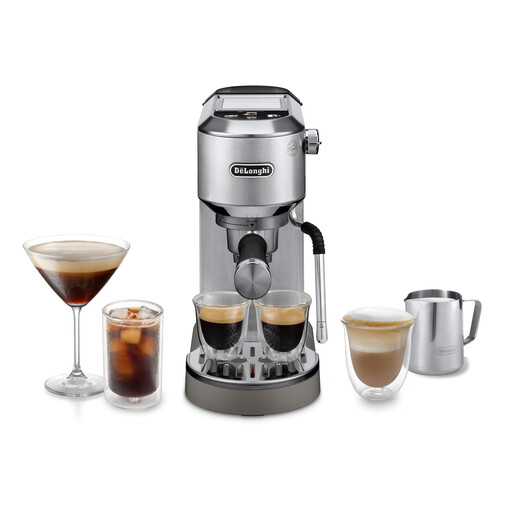
Why It Stands Out: The Dedica Duo is a remarkably slim and stylish manual espresso machine that packs in modern features. Its standout capability is the Cold Extraction Technology, which can prepare a genuine cold brew in under five minutes—a unique feature for a machine in this class.
Pros:
Who is it for? Ideal for coffee drinkers in modern homes who value both hot and cold coffee options. Its sleek design and compact size appeal to those with an eye for style and a need for space-saving appliances.

Why It Stands Out: The De'Longhi Magnifica Evo embodies the convenience of a fully automatic coffee machine. It grinds fresh beans for every cup and prepares a range of drinks with a single touch. The LatteCrema system automates milk frothing, delivering consistently creamy cappuccinos and lattes.
Pros:
Who is it for? Perfect for busy individuals or families who want café-style coffee without the learning curve. If you prioritise speed, consistency and ease of use, this is an excellent choice.
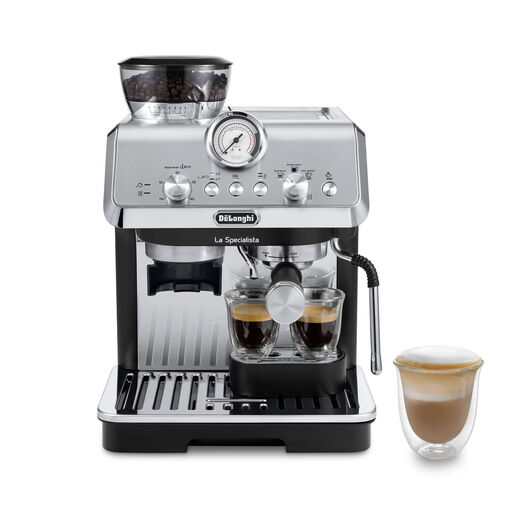
Why It Stands Out: The De'Longhi La Specialista Arte bridges the gap between manual control and bean-to-cup convenience. It features an integrated grinder and a complete barista kit, empowering you to control the grind, dose and tamp. It is designed for those who want to perfect their craft.
Pros:
Who is it for? The aspiring home barista. This machine is for someone who finds joy in the process of making coffee and wants the tools to experiment and achieve café-level results at home.
If a high-pressure espresso machine isn't quite what you're looking for, you might prefer the classic simplicity of a stovetop pot. For a rich, strong brew made the traditional Italian way, explore our range of espresso maker stove options.
Most De'Longhi machines have an automatic descaling alert. As a general rule for UK water hardness, it is advisable to descale your machine every 2-3 months to prevent limescale build-up, which can affect performance and taste. Always use the manufacturer-recommended descaling solution.
A bean to cup coffee machine is a fully automated system that grinds whole beans, doses the coffee, brews the espresso and often froths milk with one touch. A manual espresso machine requires you to perform these steps separately: you grind the beans in a separate grinder, fill and tamp the portafilter by hand and manually steam the milk. The former offers convenience, while the latter provides greater control.
It is generally recommended to avoid very dark, oily beans in an automatic coffee machine. The oils can build up in the grinder and brewing unit over time, potentially causing blockages and affecting the machine's performance. Medium roast beans are typically a safer choice for these machines.