
24/7 Customer Support

Free returns

Same-day & Next-day Delivery

Quality Guaranteed

Unlock Your Welcome Offers: FREE Delivery | Up to 80% OFF | Free 30-day JoyPlus trial
Download the APP
Choosing between personal-care deodorants, antiperspirant aerosols and household air freshener sprays can seem straightforward. However, attractive fragrance names and long protection claims do not always tell you whether a product suits your routine, skin, room or fabrics.
The same mistake appears repeatedly: buying a deodorant when sweat control is needed, using an air freshener to cover a source of odour or selecting a large aerosol without checking storage and ventilation requirements. This guide explains the practical specifications worth checking before you buy, followed by recommendations matched to different household and personal-care needs.
A deodorant spray is primarily intended to help control body odour, while an antiperspirant aerosol normally contains an aluminium-based ingredient intended to reduce perspiration. A strongly scented men's deodorant or women's deodorant may leave a noticeable fragrance but may not offer the level of sweat control you need.
Look for clear wording such as 48-hour sweat and odour protection or 72-hour sweat protection, while remembering that these are usage claims rather than a guarantee for every person or situation. Exercise, heat, clothing and application technique can all affect results.
Some air fresheners mainly add fragrance. Others are described as an odour eliminator, designed to interact with or neutralise unwanted smells. Neither option replaces cleaning, ventilation or removing the source of damp, smoke, food or pet odours.
For bathrooms and kitchens, check whether the product is intended for air only, soft furnishings or sealed hard surfaces. A household spray that is suitable for air may not be suitable for fabric, food-contact areas or delicate materials.
Aerosol cans often contain flammable propellants and must be kept away from heat, sparks and naked flames. Pressurised containers should not be pierced, burnt or exposed to temperatures above the limit stated on the label, commonly 50°C.
Fragrance can also cause irritation or an allergic reaction in some people. Avoid spraying towards the face, eyes or broken skin and use aerosols in a well-ventilated area. These are practical checks, not optional extras.
For personal care, identify whether you want:
Products in the range include stated protection periods of 48 or 72 hours. For example, some Sure, Dove, Mitchum and Right Guard aerosols list protection for up to 48 hours, while selected Sure and Dove products list up to 72 hours. These figures should be treated as the manufacturer’s stated duration and applied only as directed.
Fragrance is highly personal, but the scent family can help narrow the choice:
For fabrics, select a dedicated fabric freshener spray and follow the material restrictions. Febreze Fabric Freshener Spray, for example, is listed for many fabrics but advises testing an unseen area first and avoiding leather, suede and silk.
Compare millilitres with the frequency of use rather than choosing solely by can size. A 150ml personal-care aerosol may be convenient for a gym bag, while a 250ml can may suit regular household use. A 185ml or 240ml room spray can be easier to store in a cleaning cupboard.
Check whether the packaging is recyclable in your local system and whether the can must be completely empty before recycling. Some products use compressed aluminium cans; this can reduce packaging material, but the disposal instructions on the label remain the practical reference.
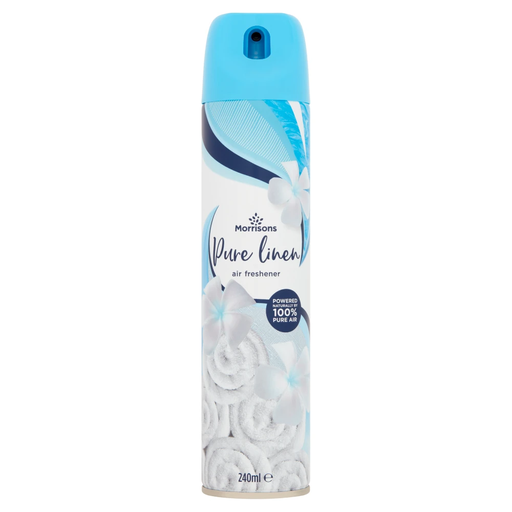
Why This Fits Their Persona: A straightforward 240ml room spray for shoppers who want an everyday fresh linen scent across bedrooms, lounges and other rooms.
It is clearly positioned as a household air freshener, so it is not confused with a personal deodorant or sweat-control product.
240ml size; pure linen fragrance; recyclable packaging when empty, according to the product information.
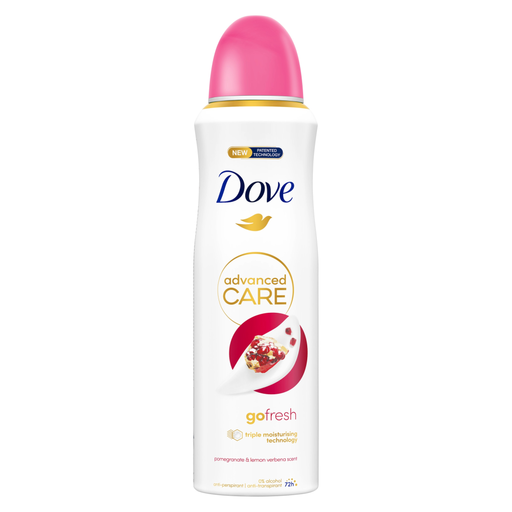
Why This Fits Their Persona: Suitable for shoppers prioritising a fruity fragrance, stated 72-hour protection and an invisible dry finish for varied clothing.
The product information separates sweat and odour protection from fragrance and specifies that it should dry before dressing.
200ml aerosol; pomegranate and lemon verbena scent; vegan and PETA-approved according to the supplied product details.
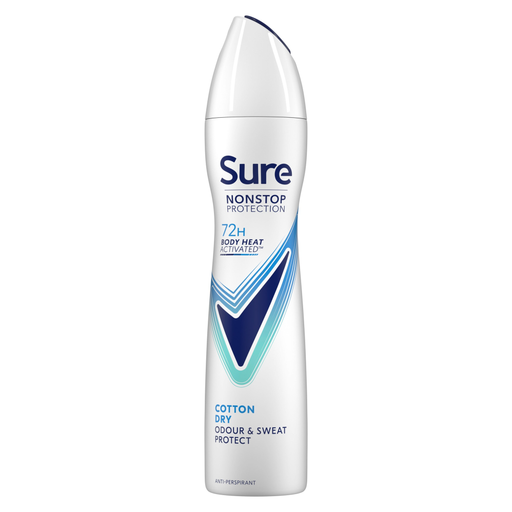
Why This Fits Their Persona: A larger can for active routines, commuting and days when you want a fresh cotton scent with a longer stated protection period.
The stated 72-hour duration is presented alongside clear short-burst application instructions, rather than implying that more spraying improves protection.
250ml size; alcohol-free formula; fresh cotton scent; aluminium can described as infinitely recyclable.
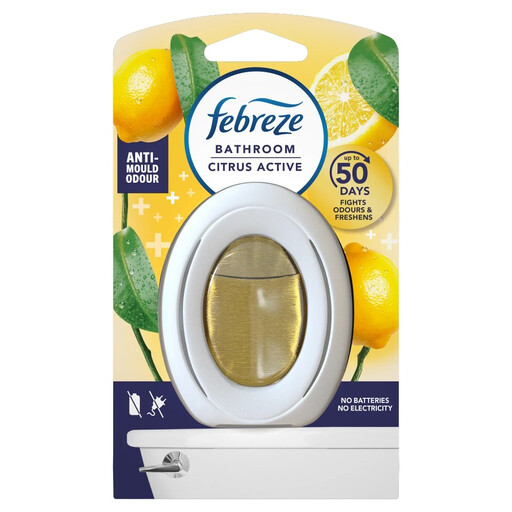
Why This Fits Their Persona: Designed for a bathroom setting, with one-push activation and a citrus fragrance for households wanting a low-maintenance option.
It is a bathroom-specific product rather than a general room aerosol, with usage and replacement guidance supplied for the unit.
Battery-free design; citrus scent; listed freshness of up to 50 days; suitable for bathroom air and some soft surfaces.
We have compiled a complete, real-time list of products that fully satisfy these strict selection criteria and UK safety regulations.
No. An antiperspirant is intended to reduce perspiration as well as helping with odour, while a deodorant spray mainly provides odour protection and fragrance. Check the active ingredients and product description before purchasing.
This depends on pack size, spray duration and frequency of use. A 150ml personal-care aerosol may suit occasional or portable use, while 200ml to 250ml cans may be more practical for daily routines. Household sprays can last longer when used in short, targeted bursts rather than continuously.
It can refresh or neutralise odours according to the product’s formulation, but it cannot permanently resolve the source of damp, mould, smoke or poor ventilation. Clean the affected area and improve airflow alongside using a suitable bathroom air freshener, odour eliminator or fabric freshener spray.