What to check before buying
Start with the bedroom temperature, then weigh laundry controls against noise, water handling and electricity use. A quoted extraction rate alone does not establish how quickly a load will dry in your room.
| Concern |
What to check |
Who this matters to |
| Drying and moisture |
Check the laundry setting or airflow controls, and whether the tank shuts the unit off when full or a drainage option suits your setup. Leave room for airflow beside the airer. |
When washing regularly occupies my bedroom airer, I want it to dry without leaving so much moisture in the room. Around 36% of consumers would put drying and moisture removal first. |
| Bedroom disturbance |
Compare sound levels for the intended fan mode, not just a single quiet-setting figure. Read the exact model’s unattended-use instructions before considering overnight operation. |
If the airer is near where I sleep, a laundry setting that disturbs me may not suit my routine. Noise and overnight suitability would be the main concern for around 29% of consumers. |
| Cool-room operation |
Match the model’s stated operating-temperature range to the bedroom’s lowest expected temperature; compare desiccant and refrigerant technology under those conditions. |
My bedroom is cool in winter, so I need a unit specified to operate at that temperature. Around 21% of consumers would prioritise cool-room operation. |
| Electricity use |
Check wattage by mode and humidity controls, then consider how long you expect to run the unit. Compare refrigerant models as well if the room is normally heated. |
If I dry loads frequently, I need to understand the electricity trade-off before relying on a high-output setting. Electricity use would come first for around 14% of consumers. |
For context, EcoAir specifies 300 W on low and 580 W on high for its DD1 Simple MK3; those figures describe that model’s stated modes, not the products below. Electrical Safety First notes that desiccant units may use more energy overall, even though they perform better in cooler spaces.
Joybuy desiccant models for bedroom laundry
These EcoAir desiccant models have laundry settings and are listed for low-temperature use. Compare their stated extraction and water-handling features, then check mode-specific noise, power use and unattended-use instructions for the model you favour.
 No image available
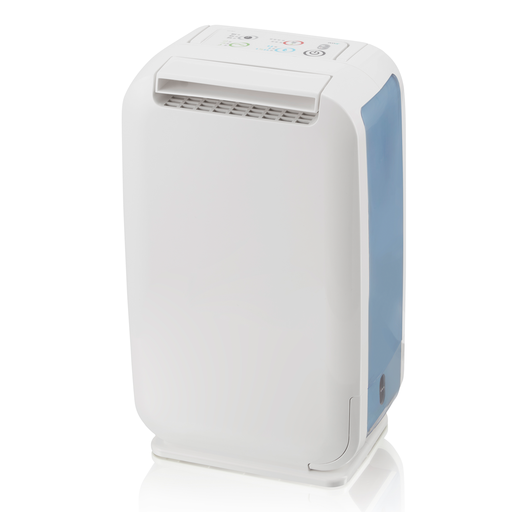
EcoAir DD1 Mini desiccant dehumidifier, white
Consider this model for laundry on a cool-bedroom airer if a 1.8-litre tank suits how often you can empty it.
The listing states extraction of up to 6 litres per day, a laundry mode, tank-full shut-off and a continuous drainage option. Check the sound level and power use for your intended mode, as well as the manufacturer’s unattended-use instructions.
View on Joybuy
 No image available
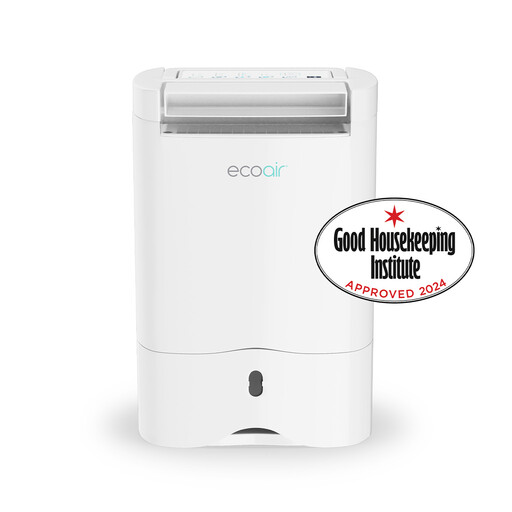
EcoAir DD3 Slimline desiccant dehumidifier, white
Consider the DD3 Slimline if you want a larger stated tank for repeated bedroom laundry sessions.
The listing states extraction of up to 10 litres per day, a 3-litre tank, a laundry mode, tank-full shut-off and continuous drainage. That extraction figure alone does not establish faster drying in your room; check mode-specific noise, power use and unattended-use instructions.
View on Joybuy
 No image available
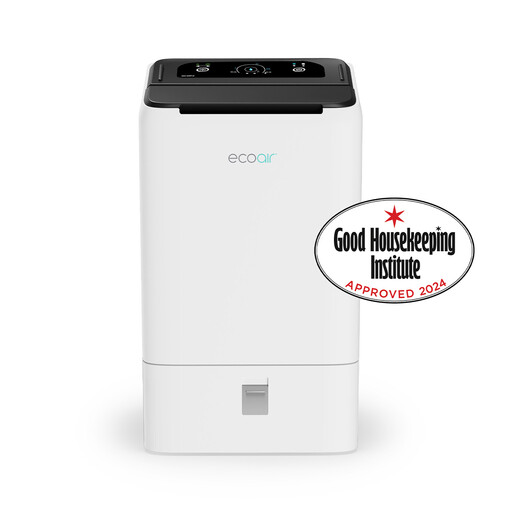
EcoAir DD2 Simple desiccant dehumidifier, white
Consider the DD2 Simple for a cool-bedroom airer if you want a laundry setting and can confirm that its water handling fits your routine.
The listing states extraction of up to 9 litres per day, tank-full shut-off and continuous drainage. Check tank capacity if emptying frequency matters, along with the sound level, power use and unattended-use instructions for the intended setting.
View on Joybuy
Common questions
Will a dehumidifier help bedroom laundry dry faster?
It can: Which? reported that a dehumidifier almost halved drying time for two identical washing loads in its test and removed around 2 litres of water from the air. Your result will depend on the load, room and appliance; keep the unit beside the airer with its airflow clear.
Do I need a dedicated laundry mode?
No. A suitable dehumidifier can remove moisture released by drying clothes without a dedicated laundry mode, although the setting may be convenient if you use an airer regularly. Check the setting’s noise and power use rather than assuming it will suit an occupied bedroom.
Can I leave a bedroom dehumidifier running overnight?
Only if the exact model’s manufacturer says unattended use is safe. Electrical Safety First advises against running a dehumidifier overnight or while away otherwise; follow the placement instructions and keep its vents clear.
Is a desiccant model worth choosing for a heated bedroom?
It may be, but compare a refrigerant model if electricity use matters more to you than cool-room performance. Electrical Safety First says compressor units generally work best and are more energy-efficient in warmer conditions, while desiccant units perform better in cooler or unheated spaces.
Will a dehumidifier resolve recurring mould in rented accommodation?
It can help manage moisture from laundry, but it cannot replace an investigation of recurring damp or mould. England’s government guidance for rented homes calls for the underlying issue to be addressed promptly; if you live elsewhere in the UK, check the guidance that applies where you rent.


