What should you check before buying?
For clothes stored in a hobby room, start with the lowest likely room temperature and the source of moisture. Then consider how often you can empty a tank and whether the appliance will run while you use the space.
| Concern | What to check | Who this matters to |
|---|
| Cold-room operation |
Compare the stated operating-temperature range with the room’s lowest likely temperature, especially if it falls below 10°C. |
If my stored clothes are in an unheated room, I need a model specified to operate at its winter temperature. Around 36% of consumers would put cold-condition reliability first. |
| Humidity control between visits |
Check how the humidistat works, whether the unit stops when the tank is full, and whether a suitable drain route is available. |
When I leave clothes stored for days, I want humidity control that does not rely on frequent tank emptying. For around 29% of consumers, managing moisture between visits would be the primary concern. |
| Noise in an occupied room |
Compare stated noise levels by setting, then check dimensions and the clearance required for airflow. |
If I work in the hobby room, a running appliance must fit without being too disruptive. Around 21% of consumers would chiefly prioritise use while the room is occupied. |
| Higher moisture loads |
Check the conditions behind the litres-per-day rating and compare power use, tank size and drying modes. |
When dampness persists or I also dry clothes indoors, I need to weigh stronger extraction against noise and electricity use. Higher-volume moisture removal would come first for around 14% of consumers. |
Desiccant models on Joybuy
These EcoAir desiccant models are relevant to moisture control where clothes are stored in a hobby room. Compare their stated extraction and tank sizes, but confirm the operating range and humidity controls of the exact model against your room and how often you can attend to it.
 No image available
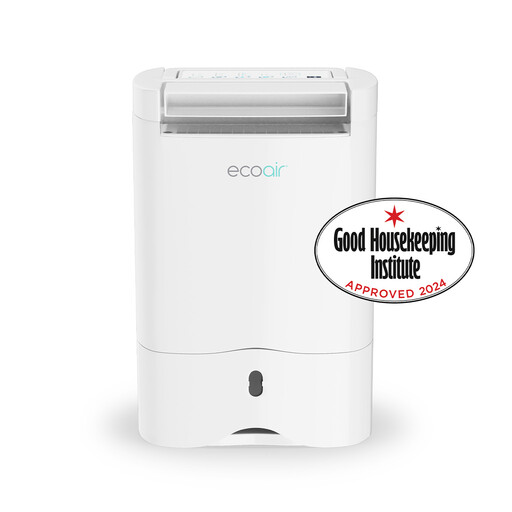
EcoAir DD3 Slimline desiccant dehumidifier, white
Consider this model if you use the hobby room while it runs and want automatic humidity control. EcoAir specifies a 1–40°C operating range and 39 dB(A) at the lowest setting; noise at other settings may differ.
Its stated extraction is up to 10 litres per day, with a 3-litre tank. The continuous-drain connection is optional, so check hose requirements and the drainage route before relying on it between visits.
View on Joybuy
 No image available
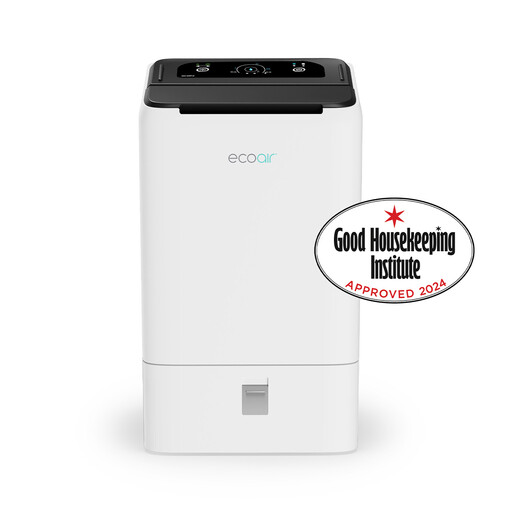
EcoAir DD2 Simple desiccant dehumidifier, white
This desiccant model is a choice to assess for stored clothes and occasional indoor drying. Its stated extraction is up to 9 litres per day, and its title identifies a laundry mode.
Before choosing it for a cold or infrequently visited room, confirm its minimum operating temperature, whether you can set a humidity target, and the requirements for any continuous-drain arrangement.
View on Joybuy
 No image available
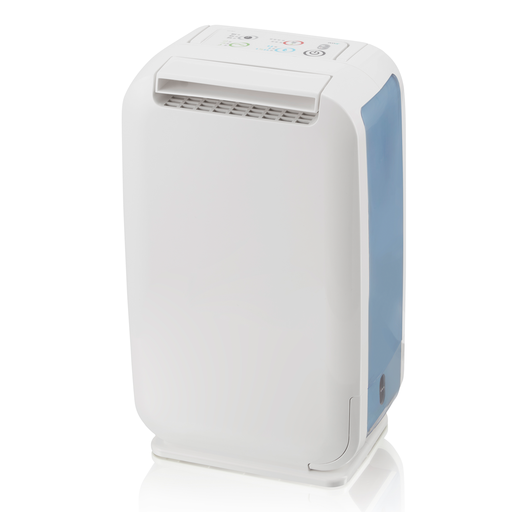
EcoAir DD1 Mini desiccant dehumidifier, white
Consider this model if a smaller tank is practical for how often you visit the hobby room. Its stated extraction is up to 6 litres per day, and the tank capacity is 1.8 litres.
Check its minimum operating temperature and whether it offers an adjustable humidity target before using it to maintain conditions around stored clothes. If you intend to use continuous drainage, confirm the hose and installation requirements.
View on Joybuy
Frequently asked questions
Should I choose a desiccant or compressor dehumidifier for stored clothes?
Choose a desiccant model when the hobby room is cool or unheated and often falls below 10°C. Meaco notes that compressor models can lose efficiency in colder conditions. If the room stays warm, compare the operating range and energy use of the exact models instead of assuming one type will always suit it better.
Will a dehumidifier fix damp around stored clothes?
A dehumidifier can manage airborne moisture, but it will not fix a leak or water entering the building. Manchester University NHS Foundation Trust identifies causes of damp beyond condensation, so investigate persistent patches or mould and address the underlying cause.
Is continuous drainage worth using for long-term clothes storage?
Continuous drainage can reduce tank-emptying visits if the exact model supports it and you can install a suitable hose route according to its instructions. Otherwise, choose a tank you can empty at practical intervals and check for tank-full shut-off. Pro Breeze specifies an included hose for the PB-D-10, while EcoAir describes the DD3 Slimline’s drain connection as optional.
How should I dispose of an old dehumidifier in the UK?
Treat an old dehumidifier as electrical waste rather than general rubbish. GOV.UK guidance says retailers selling new household electrical equipment must provide customers with a way to dispose of an old equivalent item; check the retailer’s take-back arrangements or your local authority’s electrical-waste service.


