What matters when choosing?
Start with the storage room’s temperature, then decide how much noise and routine attention you can accommodate. The concerns below reflect different primary needs among consumers considering a desiccant unit for stored clothes.
| Concern |
What to check |
Who this matters to |
| Cold-room extraction |
Check the exact model’s operating-temperature range and power draw against the room’s likely conditions. |
If my clothes are stored somewhere that gets cold, I need a unit intended to operate at that temperature. Around 45% of consumers put cold-room extraction first. |
| Low-disruption use |
Compare the stated sound level, weight and humidity controls for the exact model. |
Near a bedroom, I want to manage moisture without a machine that disrupts the room or is awkward to move. Low-disruption use comes first for roughly 28% of consumers. |
| Ongoing moisture management |
Check tank capacity, full-tank shut-off, drainage options and the instructions for placement and maintenance. |
If I visit the storage space intermittently, I need a practical way to manage collected water and check the appliance safely. About 27% of consumers prioritise that ongoing routine. |
Desiccant models for clothes storage
These EcoAir desiccant models are options to assess for rooms where clothes are stored or kept nearby. Match the operating conditions, controls and water-collection arrangement to your space rather than choosing by the extraction figure alone.
 No image available
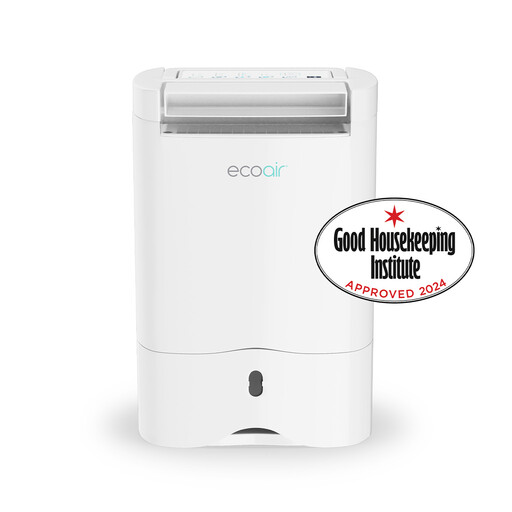
EcoAir DD3 Slimline Desiccant Dehumidifier, 10 litres/day, 3L tank
Consider this model if you need a desiccant unit for clothes kept in a cool room and can accommodate its tank-emptying routine.
The listing states 10 litres per day extraction, a 3L tank and a laundry mode; the extraction figure is not a guaranteed result in your room. Check the exact operating-temperature range, humidity controls and power draw before choosing it for ongoing storage use.
View on Joybuy
 No image available
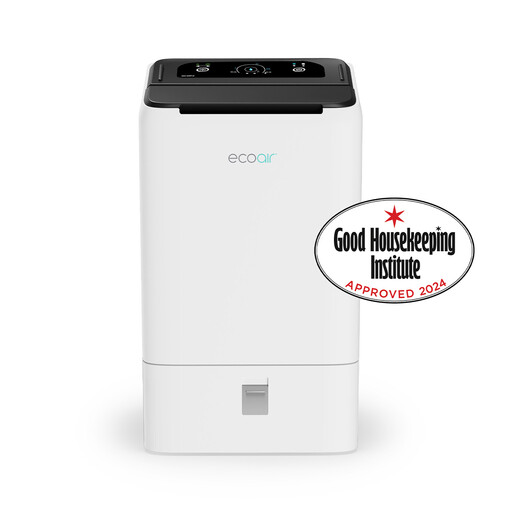
EcoAir DD2 Simple Desiccant Dehumidifier, 9 litres/day
Consider this model if you expect to move a desiccant unit between a clothes-storage space and a nearby room.
The listing states 9 litres per day extraction and a laundry mode, and describes a lightweight design; the extraction figure is not a guaranteed room result. Check the operating-temperature range, humidity controls, tank capacity, sound level and power draw against how and where you will use it.
View on Joybuy
Frequently asked questions
Can I put a portable dehumidifier inside a closed wardrobe?
Do not put a portable room dehumidifier inside a closed wardrobe unless its instructions expressly permit that use. It needs the specified clearance around its air intakes and outlets, a stable surface and space away from clothes and boxes; ordinarily, place it in the room containing the wardrobe.
Will a dehumidifier stop mould or a leak damaging stored clothes?
A dehumidifier can help manage airborne moisture, but it will not repair a leak or another building defect. Investigate recurring damp or mould and address ventilation and the moisture source alongside appliance use, as UK public-health guidance advises.
Can I leave a desiccant dehumidifier running while I am away?
Only use it unattended if the exact manufacturer’s instructions permit your setup. Electrical Safety First advises against running a dehumidifier while away unless the manufacturer specifies that it is safe; clear vents and a suitable plan for collected water still matter.
Can I run one in a bathroom?
Use a portable dehumidifier in a bathroom only if the exact appliance is rated and instructed for it. A Meaco appliance manual instead instructs users to position that unit outside the bathroom with the door open, so check your own model’s manual.
What recall checks should I make before buying?
Check the exact model against the Office for Product Safety and Standards product-recall listings, including any batch details that apply. Keep the appliance’s identifying details and register it so the manufacturer can contact you about relevant recalls.


