Who this suits

Consumers managing a cool spare room

If the bedroom stays unheated for long periods and develops condensation or damp surfaces, check low-temperature operation and humidity controls before focusing on the maximum extraction figure. Meaco and Pro Breeze both position desiccant units for colder spaces.

Consumers using the room for guests or work

When someone may sleep or work nearby, the noise at the setting you would actually use, space for the unit and ease of emptying its tank matter. EcoAir publishes model-specific noise figures, so check which fan setting each figure describes.

Households dealing with recurring moisture or indoor laundry

If moisture returns frequently or clothes dry in the room, compare extraction ratings alongside tank size, laundry settings and drainage arrangements. A dehumidifier can collect airborne moisture, but GOV.UK ventilation guidance also stresses the need for effective ventilation.

What matters when choosing

Desiccant dehumidifier

Consider it when: The spare bedroom is unheated or regularly cold; Meaco positions desiccant models for spaces below 10°C.

Trade-off: Higher settings can draw more power, so check consumption for the mode you expect to use.

Compressor dehumidifier

Consider it when: The bedroom is normally heated and electricity use is a leading concern; Ebac favours refrigerant models for occupied UK homes.

Trade-off: Meaco says compressor extraction can lose efficiency below 10°C, making room temperature an important check.

Concern What to check Who this matters to
Cold-room operation Check the model’s stated operating-temperature range and how its humidity controls behave in the room. If my spare bedroom stays cool between uses, I want a unit suited to its actual temperature, not just a high extraction rating. Around 38% of consumers put cold-room reliability first.
Low-disturbance use Compare noise figures at the intended fan setting, then check tank access and full-tank shut-off. When guests sleep or I work in the room, fan noise and routine emptying affect whether I can leave the unit running comfortably. Low-disturbance use comes first for around 31% of consumers.
Recurring moisture and laundry Compare maximum extraction with tank capacity and any laundry or continuous-drainage option; confirm that a suitable drain is available. If damp keeps returning or I dry clothes indoors, I need a way to manage repeated water collection without frequent interruptions. Around 31% of consumers prioritise that capacity and water handling.

Mistakes to avoid

  • Expecting a dehumidifier to fix every cause of damp

    A portable unit can collect airborne moisture while a leak, rain penetration or poor ventilation continues to cause damage. GOV.UK ventilation guidance explains that moisture trapped in a home can lead to condensation.

    Keep normal ventilation working and investigate damp that persists or returns. In rented accommodation, record and report recurring damp or mould rather than relying on the appliance alone.

  • Choosing by litres per day alone

    A maximum extraction rating does not tell you how much water a unit will collect in your bedroom; room temperature and humidity affect collection.

    Check the operating range, humidity controls, tank and drainage arrangement alongside the rating.

  • Overlooking electricity use at higher settings

    Warm air from a desiccant unit does not, by itself, show that a particular mode uses little electricity.

    Check the stated power or energy use for the settings you expect to run, then relate it to your own electricity tariff and likely running hours.

  • Assuming every filter is cleaned the same way

    Cleaning and replacement instructions can differ between models; using the wrong method may damage a filter.

    Read the manual for the exact model and check its filter-care instructions before purchase.

Brands to consider for this choice

Meaco

Meaco offers compressor and desiccant dehumidifiers and positions its DD8L desiccant range for cold or unheated rooms.

  • Meaco says its desiccant units can discharge warmer air and are intended for colder spaces.
  • For a normally heated bedroom, compare the power use and controls of the specific desiccant and compressor models rather than choosing by technology alone.

EcoAir

EcoAir’s desiccant range includes the DD1 Simple MK3 and DD3 Slimline, with different stated capacities and tank sizes.

  • EcoAir states maximum extraction of 7.5 L/day with a 2 L tank for the DD1 Simple MK3, and 10 L/day with a 3 L tank for the DD3 Slimline.
  • Those maximum ratings are model specifications, not a prediction of water collection in a particular bedroom; check room conditions and the intended fan setting.

Pro Breeze

Pro Breeze offers a 10L desiccant model with a stated 1–40°C operating range, humidistat and drainage option.

  • Pro Breeze states a 3 L tank and continuous-drainage capability for that model.
  • Its stated 44 dB noise figure and 0.63 kWh energy-consumption figure should be checked against the intended operating settings before choosing it for a bedroom.

Desiccant models on Joybuy

These EcoAir desiccant models are relevant to a cool spare bedroom. Compare their stated extraction ratings with the room’s moisture problem, and check noise, controls and electricity use for the way you plan to run the unit.
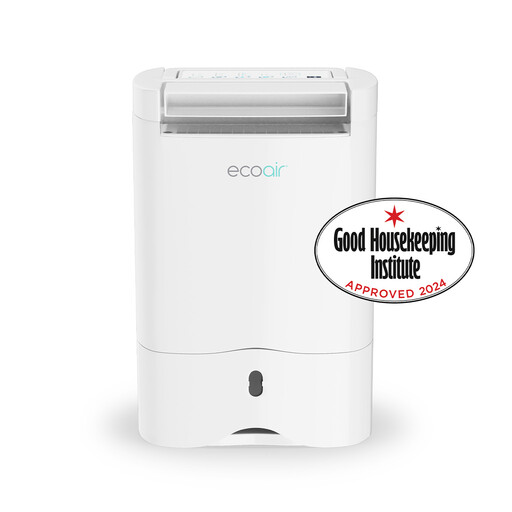
EcoAir DD3 Slimline desiccant dehumidifier in white

EcoAir DD3 Slimline desiccant dehumidifier, white

Consider this model if moisture recurs or indoor laundry increases the water you need to collect. EcoAir states maximum extraction of 10 L/day, a 3 L tank, a 1–40°C operating range and 39 dBA at the lowest setting; the model also has a laundry function and optional continuous drainage. Check its humidity controls, power use and noise at your intended setting, and make sure you have a suitable drain route if using a hose.

View on Joybuy
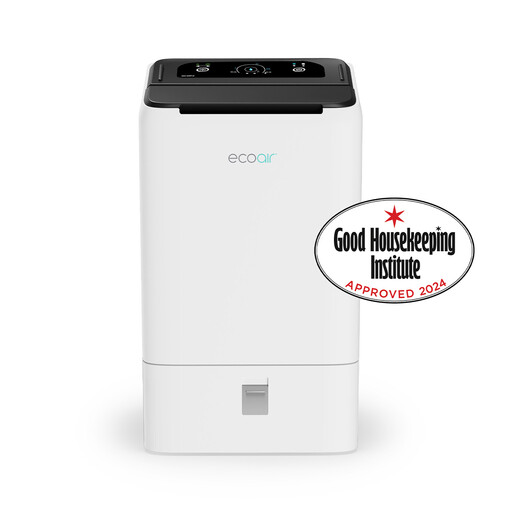
EcoAir DD2 Simple desiccant dehumidifier in white

EcoAir DD2 Simple desiccant dehumidifier, white

Consider this desiccant model for a cool spare bedroom, particularly if you also want a laundry setting. Its stated maximum extraction is 9 L/day. Before choosing it for an occupied room, check the operating-temperature range, tank size, noise at the intended setting, humidity controls and power use.

View on Joybuy

Common questions

Will a desiccant dehumidifier fix damp and mould in a spare bedroom?

It can help reduce airborne moisture, but it will not fix an underlying leak, rain penetration or ineffective ventilation. GOV.UK ventilation guidance explains that moisture can become trapped without effective ventilation, so investigate damp that persists while the unit is in use.

When should I consider a compressor model instead?

Compare compressor models if the spare bedroom is normally heated and electricity use is a priority. Meaco says compressor extraction can lose efficiency below 10°C, while Ebac favours refrigerant models for occupied UK homes; Ebac’s view is a manufacturer position, not a rule for every room.

Can a dehumidifier run without regular tank emptying?

Continuous drainage can reduce manual emptying if the exact model supports it and you have a suitable drain route. EcoAir documents drainage options for the DD1 Simple MK3 and DD3 Slimline, and Pro Breeze does so for its 10L desiccant model; check the hose and installation instructions for the model you choose.

What if damp keeps returning in a rented bedroom in England?

Report the recurring damp or mould and any suspected underlying cause to your landlord or agent rather than treating a dehumidifier as the only response. GOV.UK guidance for rented homes in England says landlords should tackle underlying issues promptly; the applicable arrangements may differ elsewhere in the UK.