For laundry drying in a cool or unheated hobby room, choose a desiccant model with a stated operating range that covers the room’s temperature, then check its laundry controls, airflow, electricity use and water-emptying arrangements. If the room stays heated, compare a compressor model too: Ebac says compressors can use less electricity under normal UK home conditions, but that is the manufacturer’s comparison, not a result for every room or model.
Who this suits
People drying laundry in a cold hobby room
If the room is cool or unheated, the model’s stated operating-temperature range matters alongside its laundry mode. EcoAir specifies its DD2 Simple for operation from 1°C to 40°C; that range should not be assumed for other models.
Crafters and makers with frequent laundry
Regular loads of clothes or washable hobby textiles make airer placement and directed airflow worth considering. Keep the drying setup clear of equipment and follow the chosen appliance’s placement instructions.
People sharing the room during drying
When the hobby room is also in use, compare mode-specific power, stated noise, tank emptying and safe socket access. If it stays warm, a compressor alternative is also worth comparing.
What to check when buying
Start with the room’s usual temperature. Then work out where the airer and appliance can sit, and whether the selected mode, noise level and tank arrangement will be manageable while you use the room.
| Concern |
What to check |
Who this matters to |
| Cool-room operation |
Check the exact model’s operating-temperature range against the room’s winter temperature; investigate persistent damp separately. |
If my hobby room gets cold, I need the appliance to operate at that temperature while laundry dries. Around 46% of consumers put cool-room operation first. |
| Laundry drying |
Look for laundry controls and a position that allows unobstructed airflow towards the airer, following the model’s clearance instructions. |
When I need another load ready between hobby sessions, I want a workable airer setup without leaving moisture around my materials. Roughly 36% of consumers make laundry turnaround their primary concern. |
| Everyday disruption |
Compare power and noise by mode, tank or drainage arrangements, and access to a suitable socket. |
If I spend long sessions in the room, electricity use, sound and emptying the tank need to be manageable. About 18% of consumers put everyday disruption first. |
Buying pitfalls
-
Choosing by litres per day alone
An extraction figure does not tell you whether the model operates at your room’s temperature or how its airflow, sound and laundry-mode electricity use will suit the space.
Compare the exact model’s operating range, laundry controls, airflow direction, mode-specific power, drainage and noise information.
-
Expecting a dehumidifier to repair building damp
A dehumidifier can manage moisture from laundry, but it cannot fix a leak or penetrating or rising damp. Rochdale Borough Council distinguishes condensation from these other forms of damp.
If damp or mould keeps returning, investigate its cause rather than relying on the appliance alone.
Running the appliance while an underlying building problem remains will also use electricity.
-
Overloading an extension setup
Dorset & Wiltshire Fire and Rescue Service warns that overloaded sockets and daisy-chained extensions create a fire risk.
Use a suitable fixed socket where practical. If an extension is needed, follow the appliance instructions, check the fused lead’s rating, keep it dry and never connect extensions or adaptors together.
-
Assuming every laundry mode runs alike
Controls and power differ by model. Pro Breeze says its compressor PB-D-23 runs continuously with the humidity target disabled in laundry mode; EcoAir specifies different power levels for its desiccant DD2 Simple.
Check the chosen model’s laundry-mode controls and power rating, and use a timer or humidity setting only where its instructions and your drying needs permit.
Brands to consider
Meaco
Its DD8L Pro is a desiccant model aimed at laundry drying in colder rooms.
- Meaco specifies laundry mode and an automatic louvre for directing airflow towards washing, and describes extraction below 10°C.
- Those are claims for the DD8L Pro, not a performance comparison with other models. Check its current availability and the settings you would use.
EcoAir
Its desiccant range includes the portable DD2 Simple and the wall-mountable or freestanding DDWH10.
- EcoAir specifies DD2 Simple operation from 1°C to 40°C and a laundry mode; it lists continuous drainage and an IP24 rating for the DDWH10.
- EcoAir states 1200W consumption for the DDWH10’s laundry mode. Its installation features do not remove the need to follow that model’s electrical and placement instructions.
Ebac
A reference point for comparing a compressor dehumidifier when the hobby room stays heated.
- Ebac says compressor models can use less electricity than desiccant models per amount of water extracted under normal UK home conditions.
- That is Ebac’s own comparison guidance, not an independent result for every room; its household models are principally compressor options.
Pro Breeze
Its laundry-mode guidance offers a useful reminder to check the controls and placement instructions of the exact model being considered.
- For the compressor PB-D-23, Pro Breeze says laundry mode runs continuously and advises positioning the unit approximately 50 cm from hanging laundry.
- That distance and control behaviour are PB-D-23-specific; they are not instructions for a desiccant model.
Desiccant models for hobby-room laundry
These Joybuy choices are desiccant dehumidifiers to consider for laundry drying in a hobby room. Compare their stated features with your room temperature, available floor space and tolerance for tank emptying and operating noise.
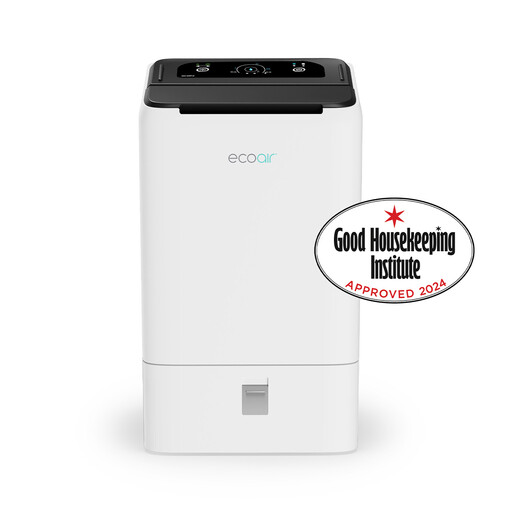 Image unavailable
EcoAir DD2 Simple Desiccant Dehumidifier, White
Consider this model when the hobby room can get cold: EcoAir specifies operation from 1°C to 40°C and a laundry mode.
Stated extraction is up to 9 litres per day. EcoAir lists 260W in low mode and 570W in high mode; check the controls and noise information for the setting you expect to use.
View on Joybuy
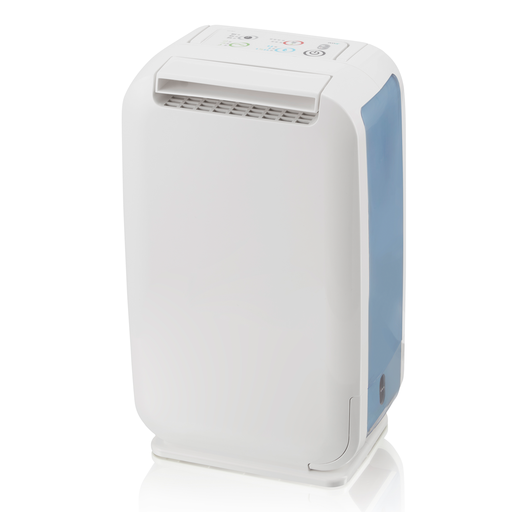 Image unavailable
EcoAir DD1 Mini Desiccant Dehumidifier, White
For an airer in a hobby room, check this model’s laundry controls and stated operating range against the temperature of the space.
Its stated extraction is 6 litres per day and its tank is 1.8 litres. Check the power and noise information for the mode you would use during hobby sessions.
View on Joybuy
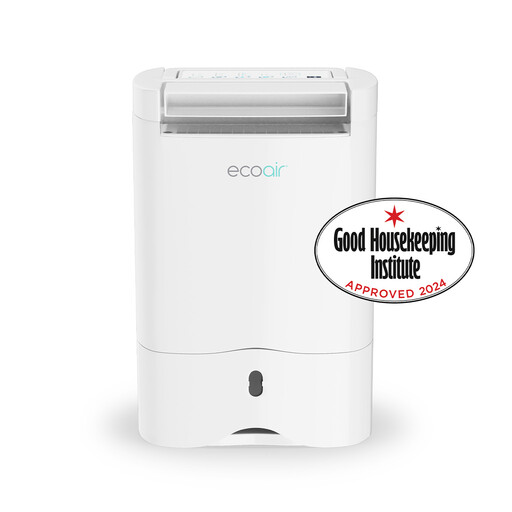 Image unavailable
EcoAir DD3 Slimline Desiccant Dehumidifier, White
The slimline design and stated laundry mode may suit a hobby room where airer placement leaves limited floor space; allow the clearances required by the model instructions.
Its stated extraction is 10 litres per day and its tank is 3 litres. Check its operating-temperature range, mode-specific power and noise before deciding whether it suits a cold or occupied room.
View on Joybuy
Common questions
How should I set up an airer and dehumidifier in a hobby room?
Choose a position that lets the appliance move air without blocking its inlet or outlet, and follow its clearance instructions. West Devon Borough Council suggests an airer in a closed room with a dehumidifier as one option; Camden Council advises using a ventilated room when drying laundry indoors. Keep the appliance away from water and hobby materials.
Will a dehumidifier fix mould caused by a leak?
No. It can help manage moisture in the air while laundry dries, but it will not repair a leak or another building defect. Investigate damp that persists or returns rather than treating moisture removal as the repair.
Is a desiccant dehumidifier always cheaper to run?
No; compare electricity use for the modes you would actually run. Ebac says compressor units can use less electricity per amount of water extracted under normal UK home conditions, but this is its own comparison guidance. A consistently heated hobby room makes that alternative worth checking against a desiccant model.
Can I use an extension lead for a dehumidifier?
Check the appliance instructions and use a suitable fixed socket where practical. If an extension is necessary, Dorset & Wiltshire Fire and Rescue Service advises using an appropriately rated fused lead, avoiding overload and never daisy-chaining extensions or adaptors. Keep the lead and appliance away from water.
Do I need continuous drainage for indoor laundry?
Not necessarily; a manageable tank and full-tank shut-off may suit your drying routine. Continuous drainage is useful only if the exact model supports it and you have a suitable drain route. EcoAir specifies a continuous-drain connection for its DDWH10; follow the chosen model’s installation instructions before relying on that arrangement.


