Choose a desiccant dehumidifier if your damp hobby room is cool or unheated; Electrical Safety First says this type performs better in cooler settings, although it may use more energy overall. For an occupied room, weigh noise and humidity control alongside the tank or drainage arrangement rather than choosing by the litres-per-day figure alone. A dehumidifier manages airborne moisture, but persistent damp still calls for attention to ventilation and its underlying cause.
Who is this for?
Collectors and makers with moisture-sensitive materials
If you keep wood, paper, models, instruments or similar items in the room, you need to consider both excessive damp and excessive drying. EcoAir’s DD1 Simple MK3 manual warns that either extreme can damage some belongings.
Users of cool or lightly heated hobby rooms
A shed, converted garage, conservatory or workshop may cool down between sessions. Electrical Safety First identifies cooler or unheated rooms as a setting where desiccant dehumidifiers can be useful; check each model’s stated operating-temperature range against your room.
People working for long periods in the room
If you paint, craft, game or concentrate near the appliance, compare noise figures by running mode and consider how often you would need to empty its tank.
What should you check?
Start with the room temperature and the humidity needs of its contents, then decide what level of noise and water-handling work fits your routine.
| Concern | What to check | Who this matters to |
|---|
| Stable humidity |
Look for an adjustable humidity setting; check how the unit behaves after reaching it. A separate hygrometer may help you monitor a valuable collection. |
If I keep wood, artwork or instruments in the room, I want to manage damp without drying those materials excessively. Around 36% of consumers would put humidity stability first. |
| Cool-room operation |
Check the stated operating-temperature range against the room’s coldest conditions, not just the extraction figure. |
When my workshop cools down between visits, I need a unit specified to operate at that temperature. Cool-room operation would come first for around 29% of consumers. |
| Noise during use |
Compare stated noise levels by mode and check whether the fan setting can be changed while using the humidity control. |
If I spend hours crafting or concentrating beside the unit, fan noise could interrupt the session. Around 21% of consumers would make low-disruption operation their main concern. |
| Water handling |
Check tank capacity and full-tank shut-off. If you plan to use drainage, confirm hose provision and a suitable, unobstructed route to a drain. |
When I cannot empty a tank often, I need water collection or drainage that fits my routine. For around 14% of consumers, avoiding frequent emptying would be the priority. |
Common buying mistakes
-
Using a dehumidifier as the only response to persistent damp
A unit can remove airborne moisture while a leak or ventilation problem remains. UK government guidance explains that inadequate ventilation can trap moisture and contribute to condensation and mould.
Keep ventilation working and investigate damp that persists or returns, rather than treating a lower humidity reading as proof that the cause has gone.
-
Choosing solely by the largest litres-per-day figure
A manufacturer’s maximum extraction figure is not a promise of what the unit will collect each day in your hobby room. Temperature, moisture load and the chosen running mode matter to the decision too.
Check the operating-temperature range, humidity controls, noise by mode and water-handling arrangement alongside the stated extraction capacity.
-
Overlooking the tank and drain route
A tank that needs frequent emptying may not suit a room you visit infrequently. Continuous drainage is useful only when the model supports it and the hose has a suitable route.
Check tank access and whether a hose is supplied; follow the manual for cleaning and keeping the hose, filter and vents clear.
-
Placing the appliance where air cannot circulate
Blocked inlets or outlets can interfere with operation. Electrical Safety First advises allowing air to circulate around a dehumidifier and keeping its filters and vents clear.
Choose a stable position with the clearances specified in the manual, and unplug the unit before cleaning it.
Relevant brands to consider
EcoAir
The DD1 Simple MK3 illustrates EcoAir’s compact desiccant range for cool indoor spaces.
- EcoAir specifies 34 dBA, a 1–35°C operating range, a 2-litre tank and optional continuous drainage for the DD1 Simple MK3.
- A 2-litre tank may mean more frequent emptying when damp persists and drainage is impractical. The stated extraction capacity is a manufacturer specification, not a daily result for every room.
Meaco
Meaco presents the DD8L Junior for spaces including workshops, garages and studios.
- The DD8L Junior offers a selectable quiet fan mode and full-bucket shut-off, according to Meaco.
- Meaco lists 39, 43 and 48 dB(A) across its running modes, so check the mode you would use during noise-sensitive work.
Pro Breeze
The cited 10L desiccant model is an option to examine for a larger or persistently damp room where a drain is available.
- Pro Breeze specifies a 1–40°C operating range, a 3-litre tank and continuous drainage for this model.
- Its listed 44 dB noise figure matters if the unit will sit near a desk. Its maximum extraction figure should not be treated as a guaranteed daily collection rate.
Joybuy products for cool hobby rooms
These EcoAir desiccant models are choices to examine for moisture control in a cool hobby room. If you need a particular humidity setting or plan to run a unit beside your workspace, confirm the exact model’s controls and noise rating before choosing.
 No image available
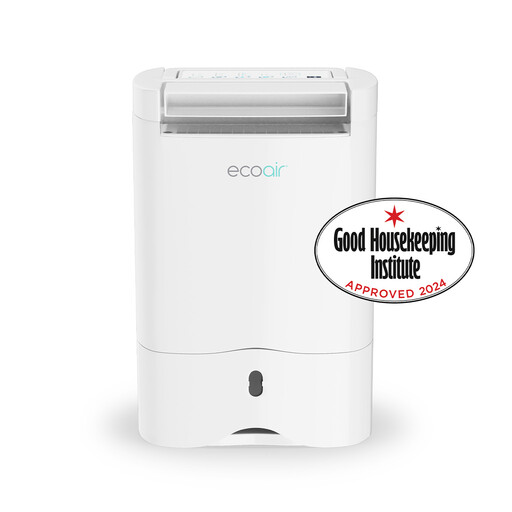
EcoAir DD3 Slimline desiccant dehumidifier, 10 L/day, 3 L tank, white
Consider this model if tank capacity matters in a cool hobby room. Its stated extraction capacity is up to 10 litres per day, not a guaranteed daily collection rate; the product name specifies a 3-litre tank and low-temperature operation. Confirm its humidity settings, operating-temperature range and noise rating if those determine where and when you can use it.
View on Joybuy
 No image available
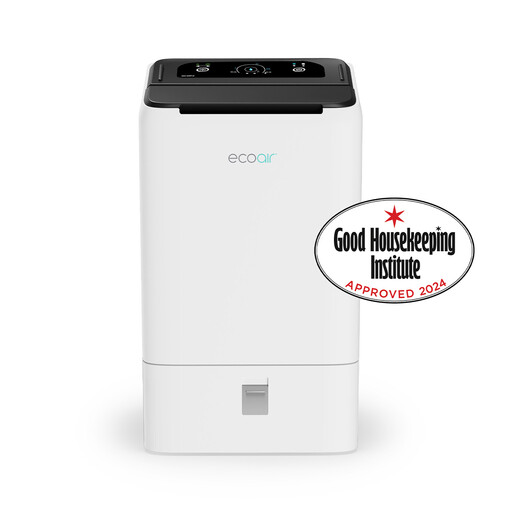
EcoAir DD2 Simple desiccant dehumidifier, 9 L/day, white
Consider this lightweight model if you need to move a desiccant unit between work areas. Its stated extraction capacity is up to 9 litres per day, not a guaranteed daily collection rate; the product name also specifies low-temperature operation. Before choosing it for a collection or a quiet workspace, confirm the humidity controls, tank capacity, operating-temperature range and noise rating.
View on Joybuy
Frequently asked questions
What humidity should I aim for in a hobby room?
Start with the needs of the materials you keep there, rather than aiming for the lowest possible reading. EcoAir’s DD1 Simple MK3 manual describes 40–60% relative humidity as a comfort range and warns that both high and excessively low humidity can damage belongings; follow material-specific care guidance for valuable or unusual collections.
Will a desiccant dehumidifier fix mould or a leak?
No: it can manage moisture in the air, but it does not repair a leak or correct inadequate ventilation. UK government guidance links trapped moisture with condensation and mould, so investigate persistent damp and address its cause.
Should I use a tank or continuous drainage?
Use a tank if you can empty it regularly; consider continuous drainage only if the exact model supports it and you have a suitable, safe hose route to a drain. Check whether the hose is supplied and keep drainage components clear as the manual directs.
What electrical-safety checks matter when choosing a unit?
Choose a unit whose instructions and placement requirements suit the room. Electrical Safety First advises buying from a reputable retailer or known manufacturer, registering the appliance for recall notices, allowing air to circulate around it and keeping its filters and vents clear.


