What matters when choosing
Start with the temperature of the damp room, then work out where the appliance can run and how you will deal with collected water.
| Concern |
What to check |
Who this matters to |
| Cool-room operation |
Check the exact model’s operating-temperature range and controls against the temperature of the damp room. Meaco says compressor efficiency can fall below 10°C; that is not a universal cutoff for every compressor model. |
If my room is often cool or only heated part of the day, I need a unit specified to operate in those conditions. Around 37% of consumers put cool-room moisture control first. |
| Space and disruption |
Compare dimensions, carrying weight and the stated noise level for the relevant operating mode. Leave room for airflow and access to the tank. |
When the unit has to sit near where I live or sleep, I need it to fit and be manageable to move or empty. For around 36% of consumers, low-disruption use is the primary concern. |
| Laundry and collected water |
Check laundry settings, tank capacity and whether the model supports continuous drainage. A hose also needs a suitable, secure route. |
If I dry clothes indoors, I want to manage the added moisture without repeatedly interrupting use to empty a tank. Laundry and heavier moisture loads come first for around 27% of consumers. |
Daily extraction and tank capacity answer different questions: the former describes stated moisture removal over 24 hours under specified conditions, while the latter affects how often you may need to empty the unit. A larger extraction figure alone does not establish how a model will perform in your room or how much electricity it will use.
Brands to consider
These product lines illustrate features worth comparing; a feature listed for one model should not be assumed to apply across a brand’s range.
Meaco
Its desiccant range includes the DD8L and DD8L Pro lines, with an emphasis on cool spaces and indoor laundry.
- Meaco describes its desiccant models as suitable for unheated spaces; it lists Smart Energy Mode, laundry airflow features and app control for the DD8L Pro.
- Check the exact model’s dimensions, power modes and controls rather than assuming DD8L Pro features apply to another Meaco unit.
EcoAir
Its desiccant options include the DD1 Simple MK3, which uses a rotary control layout.
- EcoAir specifies up to 7.5 litres/day extraction, a 2-litre tank, a continuous-drainage option, 6 kg weight, a stated 34 dBA noise level and a 1–35°C operating range for the DD1 Simple MK3.
- Consider whether a 2-litre tank or a suitable drainage setup fits your expected emptying routine. Those specifications are specific to the DD1 Simple MK3.
Pro Breeze
Its desiccant range includes a 10L model with a humidistat and continuous-drainage provision.
- For that 10L desiccant model, Pro Breeze states a 1–40°C working range, a 3-litre tank and a stated 44 dB noise level.
- Check its dimensions, noise and power use for your intended setting before choosing it for a compact living space.
Desiccant models on Joybuy
These portable EcoAir desiccant models are choices to examine for a cool room or indoor laundry in a small flat. Compare their stated extraction and tank sizes separately, then check the operating range, noise, dimensions and power use of the model that interests you.
 No image available
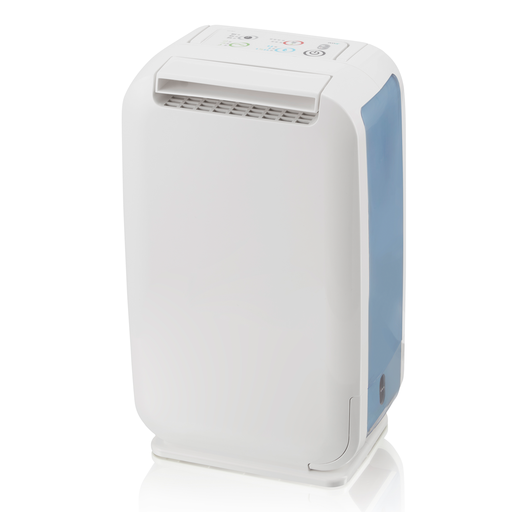
EcoAir DD1 Mini Desiccant Dehumidifier, 6 L/day, 1.8 L tank
Consider this desiccant model if you need to manage moisture in a cool part of a small flat. Its name states 6 litres/day extraction and a 1.8-litre tank; check the operating range, noise, dimensions and power use against your room and routine.
View on Joybuy
 No image available
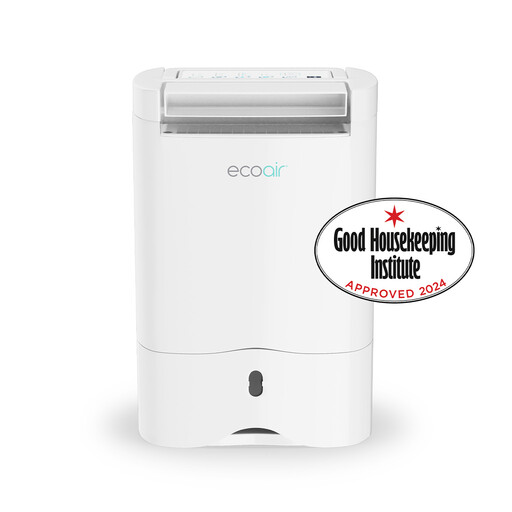
EcoAir DD3 Slimline Desiccant Dehumidifier, 10 L/day, 3 L tank
Consider this model if indoor laundry makes tank emptying an important part of your choice. Its name states 10 litres/day extraction, a 3-litre tank and a laundry mode; check its exact dimensions, operating range, noise and power use before deciding where it can run.
View on Joybuy
 No image available
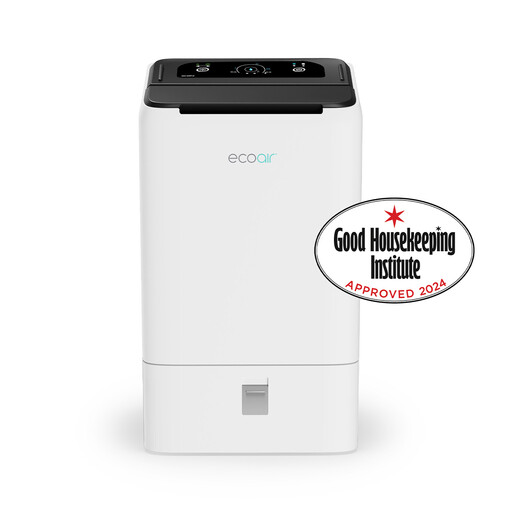
EcoAir DD2 Simple Desiccant Dehumidifier, 9 L/day
Consider this desiccant model when indoor laundry is part of the moisture problem. Its name states 9 litres/day extraction and a laundry mode; check tank capacity, dimensions, operating range, noise and power use if manual emptying or bedroom placement matters.
View on Joybuy
Common questions
Should I choose a desiccant dehumidifier if my small flat stays heated?
Not automatically: if the damp room stays consistently warm, compare compressor models as well. A desiccant unit has a clearer reason for consideration in a cool or intermittently heated room or where you dry laundry indoors; compare the exact models’ operating ranges, controls, noise and power use.
Does a 10 L/day dehumidifier have a 10-litre tank?
No: litres per day describes stated extraction over 24 hours, not the amount the tank holds. EcoAir specifies a 7.5-litres/day rating and a 2-litre tank for its DD1 Simple MK3, while Pro Breeze specifies a 3-litre tank for its 10L desiccant model. Check tank size and drainage separately if frequent emptying would be difficult.
Can I use continuous drainage in a rented flat?
You can consider it if the exact model supports continuous drainage and a compatible hose can reach a suitable drainage point securely. Follow the appliance instructions, avoid trip or leak risks, and ask the landlord before making any alteration or using a fixture in a way that requires permission.
If I rent in England, can a dehumidifier replace reporting damp or mould?
No. GOV.UK guidance applying to England says landlords should assess damp-and-mould reports urgently and tackle underlying problems promptly. A dehumidifier can help manage indoor moisture, but persistent damp, visible mould or suspected leaks should still be reported. Rules differ across the UK nations, so this England-specific guidance is not a statement of duties elsewhere.


