Students in cold or poorly heated rooms
If condensation is a problem and the room regularly feels chilly, a model’s stated operating-temperature range matters. Meaco and Pro Breeze position their desiccant ranges for colder spaces.


A desiccant dehumidifier is worth considering if your student room is regularly cold or poorly heated: Meaco says compressor models can lose efficiency below 10°C, while desiccant models are intended for colder spaces. Before buying, check your accommodation rules, bedroom noise and handling, and the exact model’s power use and humidity controls. Report persistent damp or mould as well; an appliance does not repair its underlying cause.
If condensation is a problem and the room regularly feels chilly, a model’s stated operating-temperature range matters. Meaco and Pro Breeze position their desiccant ranges for colder spaces.
Check noise at the setting you expect to use, as well as the weight and tank-emptying routine. EcoAir and Meaco publish model-specific figures that can help you assess those practical demands.
A dehumidifier can help manage moisture in the air while a problem is investigated, but it cannot repair a leak or building defect. Government guidance for rented homes in England calls for the underlying cause of damp and mould to be addressed promptly.
Start with the room’s usual temperature, then weigh bedroom practicality against the power use and controls of the exact model.
| Concern | What to check | Who this matters to |
|---|---|---|
| Cold-room moisture removal | Check the model’s operating-temperature range and the conditions attached to its extraction rating. | If my room stays chilly, I need a model rated for the temperatures it reaches. Around 31% of consumers put cold-room moisture removal first. |
| Bedroom practicality | Compare noise by mode, carrying weight and tank capacity; check for tank-full shut-off. | Studying and sleeping in one room makes fan noise and emptying the tank part of daily use. Around 38% of consumers prioritise bedroom practicality. |
| Electricity use and humidity control | Compare rated watts by mode and whether the unit stops or reduces operation at a chosen humidity level. | When I expect long running periods, I want to understand electricity use and avoid unnecessary operation. Around 31% of consumers put running-cost control first. |
Electrical-appliance rules depend on the accommodation provider. University of London CampusLife publishes a hall-specific list of prohibited items and notes that it is not exhaustive; it does not establish permission or a ban for other halls.
Read your own hall agreement and ask the accommodation team before buying.
Removing moisture from the air does not fix a leak, inadequate ventilation or a building defect. Government guidance for rented homes in England says the underlying issue should be tackled promptly.
Report persistent damp or mould to your landlord or accommodation provider and keep a record while the cause is investigated.
An extraction rating does not tell you how noisy a model will be in your bedroom or how much power it draws on each setting. EcoAir, for example, rates the DD1 Simple MK3 at 300W on low and 580W on high.
Check test conditions alongside the exact model’s noise, wattage, controls and tank capacity.
Cold-room suitability and electricity use are separate questions. Manufacturer views on running costs differ, so the technology label alone cannot settle the choice for a normally heated room.
Use the model’s rated watts, your likely operating hours and your electricity tariff to assess running costs.
Its desiccant range includes the DD1 Simple MK3 and DD128, with published specifications useful for comparing handling, temperature range and power by mode.
Its DD8L desiccant range is positioned for colder spaces. Meaco says compressor models can lose efficiency below 10°C.
Its desiccant range is positioned for cooler, unheated spaces.
These EcoAir desiccant models are options to assess for a cool or intermittently heated student room. Check each model’s temperature range and your accommodation rules before deciding whether it fits your space.
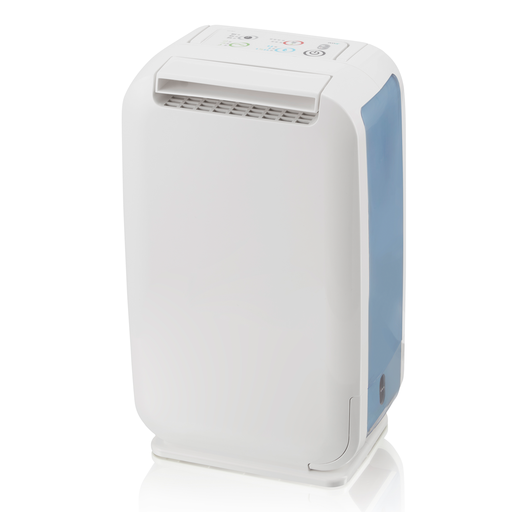 No image available
For a cool student room where tank handling matters, compare this model’s temperature range and noise rating with your room conditions.
The product title states 6 L/day extraction and a 1.8 L tank; the extraction figure should not be taken as the amount collected in every room.
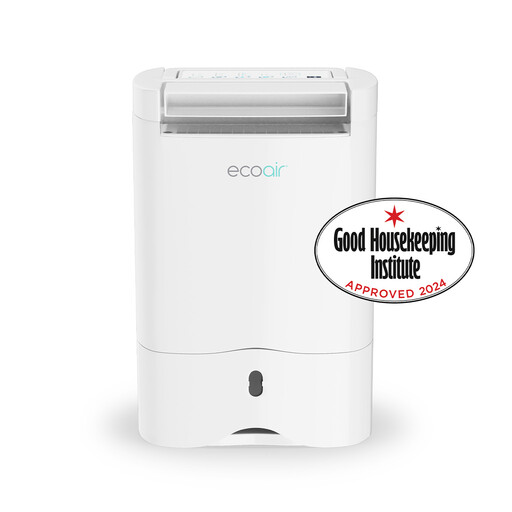 No image available
If drying clothes indoors is part of your routine, consider this model’s stated laundry mode, subject to your accommodation rules.
The product title states 10 L/day extraction and a 3 L tank. Check the noise and power of the mode you expect to use in a bedroom.
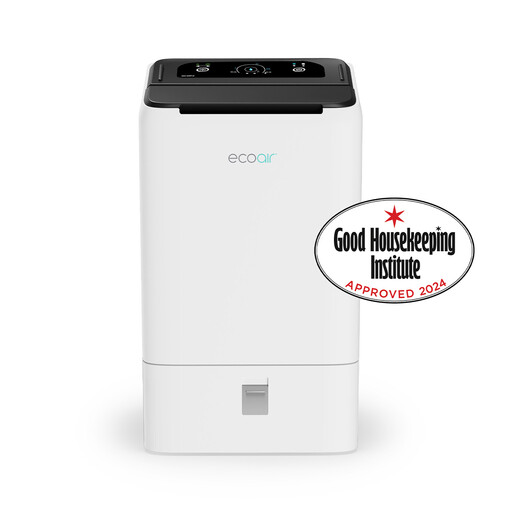 No image available
For a cool room where you also dry laundry indoors, this model’s stated laundry mode may be relevant; confirm its operating-temperature range for your room.
The product title states 9 L/day extraction. Check tank capacity, noise and power by mode before choosing it for regular bedroom use.
It is worth considering when the bedroom is regularly cold or poorly heated. Meaco says compressor models can lose efficiency below 10°C; in a normally warm bedroom, compare the exact models’ power use, noise and humidity controls before choosing between technologies.
Check your own hall agreement and ask the accommodation team before buying. University of London CampusLife’s prohibited-items list is specific to its accommodation and is not exhaustive, so another hall’s rules cannot establish whether your appliance is permitted.
No: it may help manage moisture in the air, but it cannot repair the cause of persistent damp or mould. Government guidance for rented homes in England says the underlying issue should be identified and tackled promptly; report the problem to your landlord or accommodation provider.
Use an undamaged appliance and avoid overloading sockets or extension leads. Electrical Safety First advises students to pay attention to overloaded sockets and leads; report damaged sockets or other electrical faults to your accommodation provider rather than continuing to use them.
Empty the tank when the model’s full indicator or shut-off activates, and follow its own manual for filter care. EcoAir recommends cleaning the DD128 filter every two weeks and replacing it every six months; that schedule is specific to the DD128, not every desiccant dehumidifier.