
24/7 Customer Support

Free returns

Same-day & Next-day Delivery

Quality Guaranteed

Unlock Your Welcome Offers: FREE Delivery | Up to 80% OFF | Free 30-day JoyPlus trial
Download the APP
Waking up to find condensation streaming down your windows is a familiar sight in many UK homes. That persistent damp feeling, the musty smell in a spare room or the struggle to dry laundry indoors during a wet week are challenges that many of us face. These issues are often most noticeable in cooler, unheated areas like garages, utility rooms or poorly insulated bedrooms, where damp can lead to mould and damage.
A desiccant dehumidifier is an appliance specifically engineered to tackle these problems. Unlike traditional compressor models, they perform consistently well even in low temperatures, making them a practical choice for the UK climate. This guide is designed to help you understand how they work and to highlight some effective options for keeping your home dry, comfortable and healthy.
Navigating the specifications can feel complicated, but focusing on a few key areas will help you find the right fit for your home.
The main difference lies in how they remove moisture from the air. Compressor dehumidifiers work by cooling a metal plate, causing water to condense on it. This method becomes less effective as the room temperature drops below about 15°C.
A desiccant dehumidifier, however, uses an absorbent material to soak up moisture from the air, a process that remains efficient even in the cold. This makes it an ideal low temperature dehumidifier for a dehumidifier for garage, a boat, a caravan or any chilly room in your house during autumn and winter. As a bonus, the air they expel is gently warmed, which can help take the chill off a room.
The performance of a dehumidifier is measured in how many litres of water it can extract per day. A small portable dehumidifier with a lower extraction rate might be perfect for a single bedroom or a small office. For larger open-plan areas, basements or homes with significant damp issues, a model with a higher extraction rate (e.g., 7 litres/day or more) will be more effective at controlling humidity and helping to stop condensation on windows.
Modern dehumidifiers come with features that make them more convenient. A dehumidifier with laundry mode is a popular function, as it provides a powerful, continuous airflow to significantly speed up the time it takes to dry clothes indoors. Other useful features include an automatic shut-off function that stops the unit when the water tank is full, a timer and a continuous drain option, which allows you to run the unit for long periods without needing to empty the tank.
Here are a few options we've selected that address different needs, from powerful whole-room dehumidifying to targeted moisture control in smaller spaces.
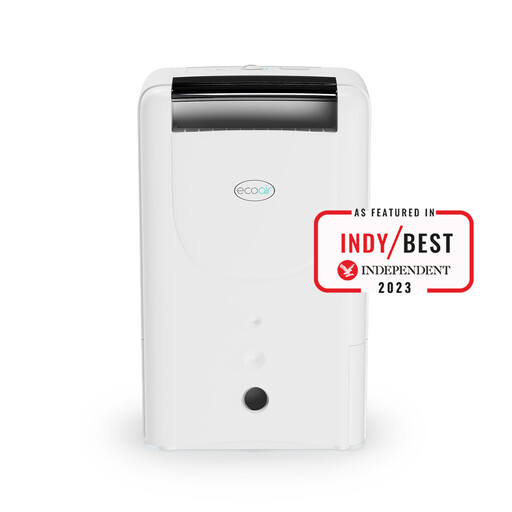
Why It Stands Out The EcoAir DD1 Simple MK3 is a classic example of a desiccant dehumidifier built for performance and simplicity. Its main strength is its ability to extract up to 7.5 litres of moisture per day even in cool environments where other types struggle. The controls are refreshingly straightforward—a simple rotary dial to set the desired humidity level and a slider for modes like Energy Saving, Turbo and Laundry. There are no complex digital screens, making it incredibly easy to operate.
Pros
Who is it for? This is an excellent choice for anyone dealing with persistent damp in spaces up to 60 m?, such as living rooms, bedrooms, utility areas or garages. It's particularly well-suited for those who need a reliable appliance to dry laundry indoors or manage condensation in a cooler part of the house.
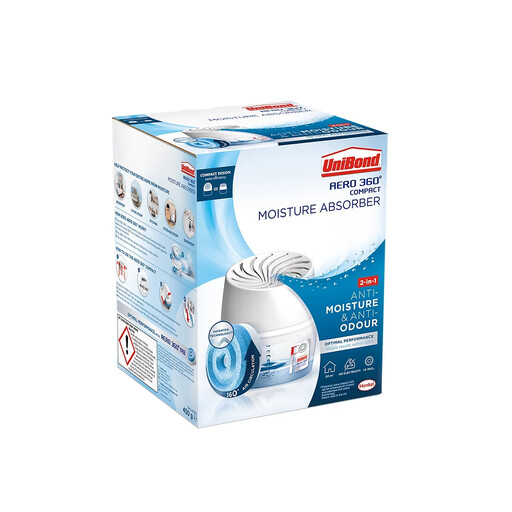
Why It Stands Out For smaller, enclosed spaces where an electric appliance isn't necessary or practical, the Unibond AERO 360 offers a silent, electricity-free solution. This compact device uses a special refill tab made of absorbent crystals to draw moisture from the air. Its 360° design promotes airflow for efficient operation. It's a set-and-forget system that also helps neutralise musty odours.
Pros
Who is it for? This is for individuals looking to manage damp and musty odours in confined areas like cupboards, wardrobes, small utility rooms or caravans. It's a simple, low-maintenance alternative for preventing mould in places where a larger dehumidifier would be overkill.
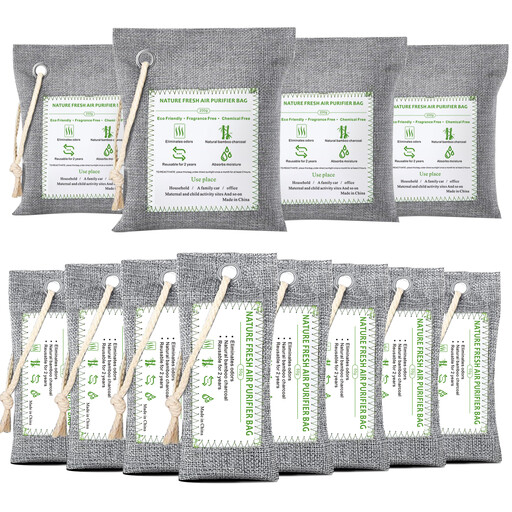
Why It Stands Out If you're seeking a natural way to combat odours and absorb minor excess moisture, these bamboo charcoal bags are a great option. They are completely chemical-free and work by trapping odour molecules and moisture in the porous structure of the charcoal. Their key feature is reusability—placing them in the sun for a few hours once a month "recharges" them, and they can last for up to two years.
Pros
Who is it for? This is a perfect choice for the environmentally conscious user who needs to tackle musty smells and light dampness in very small, enclosed spaces. It's not a replacement for an electric dehumidifier but serves as an excellent complementary product for keeping small items and areas fresh.
Every home's humidity challenge is unique, and sometimes a different solution is required. If these specific models aren't quite what you're looking for or you'd like to explore a wider variety of solutions, you can browse our full collection of moisture absorbers to find the perfect match for your needs.
A desiccant dehumidifier draws air into the unit and passes it through a slowly rotating wheel coated in a moisture-absorbing material (the desiccant). This material soaks up the water from the air. As the wheel turns, a small internal heater warms a section of it, causing the collected moisture to be released as water, which then drips into a collection tank. This process is highly effective across a wide range of temperatures.
Desiccant models can have a higher hourly power consumption than compressor units when they are actively running. However, they often work more quickly and efficiently, especially in cooler UK temperatures. This means they may need to run for shorter periods to achieve the desired humidity level, which can help balance the overall energy cost. Many models, like the EcoAir DD1 Simple MK3, include an energy-saving mode to help manage electricity usage.
Absolutely. A dehumidifier with laundry mode is an excellent tool for drying clothes indoors. When activated, it typically runs continuously on its highest fan setting. The combination of constant air movement and dry air output significantly reduces drying time, prevents clothes from developing a damp smell and stops excess moisture from being released into your home.