Choose a desiccant dehumidifier for stored clothes if the bedroom becomes cool and low-temperature operation matters. If it stays normally heated, compare compressor models too, particularly if electricity use is a priority. Whichever type you consider, check its humidity controls, overnight noise and water handling; a dehumidifier complements ventilation rather than fixing a persistent source of damp.
Who this suits
People storing clothes in a bedroom
If seasonal clothing, bedding or shoes share your bedroom, you may want to manage moisture around the storage area. GOV.UK notes that damp and mould can damage belongings; persistent damp still calls for attention to its cause.
People with a cool bedroom
If the room is lightly heated or gets cold in winter, check the exact model’s operating-temperature range. EcoAir and Wood’s publish low-temperature operating ranges for particular desiccant models, but those ranges should not be assumed for every model.
People considering overnight use
If the unit might run while you sleep, weigh its stated sound level and controls alongside tank emptying and safe electrical placement. Which? assesses quietness separately from energy consumption when testing dehumidifiers.
What matters when choosing
Check whether the bedroom becomes cold enough for low-temperature operation to shape your choice, then assess moisture control, overnight disturbance and the work of running the unit regularly.
| Concern | What to check | Who this matters to |
|---|
| Moisture around stored clothes |
Look for a humidistat or automatic humidity control, and investigate recurring condensation or damp. |
If I keep clothes or bedding in a bedroom wardrobe, I want to manage room moisture without running the unit unnecessarily; around 31% of consumers put this need first. |
| Disturbance in the bedroom |
Compare sound ratings at the speed you expect to use and check timer options. |
When the appliance may run near bedtime, I need to know whether its sound and operating schedule will suit the room; roughly 25% of consumers prioritise low-disruption use. |
| Cool-room operation |
Match the exact model’s operating-temperature range to the bedroom’s coldest usual conditions. |
If my bedroom is only occasionally heated, I need a model specified to operate at that temperature; about 25% of consumers make cool-room operation their primary concern. |
| Electricity use and upkeep |
Check power consumption by mode and whether the tank, filter care or a practical drainage route suits regular use. |
For repeated use, I need to be comfortable with the electricity consumed and the routine of dealing with collected water; around 19% of consumers put these practicalities first. |
Common buying mistakes
-
Choosing by litres per day alone
An extraction rating has stated temperature and humidity conditions; it does not tell you how the unit will sound or behave in your bedroom.
Check the rating conditions, operating-temperature range, humidity controls and water-collection arrangement for the exact model.
-
Leaving a desiccant unit on high continuously
Power draw can differ substantially between settings. EcoAir specifies 331 W on low and 623 W on high for its DD128, so its high setting should not stand in for every mode when assessing electricity use.
Compare model-specific power figures and use the humidistat or timer where appropriate. If the bedroom stays heated, compare a compressor model as well.
-
Treating a dehumidifier as a fix for recurring damp
GOV.UK explains that ineffective ventilation can leave moisture trapped indoors. A portable appliance cannot repair a leak or building defect.
Maintain suitable ventilation and investigate persistent condensation, mould, leaks or damp patches rather than relying on the appliance alone.
-
Overlooking bedroom electrical safety
A unit placed near a bed or wardrobe still needs a suitable socket and room for its cable and water tank.
Follow the model’s instructions, inspect plugs and cables, and avoid overloading extension leads. London Fire Brigade advises particular care with high-powered appliances and recommends checking product recalls.
Relevant dehumidifier brands
Meaco
Meaco’s DD8L desiccant range is presented for household moisture control, laundry drying and colder spaces.
- Meaco specifies 41 dB, humidity targets adjustable in 5% relative-humidity steps and timer controls for the DD8L Zambezi.
- Meaco’s preference for desiccant units below 10°C is its own guidance, not a temperature threshold that applies to every bedroom or model.
EcoAir
EcoAir publishes detailed operating information for its DD128 desiccant model.
- The DD128 is specified for operation from 1°C to 40°C, with a stated 39–49 dBA sound range, timer settings and a 2.2-litre tank.
- EcoAir specifies 331 W on low and 623 W on high for the DD128; consider the setting and likely run time, not just its extraction rating.
Wood’s
Wood’s offers the WDD80 desiccant model for spaces that can become particularly cold.
- Wood’s specifies operation from 0°C to 35°C, three fan speeds, a timer, a 2-litre tank and a hose connection for the WDD80.
- For a UK bedroom, check the exact unit’s plug configuration, seller support and whether a usable drainage route is available.
Joybuy desiccant models
These EcoAir desiccant models are choices to consider for moisture control around clothes stored in a cool bedroom. Check each model’s operating range, humidity controls and sound information against how you plan to use it.
 No image available
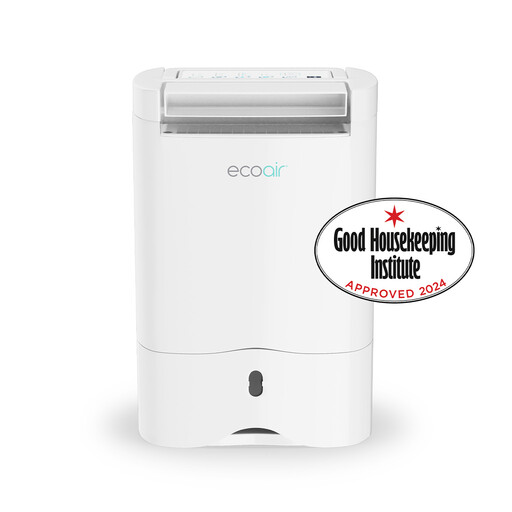
EcoAir DD3 Slimline desiccant dehumidifier, white
For a cooler bedroom with stored clothes, consider this model if its operating range and controls suit the room.
Its stated extraction rating is 10 litres/day; the product name also specifies a 3-litre tank and laundry mode.
Check the sound level at your intended setting and power consumption if you plan to run it overnight or regularly.
View on Joybuy
 No image available
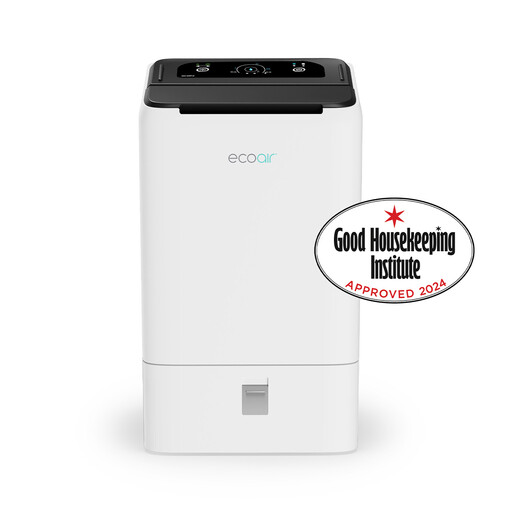
EcoAir DD2 Simple desiccant dehumidifier, white
For moisture control near bedroom storage, consider this model if its low-temperature operating range meets your needs.
Its stated extraction rating is 9 litres/day, and the product name specifies a laundry mode.
Check its tank capacity, humidity controls, operating sound and power consumption before choosing it for frequent use.
View on Joybuy
Questions about bedroom dehumidifiers
Can a dehumidifier replace ventilation when clothes are stored in a bedroom?
No. GOV.UK guidance explains that ventilation helps remove indoor moisture; a dehumidifier can help manage moisture alongside it but cannot repair leaks or inadequate ventilation.
Is a desiccant model always the right type for a bedroom?
No. A desiccant model is worth considering when the bedroom gets cold, but a normally heated room leaves room to compare compressor models. Meaco favours desiccant below 10°C, while Ebac describes a different low-temperature threshold; treat those as manufacturer positions and check model-specific operating ranges and electricity use.
What maintenance should I check before choosing a dehumidifier?
Check the exact model’s tank capacity, drainage arrangement and filter instructions. EcoAir recommends cleaning the DD128 filter every two weeks and replacing it every six months; do not apply that schedule to a different model without checking its manual.
How can I use a bedroom dehumidifier more safely?
Follow the appliance instructions, keep plugs and cables in good condition and avoid overloaded extension leads. London Fire Brigade advises particular care with high-powered appliances and recommends checking for product recalls.
What if damp or mould persists in a rented bedroom in England?
Report persistent damp or mould to your landlord and ask for its underlying cause to be investigated; a portable dehumidifier should not be the only response. GOV.UK guidance on damp and mould in rented homes applies here to England, so requirements elsewhere in the UK should be checked separately.


