People working in a cool office
If the room is lightly or intermittently heated and its windows collect condensation, check a model's stated operating-temperature range rather than relying on its extraction headline alone.


Consider a desiccant dehumidifier if your home office stays cool or is heated only while you work; in a consistently warm office, a compressor model may use less electricity for moisture removal, according to Condair. For desk-side use, weigh noise by operating mode, humidity controls and water disposal alongside the stated extraction rate. Keep designed ventilation usable: lowering moisture in the air does not fix every cause of wet windows.
If the room is lightly or intermittently heated and its windows collect condensation, check a model's stated operating-temperature range rather than relying on its extraction headline alone.
For calls or concentrated work, compare published sound levels for the mode you expect to use and consider where the unit can sit relative to your desk.
If regular emptying would interrupt your working day, consider tank access, tank-full shut-off and whether continuous drainage is practical in the room.
Room temperature helps decide between desiccant and compressor technology; once you have chosen a route, compare the controls, noise and water-disposal arrangements of the exact model.
Consider it when: The office is cool or heated only intermittently; the desiccant models described by EcoAir and Pro Breeze include low-temperature operating specifications.
Trade-off: Condair says condensing dehumidification uses less energy than desiccant dehumidification, so electricity use deserves particular attention in a warm room.
Consider it when: The office stays consistently warm and electricity use is a leading concern.
Trade-off: Its moisture-removal efficiency can fall in colder conditions, so check its specified operating range before choosing it for a chilly office.
| Concern | What to check | Who this matters to |
|---|---|---|
| Cold-room operation | Check the exact model's operating-temperature range and the conditions used for its extraction figure. | If my office cools down between working hours, I need a machine specified to operate at those temperatures. Around 33% of consumers would put cold-room suitability first. |
| Noise at the desk | Compare stated dB(A) levels by mode and whether a lower-noise setting is selectable. | During calls, I do not want the mode needed for moisture removal to disrupt conversation. For around 27% of consumers, quiet working would be the primary concern. |
| Electricity and controls | Compare stated power use for the intended mode and check for a humidistat or automatic stop. | When the room is in use for long stretches, I want control over how the machine runs. Around 27% of consumers would prioritise running control. |
| Water disposal | Check tank capacity, tank-full shut-off and whether a compatible hose can reach a suitable drain. | If I cannot readily interrupt work to empty a tank, accessible emptying or practical drainage matters most. Around 13% of consumers would make upkeep their first priority. |
Extraction figures measured at different temperatures and relative humidity levels are not directly comparable. Condair also distinguishes the energy use of desiccant and condensing technology.
Decide whether the office is genuinely cool, then compare the stated extraction conditions, operating modes and power use for models you are considering.
Running a desiccant unit continuously in a consistently warm office can increase electricity use compared with choosing a suitable condensing unit.
Government ventilation guidance explains that moisture can become trapped without effective ventilation. A portable dehumidifier also cannot repair a leak or a building defect.
Keep designed ventilation usable, including trickle vents where present, and investigate condensation or damp that persists.
Published figures vary by model and mode: Meaco specifies 39, 43 and 48 dB(A) for the DD8L Junior's modes, while EcoAir lists 34 dB(A) for the DD1 Simple MK3. A single figure does not describe how every setting will sound beside a desk.
Check the figure for the setting you plan to use and, where practical, position the unit away from your microphone.
A machine that stops when its tank is full cannot resume moisture removal until the tank is emptied or an appropriate drainage arrangement is in place.
Check that you can remove the tank comfortably. If choosing continuous drainage, confirm the exact model's requirements and plan a safe hose route clear of desk cables and walkways.
The DD8L Junior is a desiccant option positioned by Meaco for spaces including offices and studios.
The DD1 Simple MK3 and DD1 Classic MK6 offer different control and drainage arrangements within EcoAir's desiccant range.
Its 10L Desiccant Dehumidifier With Heating Setting is an option to examine if a humidistat, 3L tank and continuous drainage are priorities.
These EcoAir desiccant models are choices to examine for a cool home office. Compare their stated capacity and handling features with the noise, controls and operating conditions you need at your desk.
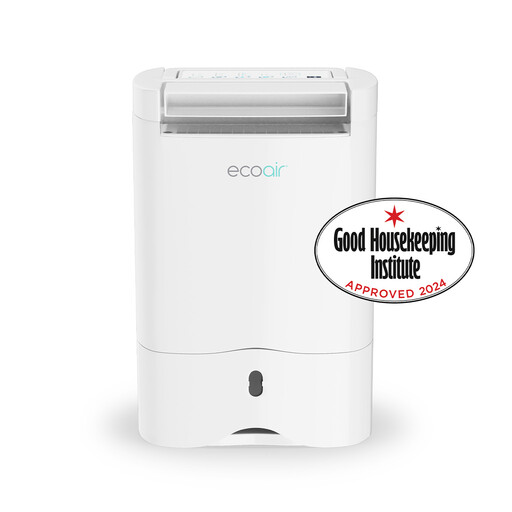 No image available
Consider the slimline DD3 if floor space and tank handling matter in a small office. Its stated extraction rate is 10 litres/day, and its tank holds 3L; compare extraction claims only when their test conditions are alike.
For desk-side use, check the operating-temperature range, sound level by mode, power use and humidity controls for this exact model before choosing it.
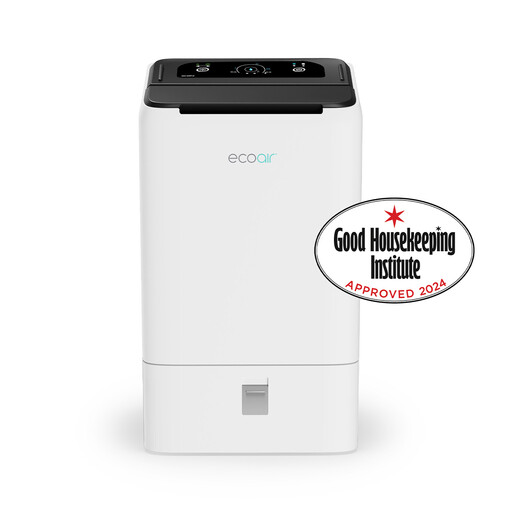 No image available
Consider the DD2 Simple if you want a desiccant model to assess for a cool office or for moving between rooms. Its stated extraction rate is 9 litres/day; compare that figure only with claims measured under comparable conditions.
Check the exact operating-temperature range, sound level, tank capacity, power use and humidity controls against your working routine.
It may reduce condensation by lowering moisture in the room air, but it cannot replace effective ventilation or fix an underlying building problem. Government ventilation guidance explains that moisture can become trapped without ventilation; National Energy Action suggests considering a dehumidifier in rooms prone to condensation.
Yes, where trickle vents are part of the home's designed ventilation, keep them open and unblocked as government guidance advises. The dehumidifier removes moisture from room air; ventilation also helps remove indoor pollutants.
Not for every home office: a capacity figure cannot tell you whether the unit will suit calls or operate as needed in a cool room. Check the model's temperature range and sound level by mode, and compare extraction figures only when their test conditions are comparable.
Yes, if the exact model supports continuous drainage and there is a suitable, safe route to a drain. Confirm hose compatibility or inclusion and keep the hose clear of desk cables and walkways; EcoAir specifies an included 1m hose for the DD1 Classic MK6.
Report persistent damp or mould to your landlord or managing agent rather than assuming a portable dehumidifier resolves its cause. Government guidance for England says landlords must comply with damp-and-mould-related regulations; seek advice applicable to your part of the UK about your particular tenancy.