Cool spare-room hobbyists
If you use the room for crafts, models, DIY or gaming but heat it only occasionally, check that a dehumidifier can operate at the room’s lowest expected temperature. Portability may matter if you also move it between rooms.


Choose a desiccant dehumidifier if your spare hobby room becomes cool or is left unheated, then match its stated operating range, humidity controls, noise and drainage arrangement to how you use the room. If you store wood, artwork or instruments, monitor relative humidity rather than aiming for the driest possible air. A dehumidifier can help manage moisture in the air, but it cannot fix a leak or replace effective ventilation.
If you use the room for crafts, models, DIY or gaming but heat it only occasionally, check that a dehumidifier can operate at the room’s lowest expected temperature. Portability may matter if you also move it between rooms.
Wood, paper, paintings, instruments, adhesives and metal tools call for monitored humidity rather than continuous drying. EcoAir’s DD3 Simple manual warns that excessively low humidity can also affect some stored belongings.
When the hobby room doubles as a study or guest room, operating noise, automatic humidity control and how often the tank needs emptying become part of the choice.
Start with the room’s temperature and what you store there, then consider whether the appliance will be running while the room is occupied or unattended.
| Concern | What to check | Who this matters to |
|---|---|---|
| Moisture control in a cool room | Compare the stated operating-temperature range with the room’s lowest expected temperature; check the conditions behind the extraction rating. | If my hobby room is unheated between visits, I need a unit specified to work at those temperatures. Around 34% of consumers would put cool-room moisture control first. |
| Humidity around stored materials | Look for an adjustable humidity setting and check the room with a separate hygrometer. | When I store wood, artwork or instruments, I want to manage damp without making the air excessively dry. Roughly 33% of consumers would make controlled humidity their primary concern. |
| Noise and portability | Check noise figures for the relevant mode, along with weight and carrying features; quoted sound levels alone cannot predict how noticeable a unit will be in your room. | If I work or host guests in the same room, I need a unit I can live with while it runs and move when necessary. About 20% of consumers would prioritise quiet, flexible use. |
| Emptying and electricity use | Check tank capacity, drainage arrangements and wattage by mode before planning longer runs. | If I cannot empty the tank frequently, I need a practical drainage plan and a clearer picture of electricity use. Around 13% of consumers would put day-to-day running arrangements first. |
GOV.UK’s home ventilation guidance explains that trapped moisture can turn into condensation, particularly against cold surfaces. A dehumidifier will not repair water ingress or a building defect.
Keep existing trickle vents open and unblocked where present, and investigate persistent damp or mould rather than relying on the appliance alone.
Extraction ratings do not describe every room’s conditions or the electricity used in each mode. EcoAir specifies 300 W and 580 W for the DD1 Simple MK3’s low and high modes, compared with 420 W and 670 W for the DD3 Slimline’s respective modes; those figures alone do not establish household running costs.
Check operating temperature, humidity controls, noise, tank or drainage arrangements and mode-specific wattage alongside the extraction figure.
EcoAir’s DD3 Simple manual warns that low humidity can shrink or warp wood, while high humidity can affect wood, metal, glues and paint. Its 40%–60% relative-humidity guidance is a comfort range, not a universal target for specialist collections.
Use a humidistat and separate hygrometer, and follow material-specific guidance where your collection needs it.
Recalls apply to the models and batches named in each notice, not to every appliance from a brand. An April 2026 notice published by the London Borough of Bromley identified a fire risk affecting specified Ebac dehumidifier batches.
Check the UK product-safety alerts and recalls service against the exact brand, model and batch before purchase and during ownership.
EcoAir offers several desiccant models relevant to cool spare rooms, including the DD1 Simple MK3 and DD3 Slimline.
Meaco presents its DD8L desiccant range for cooler spaces and rooms where appliance weight or some warmth from operation matters.
Pro Breeze has a 10L desiccant model with a humidistat and continuous-drainage option for cold rooms.
These desiccant models offer different stated extraction capacities for a cool spare hobby room. If protecting sensitive materials is the priority, confirm the exact humidity controls before choosing either one.
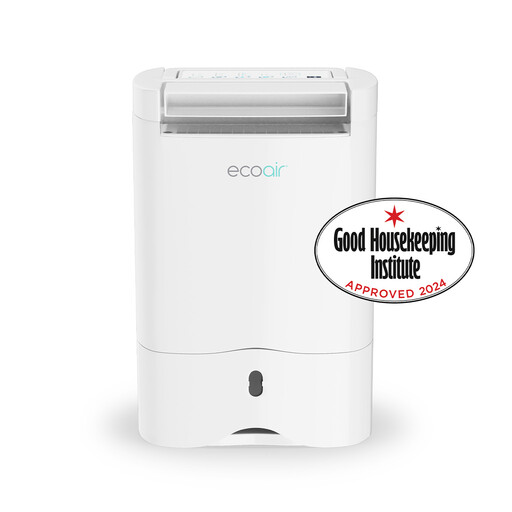 No image available
Consider this model if you want a 3-litre tank and the higher stated extraction capacity of these two choices. EcoAir specifies operation from 1°C to 40°C; the product title states up to 10 litres per day. If you store humidity-sensitive materials, check the exact humidity-target controls before relying on automatic moisture management.
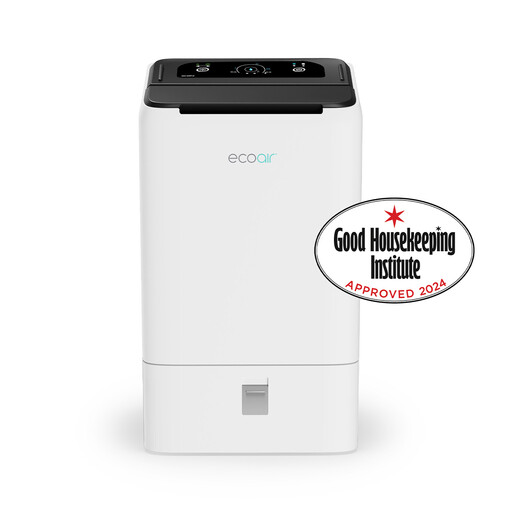 No image available
Consider this model for an intermittently used spare room if straightforward desiccant moisture control is your priority. Its product title states extraction of up to 9 litres per day. Check its operating-temperature range against your room’s lowest temperature, and confirm its humidity controls, tank arrangement and noise level if those affect when you will run it.
It can be a suitable choice when the room gets cool or is left unheated, provided the particular model is rated for its lowest expected temperature. EcoAir specifies 1°C–35°C operation for the DD1 Simple MK3 and 1°C–40°C for the DD3 Slimline; check the range and wattage of the model you intend to buy.
Monitor the room with a hygrometer rather than aiming for the lowest possible reading. EcoAir’s DD3 Simple manual identifies 40%–60% relative humidity as a comfort range, but specialist wood, artwork or instrument collections may need material-specific guidance.
Not if an underlying moisture or ventilation problem remains. GOV.UK’s home ventilation guidance explains how trapped moisture can turn into condensation; keep existing trickle vents unobstructed where present and investigate recurrent mould, leaks or water ingress.
Continuous drainage is useful if emptying a tank regularly is impractical and you have a suitable, safely positioned drain. EcoAir lists drainage options for the DD1 Simple MK3 and DD3 Slimline, while Pro Breeze lists one for its 10L desiccant model; check hose inclusion and installation requirements for the exact product.
Check the UK product-safety alerts and recalls service using the appliance’s exact model and batch details. Recall notices are product-specific: a 2026 notice published by the London Borough of Bromley concerned specified Ebac dehumidifier batches, not dehumidifiers generally.