What matters when choosing?
Start with the room’s usual temperature and the cause of the moisture, then decide how much operating noise, tank emptying and humidity variation your hobby use can accommodate. Manufacturer extraction figures help compare models, but do not establish how much water a machine will collect in your particular room.
| Concern |
What to check |
Who this matters to |
| Cold-room operation |
Match the exact model’s operating-temperature range and stated room coverage to your room; consider extraction figures alongside their test conditions. |
In an unheated room, I need the machine to operate at the temperatures the room actually reaches, not just have a large extraction figure. Around 36% of consumers put cold-room operation first. |
| Noise during use |
Check the published noise level and the fan setting or operating mode to which it applies. |
When I am concentrating or recording in the room, a machine I can leave running without undue disruption matters most. Around 29% of consumers prioritise quiet operation. |
| Emptying and drainage |
Check tank capacity, full-tank shut-off and whether a suitable drain and compatible hose arrangement are available. |
If the room stays closed for long periods, I want moisture collection to continue without frequent trips to empty the tank. Around 21% of consumers make this their primary concern. |
| Humidity for stored materials |
Look for a controllable humidistat and monitor room humidity; seek material-specific advice for valuable items. |
With wood, paper or artwork in the room, I want to control condensation without drying stored materials indiscriminately. Around 14% of consumers place stable humidity first. |
Brands to consider
These model-specific ranges offer different specifications to check against a cool hobby room; a brand name alone does not establish which appliance suits your space.
EcoAir
EcoAir lists both the DD1 Classic MK6 and DD3 Slimline for operation from 1°C to 40°C, giving cold-room shoppers two models with different stated output and noise figures.
- The DD1 Classic MK6 is listed at up to 60m² and as low as 34 dB(A); the DD3 Slimline is listed at up to 85m², up to 10 litres per day and 39 dB(A) on its lowest setting.
- Coverage and noise figures are manufacturer specifications, not a guarantee of condensation control or equal-condition noise in your room.
Meaco
Meaco describes its DD8L Junior as a desiccant option used in garages and workshops, making its specifications relevant to a cool hobby space.
- Meaco lists the DD8L Junior at 39 dB(A), 6.4 kg and 7.5 litres per day at 20°C and 60% relative humidity.
- The extraction figure has stated test conditions; check the model’s operating range and current availability for your intended room and retailer.
Pro Breeze
Pro Breeze lists a 10L desiccant model with a humidistat, a 3-litre tank and a continuous-drainage option for rooms where humidity control and emptying arrangements matter.
- Its stated operating range is 1–40°C, with coverage of up to 35m².
- The manufacturer lists 44 dB noise and 0.63 kWh energy consumption; check how the relevant setting fits occupied-room use.
Joybuy product choices
These EcoAir desiccant models are choices to consider for a cool hobby room. Match each model’s stated specifications to your room, particularly if quiet operation, a humidity setting or a workable drainage route is essential.
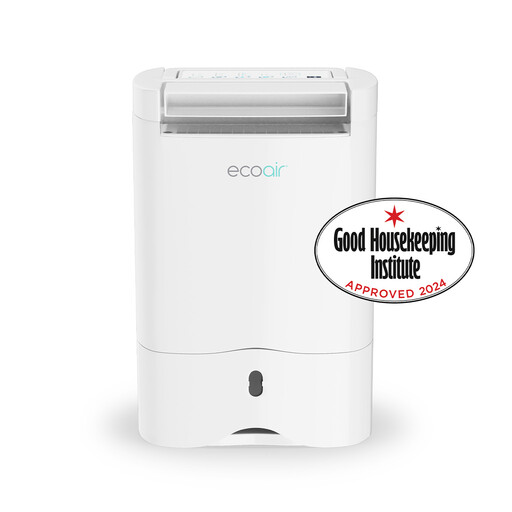 Image unavailable
EcoAir DD3 Slimline desiccant dehumidifier, 10 litres per day, 3L tank
Consider this model for a cool room with persistent window condensation when its stated capacity and drainage arrangement suit the space.
EcoAir lists operation from 1°C to 40°C, extraction of up to 10 litres per day, a 3-litre tank and optional continuous drainage. Its 39 dB(A) noise figure applies to the lowest setting, so check whether the setting you would use is acceptable during hobby work.
View on Joybuy
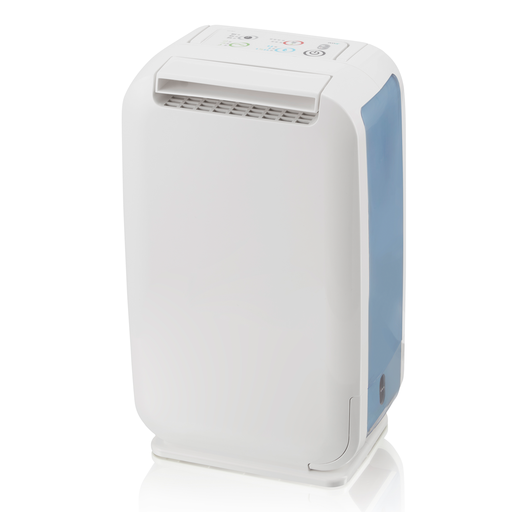 Image unavailable
EcoAir DD1 Mini desiccant dehumidifier, 6 litres per day, 1.8L tank
Consider this desiccant model if its smaller stated tank and extraction rating fit the room’s moisture load and your emptying routine.
The product name states extraction of 6 litres per day and a 1.8-litre tank. Before choosing it for an unheated or occupied room, check the DD1 Mini’s exact operating-temperature range, noise figure and humidity controls.
View on Joybuy
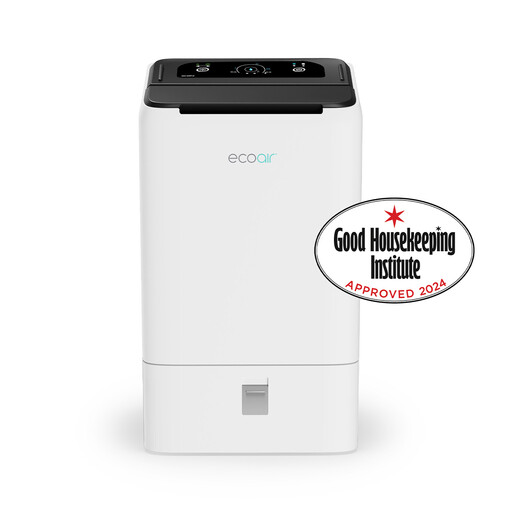 Image unavailable
EcoAir DD2 Simple desiccant dehumidifier, 9 litres per day
Consider this model if you want to compare its stated extraction rating with the room’s moisture load and your preferred emptying arrangement.
The product name states extraction of 9 litres per day. Check the DD2 Simple’s operating-temperature range, tank capacity, noise figure and humidity controls for your particular room before relying on it for cold-room or quiet-workspace use.
View on Joybuy
Common questions
Will a desiccant dehumidifier stop all window condensation?
No: it removes airborne moisture, but cold glass, ventilation and ongoing moisture sources still affect condensation. GOV.UK advises effective ventilation, while West Lothian Council explains how moist air forms droplets on cool surfaces. Investigate leaks or other damp causes if the problem persists.
When should I consider a desiccant rather than another type?
A desiccant model is worth considering when the hobby room is cold or intermittently heated, provided the exact model’s stated operating range covers its usual temperature. Meaco recommends desiccant for applications below 10°C; EcoAir and Pro Breeze each list relevant models operating down to 1°C. Those are manufacturer statements about particular products, not a guarantee for every room.
What humidity should I aim for around crafts, wood or artwork?
EcoAir’s DD3 Slimline manual gives 40–60% relative humidity as a general optimum range and cautions against both excessively high and low humidity. Monitor the room rather than running the appliance at maximum drying continuously, and seek material-specific guidance for valuable or specialist items.
Can I avoid emptying the tank every day?
A compatible continuous-drainage arrangement can reduce manual emptying, but it needs a suitable, safely routed drain. EcoAir lists optional continuous drainage and a 3-litre tank for the DD3 Slimline, while Pro Breeze lists a drainage option and a 3-litre tank for its 10L desiccant model. Without drainage, emptying frequency depends on how much water the room and appliance collect.
What if condensation has led to persistent mould in a rented room?
Report persistent damp or mould to your landlord or managing agent rather than treating a dehumidifier as the whole solution. GOV.UK guidance for homes in England says private and social landlords must comply with damp-and-mould regulations; the underlying moisture problem still needs attention alongside any control of airborne humidity.


