People drying laundry in a cold conservatory
If your airer is in a conservatory that becomes cold or remains unheated in winter, check how the dehumidifier operates at the temperatures your room reaches.


Choose a desiccant dehumidifier if you regularly dry laundry in a cool or unheated conservatory: Meaco says compressor extraction can lose efficiency below 10°C, while Electrical Safety First identifies desiccant machines as better suited to cooler spaces. If the room stays warm, a compressor model is worth considering for its generally lower electricity use in those conditions. Whichever type you choose, check its laundry controls, placement instructions and water-collection arrangements.
If your airer is in a conservatory that becomes cold or remains unheated in winter, check how the dehumidifier operates at the temperatures your room reaches.
Repeated indoor loads make laundry controls, airflow direction and a manageable tank or drainage arrangement especially relevant.
If drying washing also leaves moisture on the windows, consider dehumidification alongside the room's existing ventilation, not as a replacement for it.
Start with the conservatory's winter temperature, then compare the controls needed for a laundry session. Electrical Safety First says compressor models generally work better in warmer conditions, while desiccant models suit cooler spaces but may use more electricity.
| Concern | What to check | Who this matters to |
|---|---|---|
| Cold-room operation | Compare the exact model's stated operating temperatures with those in your conservatory; do not treat a litres-per-day figure as a cold-room drying result. | If my conservatory is unheated, I need moisture removal that still suits the room in winter. Around 36% of consumers put cold-room operation first. |
| Laundry sessions and airflow | Look for laundry controls and an adjustable louvre where useful; check whether the mode runs continuously and how the airer should be positioned. | When washing loads arrive frequently, I want a drying setup I can use for each active load. Laundry turnaround comes first for around 29% of consumers. |
| Electricity use and control | Check the exact model's input power, humidity settings and available modes against how long you expect to run it. | If I also use the machine between laundry loads, I want to avoid leaving an intensive setting on unnecessarily. Around 21% of consumers prioritise control over electricity use. |
| Moisture management and safe placement | Check tank or drainage arrangements and the appliance's clearance instructions; keep the room's ventilation usable. | If condensation is my main worry, I need a place for collected water without blocking airflow or ventilation. Safe moisture management leads the choice for around 14% of consumers. |
A larger litres-per-day figure does not, by itself, tell you how a machine will work in a cold conservatory. Meaco says compressor extraction can lose efficiency below 10°C.
Check the room's usual winter temperature and the exact model's low-temperature guidance before comparing laundry features.
Pro Breeze says the laundry mode on its PB-D-23 disables the humidity target and runs continuously; do not assume another model's mode works the same way.
Check the manual, use the setting for the active drying period and return to humidity-controlled operation or switch off when appropriate.
Government home-ventilation guidance explains that washing and other household activities add moisture that can remain trapped without effective ventilation.
Keep installed vents usable and follow the home's ventilation instructions alongside the dehumidifier's instructions.
An airer, curtains or furniture can obstruct the machine's airflow. Electrical Safety First also warns against overloading or daisy-chaining extension equipment.
Follow the model's clearance instructions, keep its openings clear and check that any electrical equipment used is appropriately rated.
Meaco offers DD8L desiccant models positioned for cold or unheated spaces and indoor laundry drying.
Pro Breeze markets desiccant models for cool spaces, including conservatories, alongside compressor models with laundry settings.
EcoAir offers desiccant models including the DD1 Simple MK3, whose manual discusses indoor humidity control and laundry drying.
These EcoAir desiccant models are choices to compare for indoor conservatory laundry. Check each model's operating-temperature guidance against your room before choosing on extraction figures or laundry features.
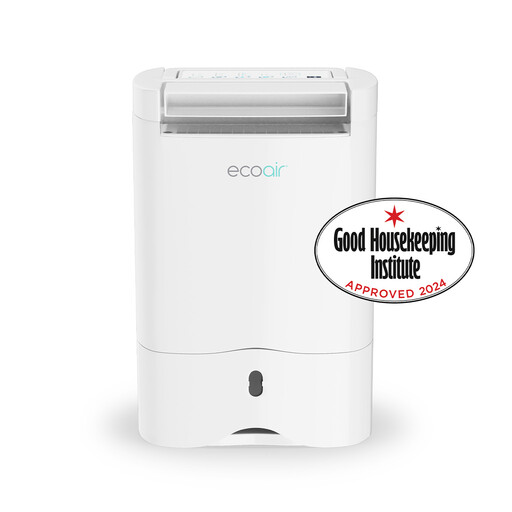 No image available
Consider this model if a laundry setting and a 3 L water tank suit your drying routine.
Advertised extraction: 10 L/day. Its product name specifies a laundry mode; check its operating-temperature guidance for your conservatory.
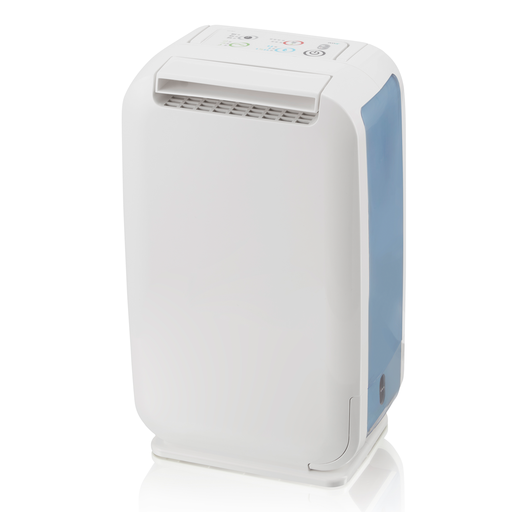 No image available
For conservatory laundry, compare this model's drying controls and cold-room operating guidance with your routine before choosing it.
Advertised extraction: 6 L/day. Water tank: 1.8 L.
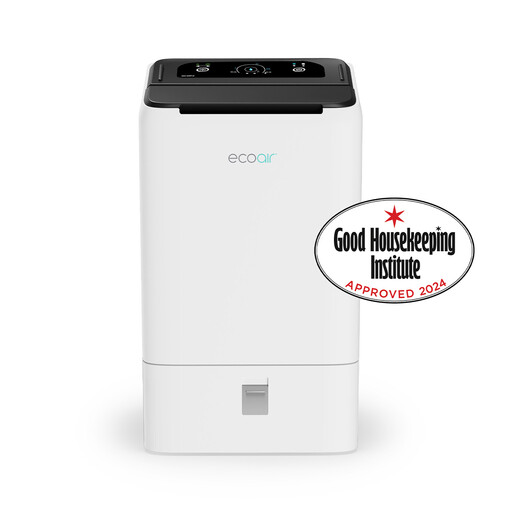 No image available
Consider this model if you want a named laundry mode for active drying sessions.
Advertised extraction: 9 L/day. Check its operating-temperature guidance and tank arrangements for the way you will use the conservatory.
A desiccant model is worth considering when the conservatory is regularly cool or unheated. Meaco and Pro Breeze position their desiccant ranges for colder spaces, while Electrical Safety First says compressor models generally work better in warmer temperatures; check the exact model's operating conditions.
Use laundry mode for an active drying session in line with the exact model's manual, rather than assuming it is a background setting. Pro Breeze says the cited PB-D-23 mode runs continuously without a humidity target; once washing is dry, change settings or switch off as instructed.
A dehumidifier does not replace the home's ventilation. Government home-ventilation guidance explains that household activities add moisture that can become trapped without effective ventilation, so keep installed vents usable and follow your home's ventilation instructions.
Use one only if it is suitable for the appliance and the combined electrical load. Electrical Safety First warns against overloading extension equipment or plugging one extension into another; follow the appliance and extension manufacturers' instructions.