What matters when choosing?
Start with the room’s size and usual temperature, then consider humidity control and the practicalities of running the appliance in an occupied space. For a consistently heated room, include a compressor model in the electricity-use comparison.
| Concern |
What to check when buying |
Who this matters to |
| Room coverage |
Measure the living room in m² and compare it with the exact model’s stated coverage. Check the conditions behind any litres-per-day rating. |
If stored clothes share a large or open living space, I need moisture control suited to the whole room, not just the area beside the appliance; around 42% of consumers put room coverage first. |
| Cool-room clothes care |
Check the operating-temperature range and whether the humidistat and airflow controls suit the room and clothes-drying setup. |
When the living room cools between heating periods, I want to control humidity around stored clothes without relying on a headline extraction figure; roughly 33% of consumers prioritise this cold-room need. |
| Everyday use |
Compare the intended mode’s noise and electricity figures, then check tank capacity or the requirements for continuous drainage. |
If I spend much of the day in this room, I need an appliance whose sound and emptying routine I can live with; for around 25% of consumers, everyday comfort and upkeep come first. |
Desiccant models on Joybuy
These desiccant models relate to cool-room clothes storage or indoor laundry. Compare each one’s stated room coverage and humidity controls with your living room before deciding whether it suits a large space.
 No image available
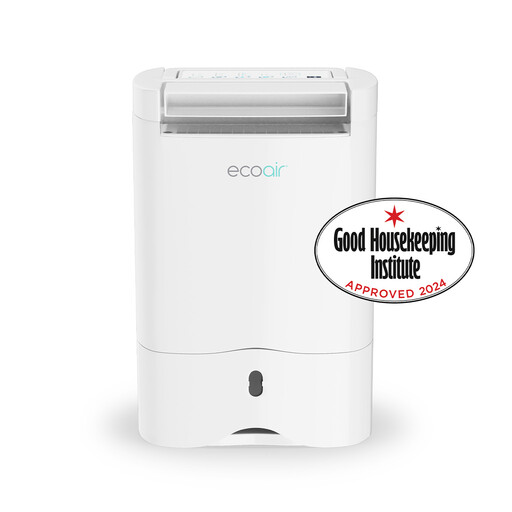
EcoAir DD3 Slimline Desiccant Dehumidifier, White
Its laundry mode is relevant if clothes are dried in the living room; check the model’s stated coverage against the measured space.
The listed extraction figure is up to 10 litres per day, and the tank is 3L. Daily collection will depend on conditions.
If you plan to use continuous drainage, confirm the hose requirements and what is included.
View on Joybuy
 No image available
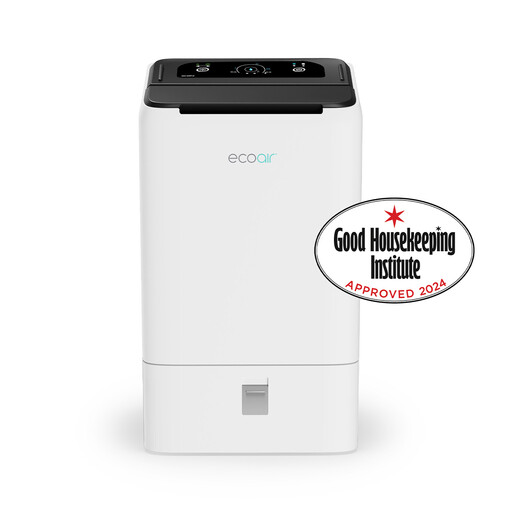
EcoAir DD2 Simple Desiccant Dehumidifier, White
Its laundry mode may be useful where clothes are dried indoors; confirm room coverage and humidity controls for your space.
The listed extraction figure is up to 9 litres per day, not a fixed amount to expect each day.
Check the tank capacity and any continuous-drainage hose requirements if regular emptying would be inconvenient.
View on Joybuy
 No image available
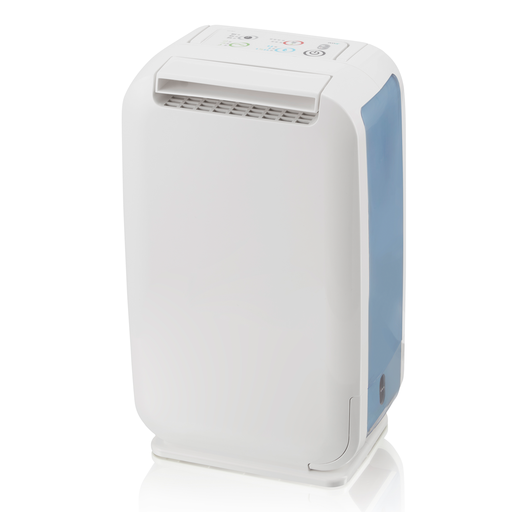
EcoAir DD1 Mini Desiccant Dehumidifier, White
For clothes stored in a cooler living room, assess this model against the full room area rather than assuming a compact unit will cover it.
The listed extraction figure is up to 6 litres per day, with a 1.8L tank; actual collection depends on conditions.
Check its humidity controls and drainage arrangement if either is important to your setup.
View on Joybuy
Common questions
What humidity setting makes sense around stored clothes?
Use a humidistat to manage room humidity rather than running continuously at maximum where the appliance offers that control. EcoAir’s DD1 Classic manual describes 40–60% relative humidity as its comfort range and cautions against humidity that is too high or too low.
Can a dehumidifier fix persistent damp or mould by itself?
No. It can help reduce excess moisture, but a leak or other underlying damp cause still needs attention. Government guidance for England says damp and mould and their underlying causes should be addressed promptly.
Is continuous drainage preferable to using a tank?
Continuous drainage can reduce emptying work if you have a suitable drain and can secure the hose without a leak or trip risk. Check what comes with the exact model: EcoAir lists a 1m hose for the DD1 Classic MK6, while Pro Breeze lists a 200cm hose for its 10L desiccant model.
Should I consider a compressor model for a heated living room?
Yes, particularly if the room stays heated and electricity use is a priority. Ebac claims that, under normal UK home conditions, a compressor dehumidifier can use about half the electricity of a desiccant model for the same water extraction; that is a manufacturer comparison, so compare the exact models and their stated operating conditions before choosing.


