Who this suits

People with cold-flat condensation

If your windows are wet mainly in colder weather, the affected room's temperature matters when choosing a dehumidifier. Electrical Safety First identifies desiccant models as better suited to cooler or unheated spaces.

People short of floor space

In a compact living area or bedroom, allow room for airflow as well as the appliance itself. Consider how its noise, carrying weight and water tank will affect everyday use.

Households drying laundry indoors

Drying clothes inside adds moisture to the flat while windows may already be cold. National Energy Action suggests considering a dehumidifier in rooms prone to condensation or used for drying washing; ventilation still matters.

What matters when choosing

Desiccant dehumidifier

Consider it when: The room is cool, unheated at times or used for indoor laundry; Electrical Safety First says this type performs better in cooler conditions.

Trade-off: It may use more energy overall, so compare the stated energy use and control modes for the conditions in which you will run it.

Compressor dehumidifier

Consider it when: The room stays warm during use and energy efficiency is the stronger priority; Electrical Safety First says compressor models work best in warmer temperatures.

Trade-off: A cool or unheated room may make this type less suitable for tackling winter condensation.

Concern What to check Who this matters to
Cool-room moisture control Check the model's stated operating-temperature range and the conditions attached to its extraction figure. When my flat stays cool and the windows are wet, I need a unit suited to that room temperature; around 36% of consumers put cool-room moisture control first.
Placement and daily handling Compare dimensions, airflow clearance and stated noise; check tank capacity and whether continuous drainage is practical. If the unit will sit near where I live or sleep, I need space for it and a manageable routine for emptying it. For around 29% of consumers, placement and handling come first.
Indoor laundry Look for humidity control and, if useful, a laundry mode or adjustable airflow; follow the positioning instructions. When I dry clothes indoors, I need to manage that extra moisture without obstructing the appliance's airflow; roughly 21% of consumers prioritise the laundry-related moisture load.
Persistent damp Check that extractors and trickle vents work, and investigate recurring damp rather than relying on an appliance alone. If damp keeps returning, I need to find out whether ventilation or a building problem is involved; about 14% of consumers put identifying the underlying cause first.

Mistakes to avoid

  • Treating the appliance as a repair for recurring damp

    A dehumidifier can lower airborne moisture, but it cannot clear a blocked vent or repair water ingress. Government ventilation guidance explains that moisture can remain trapped without effective ventilation.

    Keep available extractors and trickle vents working, reduce moisture released during cooking and showering, and report persistent damp or mould in a rented flat.

    Running the appliance while the underlying problem continues also means ongoing electricity use.

  • Choosing by litres per day alone

    An extraction figure depends on the stated test conditions. It does not tell you whether the unit will fit beside furniture or be comfortable to run near a sleeping area.

    Compare temperature range, dimensions, noise and tank handling alongside extraction, using like-for-like test conditions where available.

  • Crowding an electrical appliance

    Restricted airflow and exposure to dripping water can create safety problems. A compact flat does not remove the need for clearance around the unit.

    Follow the manual's placement instructions, keep vents clear, inspect the plug and cable, and stop using the unit if you notice overheating, a burning smell or unusual noise. Electrical Safety First advises buying from a reputable source and checking the supplied plug.

  • Assuming an advertised energy figure describes every use

    Energy use depends on the model, selected mode and how long it runs. A high-output setting used for laundry may not reflect ordinary humidity-controlled operation.

    Check the stated power or energy figure and its conditions, then consider your expected running hours and whether the model has automatic humidity control.

Brands to consider

Meaco

Meaco positions its DD8L Pro desiccant model for moisture control in cold rooms and for indoor laundry.

  • Meaco describes directed laundry airflow, selectable energy modes and app control for the DD8L Pro.
  • Check the model's dimensions, noise and stated energy-use conditions against your intended room rather than treating its feature list as a performance comparison.

EcoAir

EcoAir's desiccant range includes the DD1 Classic and larger-home models; compare the exact model and variant before using a published specification.

  • For the DD1 Classic, EcoAir states a 1°C to 40°C operating range and 7.5 L/day extraction at 20°C and 60% relative humidity.
  • A larger model's extraction figure alone does not establish that its size, noise or tank routine suits a small flat.

Pro Breeze

Pro Breeze offers a PB-D-10 desiccant model positioned by the brand for cold rooms and spaces up to 35 m².

  • The PB-D-10 product information lists a humidistat, 3 L tank and continuous-drain provision.
  • Check its dimensions, stated noise and energy-use conditions for your placement and intended running pattern.

Desiccant models on Joybuy

These EcoAir desiccant models are relevant if you are considering an appliance for a cool small flat. Compare their stated extraction and tank sizes with the space available, and check each model's operating range, noise and energy use before deciding.
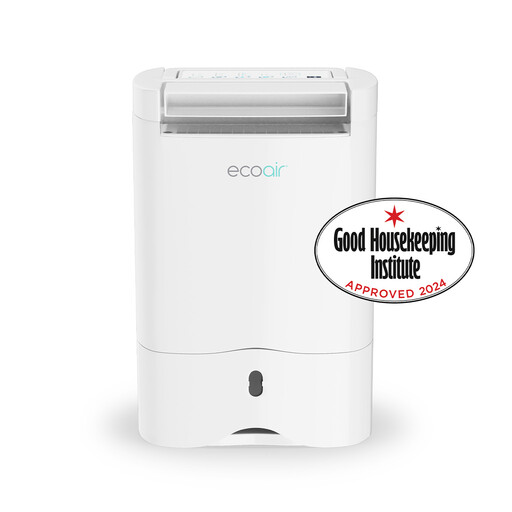
EcoAir DD3 Slimline desiccant dehumidifier, white

EcoAir DD3 Slimline desiccant dehumidifier, white

Consider this slimline model if floor space and indoor laundry are priorities. Its title states 10 litres/day extraction, a 3 L tank and a laundry mode; check the extraction test conditions, dimensions, noise and energy use for your intended room.

Joybuy
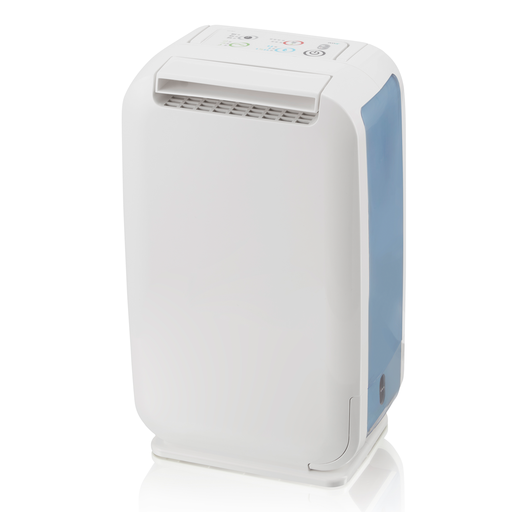
EcoAir DD1 Mini desiccant dehumidifier, white

EcoAir DD1 Mini desiccant dehumidifier, white

Consider this model if moving the unit and emptying its tank will be part of your daily routine. Its title states 6 litres/day extraction, a 1.8 L tank and a lightweight carrying design; confirm its dimensions, operating range and stated noise before placing it near a living or sleeping area.

Joybuy
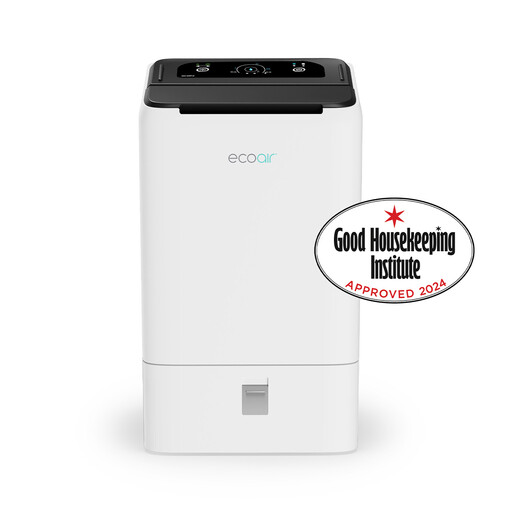
EcoAir DD2 Simple desiccant dehumidifier, white

EcoAir DD2 Simple desiccant dehumidifier, white

Consider this model if indoor laundry is a regular source of moisture. Its title states 9 litres/day extraction, a laundry mode and a lightweight design; check the tank capacity, dimensions, operating range, noise and energy use against your routine.

Joybuy

Common questions

Will a desiccant dehumidifier stop condensation on my windows?

It can reduce the indoor moisture that contributes to condensation, but it cannot remove a cold window surface or fix blocked ventilation or a leak. Keep available ventilation working and investigate damp or mould that persists.

Is a desiccant or compressor model better for a cold flat?

A desiccant model is generally the more suitable type for a cool or intermittently heated room: Electrical Safety First says it performs better in cooler conditions. If the room stays warm, a compressor model may be more energy-efficient; check the conditions behind each model's figures.

Where can I put a dehumidifier in a small flat?

Choose a position that meets the manual's airflow-clearance instructions and keeps the unit away from dripping water. Do not cover its vents with furniture or curtains, and do not permanently block designed ventilation such as trickle vents.

Can I use one while drying clothes indoors?

Yes, if the manufacturer's instructions permit that placement and water cannot drip onto the appliance. A laundry mode or adjustable airflow may be useful, but keep the air inlets and outlets clear and continue to ventilate the flat appropriately.

What if I rent and the damp keeps coming back?

Report persistent damp or mould to your landlord or managing agent and ask for the possible ventilation or building cause to be investigated. A dehumidifier may help manage indoor moisture while the issue is addressed, but it cannot repair the underlying defect.