What matters when choosing?
Start with the conservatory’s lowest likely temperature: it determines which type to investigate. Then choose the controls, drainage arrangement and room-use features that matter to you.
Desiccant dehumidifier
Consider when: The unheated room often drops below 10°C; Meaco positions desiccant models for cold spaces including conservatories.
Check before choosing: Compare the exact model’s controls, noise, power use and drainage rather than relying on its stated daily extraction figure alone.
Compressor dehumidifier
Consider when: The room stays within the chosen model’s stated operating range and its humidity controls suit regular use.
Check before choosing: A stated minimum operating temperature does not establish the same extraction performance at every temperature; colder nights remain an important consideration.
| Concern |
What to check |
Who this matters to |
| Cold-room operation |
Compare the room’s lowest likely overnight temperature with the exact model’s operating range; below 10°C, investigate desiccant models first. |
If my conservatory gets cold overnight, I need a unit intended for those conditions. Around 36% of consumers put cold-room operation first. |
| Automatic humidity control |
Look for an adjustable humidistat and check how the model responds when it reaches the selected setting. |
When I use the spare room irregularly, I want moisture control without repeatedly switching the unit myself; around 29% of consumers prioritise automatic control. |
| Tank emptying and drainage |
Check tank capacity, whether a hose is supplied and whether drainage needs a downward gravity-fed route. |
I would rather not keep visiting the room to empty a tank during extended use. For around 21% of consumers, avoiding frequent emptying is the primary concern. |
| Noise and space |
Compare stated noise at the relevant fan setting, along with dimensions and moving features if the unit will change rooms. |
If someone sleeps or works there, I need the running unit to fit without being too disruptive; around 14% of consumers put occupied-room comfort first. |
Desiccant models on Joybuy
These EcoAir desiccant models are options to examine if the conservatory spare room is often cold. Compare each model’s stated capacity and tank, then check its temperature guidance, controls and drainage arrangement against the room before choosing.
 No image available
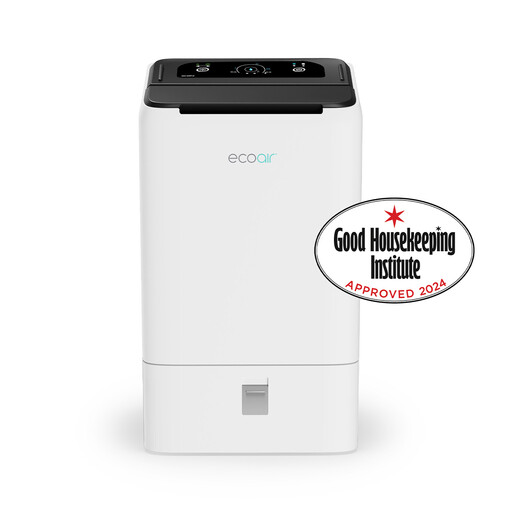
EcoAir DD2 Simple desiccant dehumidifier
Consider this desiccant model for an often-cold conservatory spare room. Its listing states 9 litres/day extraction and a laundry mode; check the minimum operating temperature and drainage instructions for your room.
View on Joybuy
 No image available
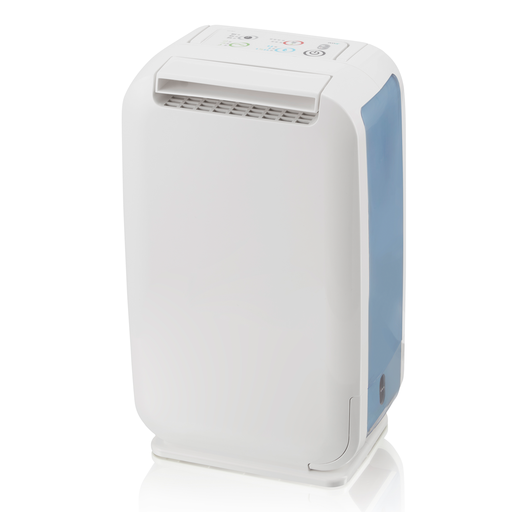
EcoAir DD1 Mini desiccant dehumidifier
Consider this desiccant model where a smaller tank suits how often you can empty it. Its listing states 6 litres/day extraction and a 1.8 L tank; check its temperature guidance and whether the drainage arrangement suits the room.
View on Joybuy
 No image available
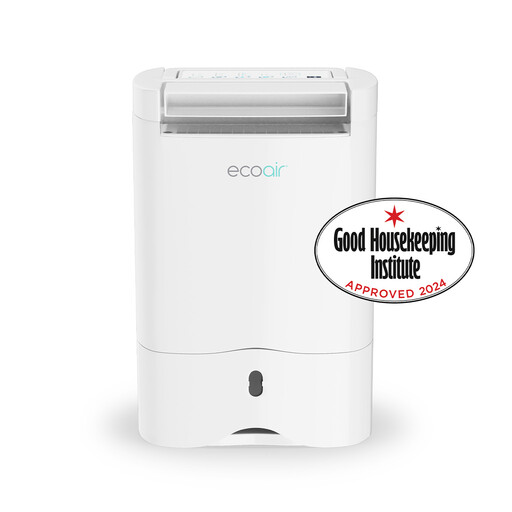
EcoAir DD3 Slimline desiccant dehumidifier
Consider this desiccant model if its slimline shape fits the available floor space. Its listing states 10 litres/day extraction, a 3 L tank and a laundry mode; confirm its operating-temperature guidance and drainage requirements.
View on Joybuy
Common questions
Should I use a desiccant or compressor dehumidifier in a cold conservatory?
Consider a desiccant model if the room is unheated or frequently falls below 10°C: Meaco advises that compressor efficiency can decline in colder spaces. If you prefer a compressor, check that the exact model’s operating guidance suits the room’s lowest likely temperature; a stated minimum alone does not promise unchanged extraction.
Can a dehumidifier fix every damp problem in a conservatory?
No. A dehumidifier can help manage airborne moisture, but it cannot repair water ingress or other building defects. The Energy Saving Trust notes that a tidemark at the bottom of a wall can indicate rising damp; investigate persistent or localised damp rather than assuming it is condensation.
Do I still need ventilation when using a dehumidifier?
Yes. UK government home-ventilation guidance says poor ventilation can trap moisture and pollutants. Keep intended ventilation, such as trickle vents where fitted, open and unblocked rather than treating the appliance as its replacement.
Will continuous drainage work without emptying a tank?
It can reduce tank emptying if the chosen model and room allow the required hose route. Pro Breeze says the models covered by its support guidance use gravity-fed drainage, not a pump, so the appliance must sit above the receiving point and the hose must run downhill; check the instructions for your exact unit.
What if damp or mould persists in a rented conservatory in England?
Report the problem to your landlord or managing agent and keep a record, rather than relying on a dehumidifier to address a possible underlying defect. GOV.UK guidance for rented housing in England addresses landlords’ responsibilities for damp and mould; housing rules elsewhere in the UK need separate, nation-specific advice.


