For a conservatory that regularly falls below about 10°C, consider a desiccant dehumidifier; Meaco uses that temperature as general guidance, not a rule for every model. A compressor model is more relevant to a consistently warmer room, where Electrical Safety First says the technology is generally more energy-efficient. Check the exact appliance's operating range, and keep shower-room ventilation working whichever type you choose.
Who needs to consider what?
The conservatory's temperature and the frequency of shower-related moisture change which features deserve attention.
Households with a cold conservatory
If the room is unheated or cools substantially in winter, choose a technology and operating range suited to its colder periods. Meaco identifies cold conservatories as a desiccant use case, while Electrical Safety First also points to desiccant units for cooler or unheated spaces.
Households with a consistently warm conservatory
If the room stays warm, compare compressor models' stated energy use and humidity controls alongside their operating ranges. Automatic control is particularly relevant when moisture rises after showers rather than staying at one level.
Households managing repeated moisture
If collected water would need frequent attention, look at tank capacity, full-tank shut-off and whether continuous drainage can work from a safe, dry position. A drainage outlet helps only when its hose has a suitable route.
What matters when choosing?
Start with the conservatory's coldest usual temperature. Then consider how the dehumidifier will respond to recurring humidity and how you will remove the collected water.
Desiccant dehumidifier
Consider when: the conservatory is unheated or regularly drops below about 10°C, the general point at which Meaco favours desiccant technology.
Trade-off: Electrical Safety First says desiccant units can use more energy overall than compressor units in warmer conditions; check the individual model's stated consumption and operating range.
Compressor dehumidifier
Consider when: the conservatory stays reliably warmer; Electrical Safety First describes compressors as generally more energy-efficient in warmer temperatures.
Trade-off: extraction may be less suitable in a colder room, so a headline litres-per-day figure cannot replace the exact model's temperature specification.
| Concern |
What to check |
Who this matters to |
| Cold-weather extraction |
Compare the model's operating-temperature range with the conservatory's coldest usual temperature. Read its extraction rating alongside the conditions under which it applies. |
If my conservatory becomes cold between showers, I need a unit suited to extracting moisture at those temperatures; around 44% of consumers put cold-weather suitability first. |
| Energy use and humidity control |
Check stated energy consumption on a comparable basis and whether a humidistat can maintain a selected humidity level. |
When moisture rises repeatedly in a warm room, I want control that responds to changing humidity without unnecessary running; roughly 33% of consumers prioritise energy use and automatic control. |
| Water handling |
Check tank capacity and full-tank shut-off. For continuous drainage, confirm the hose arrangement and a suitable downhill route from a dry location. |
I would rather not empty a tank after every spell of dampness; about 23% of consumers put easier water handling first. |
Mistakes to avoid
-
Choosing by litres per day alone
An extraction figure depends on operating conditions and does not establish how well a compressor model will suit a cold conservatory.
Check the room's winter temperature against the model's stated range before comparing extraction figures. Meaco's general guidance favours desiccant technology below 10°C.
-
Using a dehumidifier instead of shower-room ventilation
Government home-ventilation guidance identifies showering as a source of indoor moisture. Removing moisture later in the conservatory does not replace ventilation where it is generated.
Use and maintain the shower-room ventilation as intended, keep vents unobstructed and treat the conservatory dehumidifier as additional moisture control.
-
Assuming a drainage outlet means hands-off operation
Continuous drainage needs an appropriate hose route, and the hose or collection arrangement still needs checking. Without a workable route, you may need to empty the tank.
Plan the unit's position and downhill hose run before buying. Meaco lists a drainage option for the DD8L but says its hose is not included; EcoAir says the DD3 Classic MK3 includes a 1-metre hose.
A hose, fittings or a suitable collection container may be needed if the supplied arrangement cannot reach the intended drainage point.
-
Placing a mains appliance near shower water
Water exposure and obstructed airflow affect where a domestic dehumidifier can be used safely. Electrical Safety First also warns against using an extension lead to power an appliance in a bathroom where sockets are absent.
Choose a stable, dry position in the conservatory, leave the clearance required by the model's instructions and do not route a bathroom extension lead to power it.
Relevant brands to compare
These brands offer product lines relevant to the temperature and water-handling choices here; compare individual models rather than treating a brand name as a specification.
Meaco
Meaco offers compressor and desiccant dehumidifiers, including the DD8L desiccant model for buyers considering a cooler conservatory.
- Meaco's technology guidance identifies spaces below 10°C, including conservatories, as a general desiccant use case.
- The DD8L has a continuous-drainage option, but Meaco says a hose is not included. Check the exact model's suitability and supplied accessories.
EcoAir
EcoAir's desiccant range includes the DD3 Classic MK3, a model to compare when tank size and a supplied drainage hose matter.
- EcoAir specifies a 4.2-litre tank and an included 1-metre continuous-drainage hose for the DD3 Classic MK3.
- EcoAir states an extraction figure of up to 11 litres per day and a noise range of 36–47 dB(A) for that model; assess those figures using the model's stated conditions rather than applying them to its whole range.
Pro Breeze
Pro Breeze has a 12L compressor model with a built-in humidistat and continuous-drainage option for consideration in a warmer conservatory.
- Pro Breeze specifies its 12L model for a working temperature of 5–32°C and a room size of up to 20m².
- That stated operating range does not, by itself, establish how much moisture the model will extract at the cold end of the range; compare the room's actual conditions with the model guidance.
Ebac
Ebac discusses both compressor and desiccant technologies for domestic moisture control.
- Ebac positions its compressor models for domestic damp and condensation and discusses desiccant units for colder, unheated settings.
- Ebac's general temperature guidance differs from Meaco's 10°C point. Use the chosen model's instructions and operating range rather than either brand's general rule alone.
Joybuy dehumidifiers to consider
These dehumidifiers offer different stated extraction ratings, tank sizes and drainage arrangements for managing moisture in a conservatory. Before choosing one, check that its operating range suits the room's coldest usual temperature; the listed features alone do not establish cold-weather extraction.
 No image available
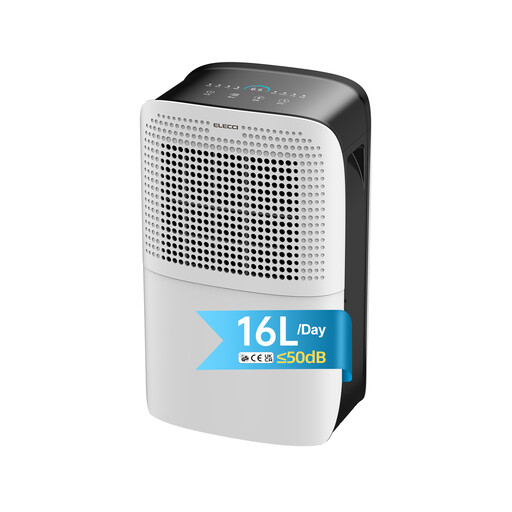
ELECCI 16L/D dehumidifier with drain hose
Consider this model if a drain hose and timer would help with recurring moisture. The product name states a 16L/day extraction rating, 3.1L tank, four modes and 24-hour timer.
Check extraction behaviour at the conservatory's coldest temperature and whether the hose can run downhill from a dry position.
Joybuy
 No image available
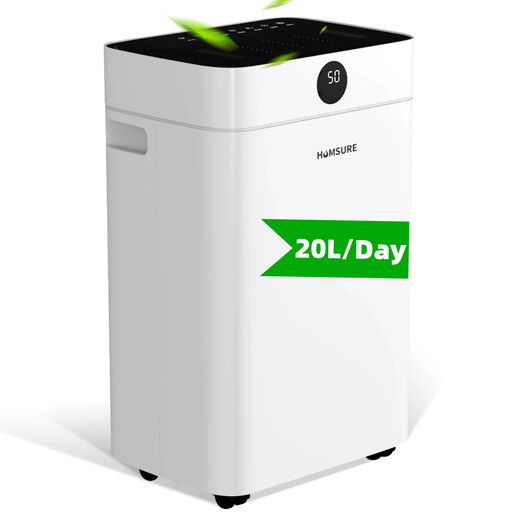
HUMSURE 20L/Day dehumidifier for rooms up to 50m²
Consider this model when tank capacity, a timer and continuous drainage are relevant to repeated humidity. Its product name states a 20L/day extraction rating, 2.8L tank, 24-hour timer and claimed room coverage of up to 50m².
Confirm its operating-temperature range for your conservatory and plan a suitable downhill drainage route.
Joybuy
 No image available
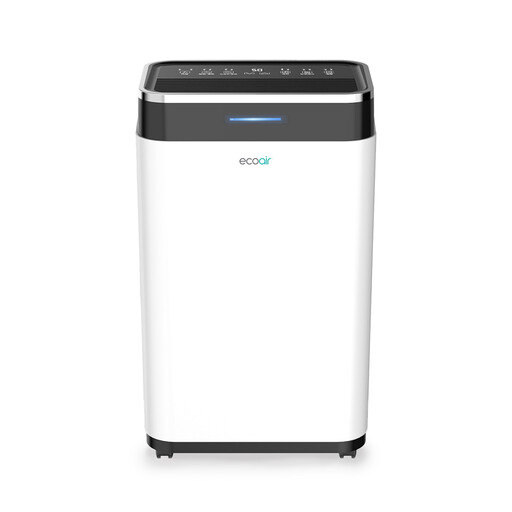
EcoAir DC18 MK2 compressor dehumidifier
Consider this compressor model for a conservatory whose temperature suits its stated operating range, particularly if a larger tank would reduce emptying. Its product name states an 18-litre/day extraction rating, 6.5L tank and humidistat control.
Check the model's cold-weather operating guidance and what is supplied for continuous drainage before relying on that option.
Joybuy
 No image available
EcoAir DC26 compressor dehumidifier
Consider this compressor model if its operating conditions suit the room and you want to compare a higher stated extraction rating. Its product name states 26 litres/day, a 6.5L tank and humidistat control.
The larger headline extraction figure does not establish better results in a cold conservatory. Check the model's operating range and the supplied drainage arrangement.
Joybuy
 No image available
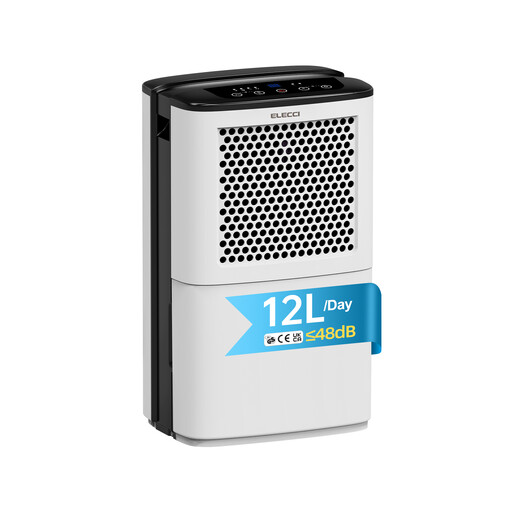
ELECCI 12L/D dehumidifier with drain hose
Consider this model if a stated smaller-room application and a drain hose match your set-up. Its product name states a 12L/day extraction rating, 3.8L tank, 24-hour timer and claimed coverage of up to 25m².
Check its operating range against the conservatory's lowest usual temperature and confirm whether its humidity settings maintain a selected level automatically.
Joybuy
Common questions
Should I choose a desiccant or compressor dehumidifier for a conservatory?
Choose according to the conservatory's usual temperature, particularly in colder weather. Meaco generally favours desiccant models below 10°C and compressor models above it; Electrical Safety First likewise describes desiccant units as better suited to cooler or unheated spaces. Confirm the exact model's operating range rather than treating that general threshold as universal.
Can a dehumidifier replace shower-room ventilation?
No: use the shower-room ventilation as intended and the conservatory dehumidifier for additional moisture control. Government home-ventilation guidance identifies showering as a source of indoor moisture and warns that ineffective ventilation can leave it trapped.
Can I run the dehumidifier in the bathroom after a shower?
Do not assume a domestic dehumidifier is suitable for bathroom use. Follow the exact appliance's placement instructions and keep it in a stable, dry location with clear airflow; Electrical Safety First warns against using an extension lead in a bathroom where sockets are absent.
What should I check before choosing continuous drainage?
Confirm that the model has a drainage outlet, whether a hose is included and whether it can run downhill to a suitable drain or container from the intended dry position. Check the hose or collection arrangement regularly for blockages, as Electrical Safety First advises.


