People storing clothes in a shared lounge
If seasonal clothes or linens are kept where others sit and spend time, moisture control has to work alongside acceptable noise, accessible tank emptying and a safe position away from furniture and textiles.


Consider a desiccant dehumidifier if the shared lounge is regularly cold or falls below about 10°C; Meaco positions its desiccant models for those conditions. If the room is normally heated and occupied, compare compressor models too rather than assuming a laundry-focused desiccant is the right choice. Whichever type you choose, check noise, humidity controls and safe placement around clothes, and address any underlying cause of persistent damp.
If seasonal clothes or linens are kept where others sit and spend time, moisture control has to work alongside acceptable noise, accessible tank emptying and a safe position away from furniture and textiles.
If the room gets cold in winter, its usual temperature is central to the technology choice. Meaco and Pro Breeze position their desiccant ranges for colder conditions; check the operating range of the particular model.
If condensation or mould keeps returning, moisture removal alone may not resolve the problem. Government guidance on ventilation and damp points to the need to investigate underlying causes as well.
Start with the lounge’s normal temperature, then decide whether the machine’s everyday controls and noise suit a room people share. Wet laundry is a separate, occasional task from protecting clothes already in storage.
Consider it when: The lounge is regularly cold; Meaco positions desiccant operation for rooms below 10°C, while Pro Breeze describes its desiccant range as operating down to 1°C.
Trade-off: In an occupied lounge, check the exact model’s electricity use, noise and automatic controls. Ebac favours refrigerant models for occupied UK homes partly because of its concern about desiccant electricity use.
Consider it when: The lounge is normally heated and ongoing humidity control around stored clothes is the main task. Ebac recommends refrigerant models for occupied UK homes.
Trade-off: If the lounge becomes very cold, compare the exact compressor model’s stated operating range with a desiccant alternative rather than assuming either will suit every temperature.
| Concern | What to check | Who this matters to |
|---|---|---|
| Room temperature and electricity use | Check the lounge’s usual winter temperature and the model’s operating range and wattage at the setting you would use. | If my lounge is cold only occasionally, I want to know whether I need desiccant operation before committing to its everyday electricity use. Around 36% of consumers would put this temperature-and-use decision first. |
| Shared-room disruption | Compare noise ratings at the intended setting, and check whether the unit can stand clear of seating, curtains and stored clothes. | When other people use the lounge, I need moisture control that does not dominate conversation or obstruct the room. For around 29% of consumers, shared-space practicality is the primary concern. |
| Clothes storage and laundry | Look for humidity-controlled everyday operation; if you also dry wet laundry, check how the separate drying mode works. | I want to protect stored textiles day to day, but sometimes need a setting for wet laundry without leaving it on unnecessarily. Around 21% of consumers would make that distinction their main priority. |
| Persistent damp | Check for recurring condensation, leaks or mould, and whether existing ventilation is working as intended. | If damp keeps returning, I need to understand its cause rather than rely on an appliance alone. Investigating the underlying problem comes first for around 14% of consumers. |
A laundry label does not settle the choice for a normally heated, occupied lounge. Meaco positions desiccant models for cold conditions, whereas Ebac recommends refrigerant machines for occupied UK homes.
Observe the room’s usual cold-weather temperature, then compare the intended settings, noise and electricity use of both types.
Drying modes do not all maintain a chosen humidity level. On the Pro Breeze PB-08 compressor model, laundry mode disables the humidity target and runs continuously.
For everyday storage, check whether the model has a humidity-controlled setting; use an intensive drying mode according to its instructions when drying wet clothes.
Continuous operation can add electricity use and noise while people share the room.
Restricted airflow interferes with operation, and water dripping onto the appliance creates an electrical hazard. Meaco’s DD8L Zambezi Z2 instructions warn against water entering the unit.
Stand the appliance upright on a stable surface, keep its air openings clear and follow the purchased model’s placement instructions around hanging clothes.
Government ventilation guidance explains that moisture can become trapped indoors without effective ventilation. Recurring mould or water ingress also calls for investigation of its cause.
Keep intended ventilation routes usable and report suspected building defects to the landlord or managing agent where applicable. Use the dehumidifier for moisture control, not as a substitute for addressing the problem.
These ranges illustrate different features to check; a brand’s range does not tell you how every model will perform in your lounge.
Meaco positions its DD8L desiccant range for laundry drying and colder rooms.
EcoAir’s DD1 Classic MK6 is a desiccant option positioned for cold or unheated areas.
Pro Breeze offers desiccant and compressor ranges, making its model instructions particularly relevant when comparing cold-room use with laundry settings.
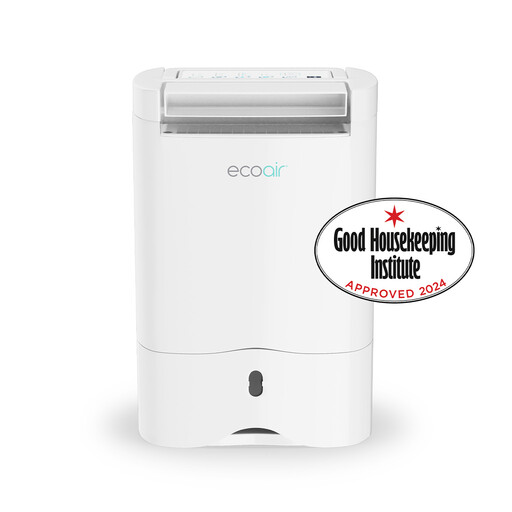
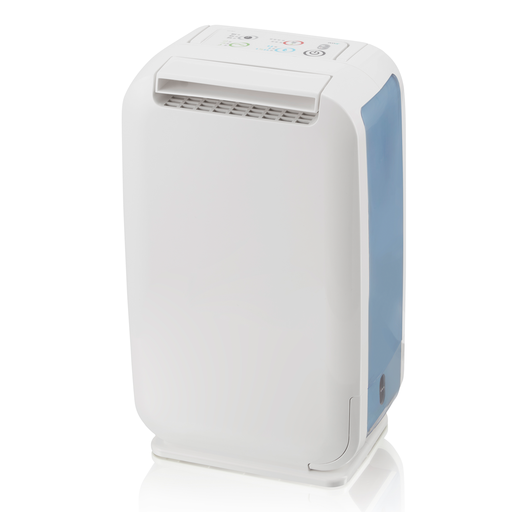
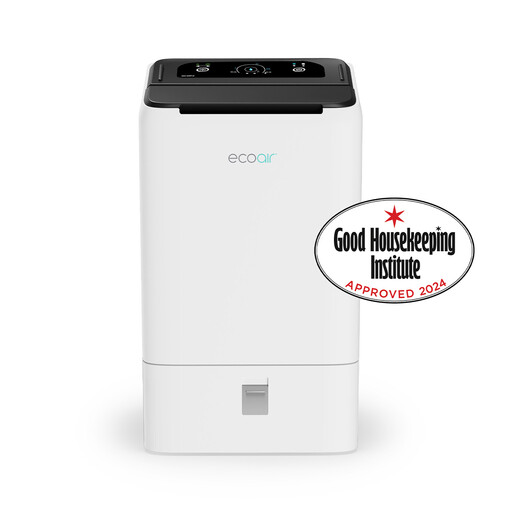
These EcoAir desiccant models are relevant if a cold or intermittently heated lounge makes desiccant operation worth considering. Their listed capacities distinguish the variants, but check each model’s operating temperature, noise and everyday humidity controls against your room before choosing.
 No image available
A desiccant option to consider for a cold lounge where occasional wet laundry is also dried.
The listing names 10 litres/day extraction, a 3 L tank and laundry mode. Check the operating-temperature range, noise at your intended setting and humidity-control behaviour for everyday use.
 No image available
Consider this smaller listed variant if you can accommodate its tank-emptying routine in the shared room.
The listing names 6 litres/day extraction and a 1.8 L tank. Check its operating-temperature range, noise and humidity controls, as well as how often the tank would need emptying in your use.
 No image available
A desiccant option for comparing cold-room use with occasional indoor laundry needs.
The listing names 9 litres/day extraction and laundry mode. Before using it in a shared lounge, check the tank capacity, operating-temperature range, mode-specific noise and everyday humidity controls.
No. Meaco positions desiccant models for temperatures below 10°C, but a normally heated, occupied lounge also warrants a look at compressor models; Ebac recommends refrigerant machines for occupied UK homes. Compare the actual models’ operating ranges, noise, controls and electricity use.
Only if you can follow that model’s clearance and safety instructions. Keep air openings unobstructed, place the unit upright on a stable surface and prevent water dripping onto it. A distance specified for one machine should not be assumed to apply to another.
Not necessarily. Laundry mode on the Pro Breeze PB-08 compressor model runs continuously without maintaining a selected humidity target. For routine storage protection, check whether your chosen machine offers a humidity-controlled everyday setting and reserve intensive drying for wet laundry when appropriate.
No, not if the underlying cause remains. Government guidance explains how inadequate ventilation can leave household moisture trapped indoors, while its damp-and-mould guidance for England calls for underlying issues to be addressed promptly. If you rent, report recurring mould or a suspected defect to the landlord or managing agent; check the applicable guidance where you live.
Follow the purchased model’s electrical instructions and do not use a damaged cable. For example, electriQ specifies an earthed 220–240 V, 50 Hz outlet and no extension cord in its DESD9LW manual; those are instructions for that model, not a substitute for checking yours.