Who needs which approach?

Owners of cold or unheated conservatories

If the room often falls below 10°C, start with a model intended for cooler conditions. Electrical Safety First identifies desiccant dehumidifiers as better suited to cooler or unheated spaces; check the operating range of the particular appliance.

Households dealing with recurring condensation

Regular moisture collection makes the tank, humidity control and possible drain route important. Check the building too: the Energy Saving Trust notes that rain can enter through defects in roofs, guttering, walls, doors and windows.

Consumers seeking less day-to-day intervention

If you expect to run the appliance regularly, consider how often you can empty its tank, whether a suitable drain is available and how easily you can reach its filter. Check the stated noise level if the conservatory is used as living space.

What matters when choosing?

Desiccant dehumidifier

Choose when: The conservatory is unheated or often below 10°C; Meaco identifies desiccant models as suitable for conservatories and other cold spaces.

Trade-off: Electrical Safety First says desiccant models may use more energy overall, so check the particular model’s power use.

Compressor dehumidifier

Choose when: The conservatory normally stays warmer and the model’s operating range covers its expected temperatures.

Trade-off: Cold conditions can reduce extraction or interrupt operation for defrosting; a headline litres-per-day rating does not establish cold-room output.

Concern What to check Who this matters to
Cold-weather operation Typical winter temperature, dehumidifier type and the exact model’s operating-temperature range. If my unheated conservatory gets cold, I need an appliance intended to keep extracting moisture in those conditions. Around 40% of consumers put cold-weather operation first.
Moisture load and drainage Room-size guidance, tank capacity and whether the model supports drainage to a suitable point. When condensation keeps returning, I want water collection that does not mean constant tank emptying. For around 30% of consumers, managing recurring moisture is the primary concern.
Noise and routine upkeep Stated noise level, tank-full shut-off, filter access and clearance instructions. If I use the conservatory as living space, I need a unit I can run and maintain without undue disruption. Quiet, manageable daily use comes first for around 30% of consumers.

Mistakes to avoid

  • Choosing by litres per day alone

    A stated maximum extraction rate does not tell you what a model will collect in a cold conservatory. Manufacturer figures can depend on test temperature and humidity, while compressor operation may be less effective in colder air.

    Check the room’s winter temperature alongside the model’s technology, operating range and rated-output conditions.

  • Treating water ingress as condensation

    A dehumidifier removes airborne moisture; it will not repair rain penetration. The Energy Saving Trust identifies roofs, guttering, walls, doors and windows as possible routes for water to enter.

    Investigate a localised patch, a tidemark or damp that worsens after rain, and arrange an appropriate building assessment where needed.

    An unresolved leak can leave the room needing ongoing attention and building repairs even while a dehumidifier runs.

  • Overlooking tank handling

    With recurring damp, a tank that needs frequent emptying can make regular use difficult. A drainage option is useful only if the model supports it and a suitable route is available.

    Compare tank capacity and tank-full shut-off, or check the manufacturer’s hose and drainage instructions before planning continuous use.

  • Closing off ventilation

    A dehumidifier does not replace fresh-air exchange. UK government home-ventilation guidance warns that poor ventilation can trap moisture and pollutants indoors.

    Keep installed trickle vents unobstructed and maintain suitable ventilation while managing the room’s moisture.

Relevant brands to consider

Meaco

Meaco offers both desiccant and compressor dehumidifiers for domestic use.

  • Meaco recommends its desiccant range for conservatories and other spaces that often fall below 10°C.
  • That guidance does not apply to every Meaco appliance: compare the exact model’s operating range and drainage arrangement with your room.

Ebac

Ebac’s domestic range includes models positioned for condensation and indoor laundry use.

  • Ebac describes automatic humidity-response control and a laundry mode for its 3850e model.
  • Check the chosen model’s operating conditions before using those features to judge its fit for an unheated conservatory. Ebac’s performance and savings language is its own claim, not an independent comparison.

Pro Breeze

Pro Breeze has UK-facing compressor and desiccant ranges, including models with different stated capacities.

  • Pro Breeze specifies a 5°C to 32°C working range, 4L tank and continuous drainage for its OmniDry 20L.
  • Its stated extraction and room-area figures should be considered with the model’s test conditions, not taken as guaranteed output in a cold conservatory.

Dehumidifiers on Joybuy

These dehumidifiers offer different starting points for a damp conservatory: the desiccant model is relevant to a colder room, while compressor models need closer attention to winter temperatures. For every option, check whether its tank or drainage arrangement suits how you will use the room.
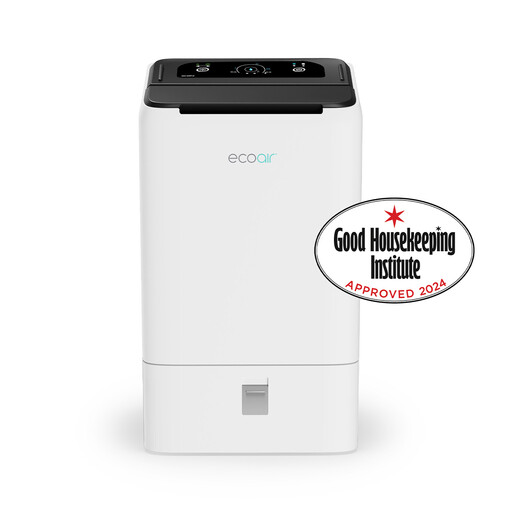
EcoAir DD2 Simple desiccant dehumidifier

EcoAir DD2 Simple desiccant dehumidifier, white

Consider this desiccant model for a conservatory that is regularly cold; confirm its operating-temperature range against your room before buying.

The product name states 9 litres per day of extraction and a laundry mode. Check how the stated extraction rate applies to your room conditions.

View on Joybuy
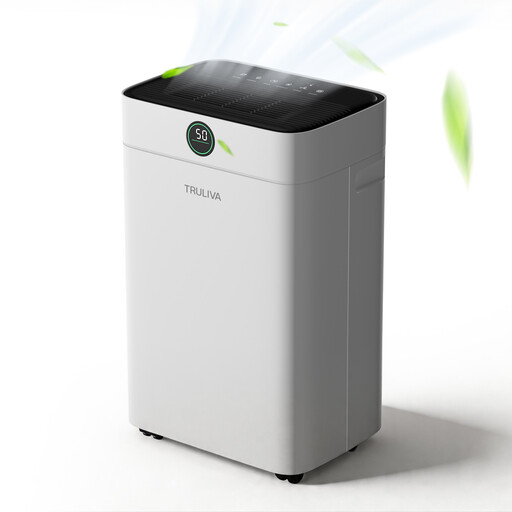
TRULIVA 25 L/day dehumidifier with laundry drying

TRULIVA 25 L/day dehumidifier with laundry drying

Consider this compressor model where winter temperatures suit its operation and a drain-hose route is practical. The listing says its compressor stops to defrost below 15°C, so check how often your conservatory reaches that temperature.

The product name specifies a 2.8 L tank, auto defrost and a continuous-drain hose. Its stated extraction rate is up to 25 L/day at 90% relative humidity and 95°F, not a promise of the same output in a cooler room.

View on Joybuy
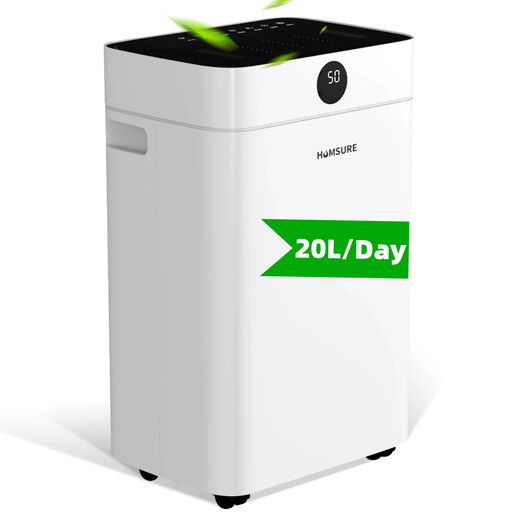
HUMSURE 20 L/day dehumidifier

HUMSURE 20 L/day dehumidifier with 2.8 L tank

This option is relevant when recurring moisture makes drainage and tank handling important. Confirm its dehumidification technology and operating-temperature range before choosing it for a cold conservatory.

The product name states guidance for rooms up to 50 m², a 2.8 L tank, a 24-hour timer, auto defrost and continuous drainage. Treat the stated room area and extraction rate as guidance rather than assured output in your conservatory.

View on Joybuy
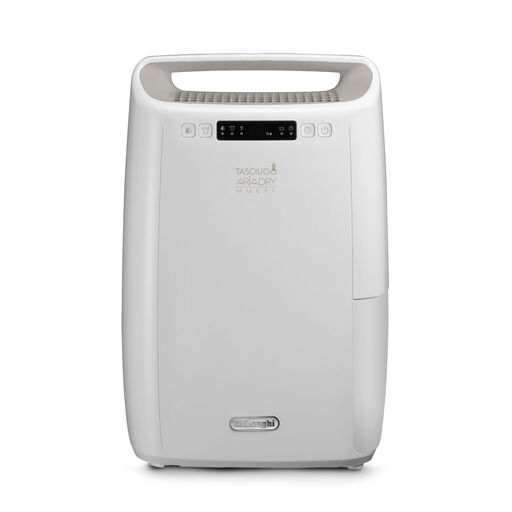
DE'LONGHI AriaDry Multi DEX214RF dehumidifier

DE'LONGHI AriaDry Multi DEX214RF dehumidifier

Consider this compressor option for a conservatory that stays within the offered unit’s operating range. Confirm the exact model before purchase, as the listing also refers to DEXD214RF.

The product name states 14 litres per day of extraction and a laundry function. Check the offered model’s winter-temperature suitability and drainage arrangement against your routine.

View on Joybuy
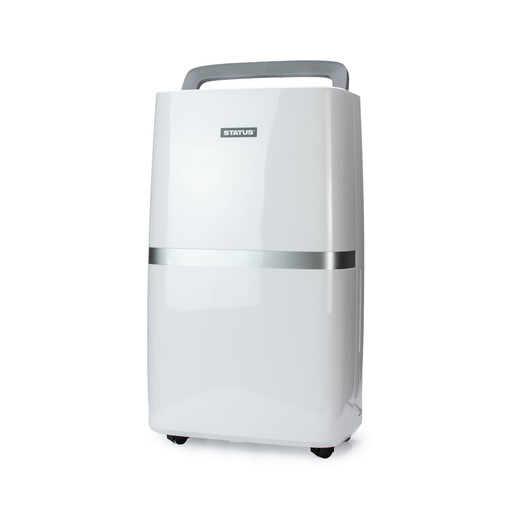
Status 16L dehumidifier with digital display

Status 16L dehumidifier with 5.5L tank, white

The stated tank capacity may appeal if you plan to collect water in the appliance rather than route it to a drain. Check its technology and operating-temperature range before selecting it for an unheated conservatory.

The product name specifies a digital display and 5.5L tank. Compare the tank-emptying routine with your expected moisture load; the stated 16L extraction figure will depend on operating conditions.

View on Joybuy

Frequently asked questions

Should I choose a desiccant or compressor dehumidifier for my conservatory?

Choose a desiccant model if the conservatory is unheated or commonly below 10°C; consider a compressor model if it normally stays warmer. Electrical Safety First identifies desiccant appliances as better suited to cooler spaces, while noting that they may use more energy overall. Check the particular model’s operating range before deciding.

Will a dehumidifier fix damp caused by a leak?

No: removing moisture from the air will not repair water entering the building. The Energy Saving Trust identifies roofs, guttering, walls, doors and windows as possible sources, so investigate patches that worsen after rain rather than assuming they are condensation.

Do I still need to ventilate the conservatory?

Yes. UK government home-ventilation guidance warns that poor ventilation can trap moisture and pollutants. Keep installed trickle vents unobstructed and ventilate appropriately while using a dehumidifier.

What should I check before running a dehumidifier regularly?

Follow the model’s instructions for airflow clearance, tank emptying, filter care and any drainage hose. If the unit will run for long periods, check its tank-full shut-off and whether its maintenance routine is manageable; follow the manufacturer’s instructions about unattended operation.

What product-safety details should I check when buying?

Check the appliance’s instructions, appropriate product marking and the manufacturer’s name and address, as advised by the UK Office for Product Safety and Standards. Check that the plug and the model’s operating instructions suit your intended use.