What matters when choosing?
Start with the room’s measured area and usual temperature, then decide how much electricity use, noise and tank emptying you can accommodate during a laundry cycle.
| Concern | What to check | Who this matters to |
|---|
| Cool-room operation |
Check the exact operating-temperature range and what its laundry setting does. |
If my living room gets chilly while washing is on the rack, I need a unit specified to operate at that temperature; around 29% of consumers put cool-room operation first. |
| Large-room coverage |
Measure the room in m² and compare its area with the exact model’s coverage claim; consider the additional moisture from laundry. |
I do not want to rely on a litres-per-day figure if the appliance cannot serve my measured room. Roughly 29% of consumers make room fit their primary concern. |
| Electricity use |
Compare power use at the setting you expect to run and calculate usage against your household tariff. |
With frequent laundry loads, I need to know what a high-output cycle demands before leaving it running; about 24% of consumers prioritise electricity use. |
| Noise and upkeep |
Check noise at the intended setting, tank capacity, drainage requirements and the manual’s placement instructions. |
Because I also spend time in the living room, I want manageable sound and fewer interruptions to empty the tank. Around 18% of consumers put day-to-day disruption first. |
Relevant brands for reference
These examples show why specifications should be checked by model, particularly for room size, temperature and the setting used while laundry dries.
Meaco
Meaco positions its DD8L Pro desiccant model for cooler environments, including temperatures below 10°C, and describes an automatic louvre that directs airflow towards washing.
- The DD8L Pro product page lists three manual energy levels and a three-year warranty.
- Check the DD8L Pro’s stated room coverage and the noise and power use of the setting you plan to use before judging its fit for your living room.
EcoAir
EcoAir’s desiccant range includes models with laundry settings. Its DD3 Slimline is specified for 1–40°C operation and coverage of up to 85 m².
- The DD3 Slimline also lists continuous drainage and 39 dB(A) at its lowest setting.
- EcoAir specifies 670W for the DD3 Slimline on high; its lowest-setting noise figure should not be taken as the noise level during high-output drying.
Pro Breeze
Pro Breeze lists a 10L desiccant model with a humidistat, a 1–40°C working range and a continuous-drainage option.
- Its published specifications include up to 35 m² coverage, 120 m³/h airflow and a 3L tank.
- The 35 m² coverage claim needs comparing with your measured living room; the word ‘large’ alone does not establish a match.
Desiccant models on Joybuy
These desiccant models are relevant to indoor laundry drying. Compare each one with your living room’s measured area and usual temperature before choosing; their extraction ratings alone do not establish large-room suitability.
 No image available
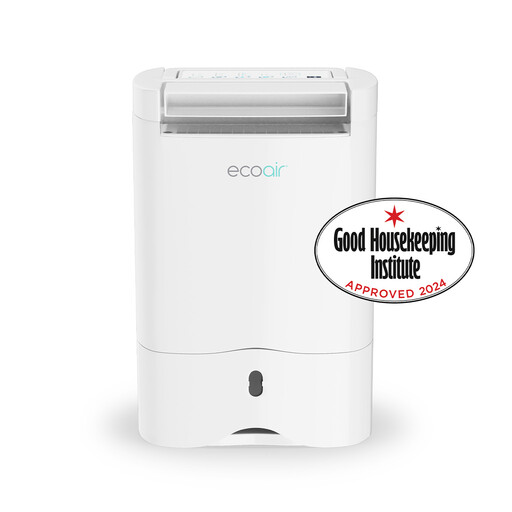
EcoAir DD3 Slimline desiccant dehumidifier, 10L/day, 3L tank
Consider this model for laundry in a cool, measured living room that falls within EcoAir’s stated coverage of up to 85 m². EcoAir specifies a 1–40°C operating range, laundry mode and continuous drainage; its 39 dB(A) figure is for the lowest setting, while high-mode power use is listed as 670W.
View on Joybuy
 No image available
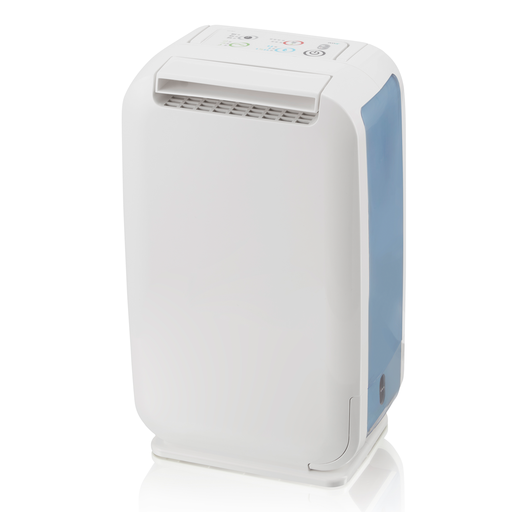
EcoAir DD1 Mini desiccant dehumidifier, 6L/day, 1.8L tank
For laundry in a cool space, check this model’s stated room coverage and operating-temperature range against your living room before choosing it. The product name specifies extraction of up to 6L/day and a 1.8L tank; also check noise and power use at the setting you would run.
View on Joybuy
 No image available
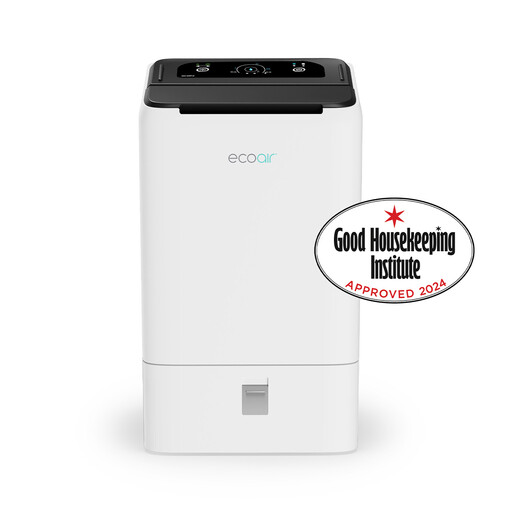
EcoAir DD2 Simple desiccant dehumidifier, 9L/day
This model has a stated laundry mode and extraction of up to 9L/day. Before using it for a large living room, compare the exact model’s room coverage and operating-temperature range with your space, and check its tank, noise and power specifications for the intended setting.
View on Joybuy
Frequently asked questions
Is a desiccant dehumidifier suitable for drying laundry in a large living room?
It can be, particularly if the room is cool, but choose against its measured area rather than the description ‘large’. Pro Breeze states coverage of up to 35 m² for its cited 10L model, while EcoAir states up to 85 m² for the DD3 Slimline; check the exact model’s coverage, temperature range and laundry setting.
Can a dehumidifier replace ventilation or a repair for damp?
No. It can help manage moisture from indoor washing, but the Energy Saving Trust advises establishing the source of damp. Condensation may call for ventilation, whereas a leak or other building fault needs its cause addressed.
How close can I place a dehumidifier to a clothes rack?
Use the clearance in your exact model’s manual and keep laundry off the appliance and away from its vents. EcoAir’s DD3 Simple manual specifies at least 40cm from laundry and cautions against leaving its Laundry Mode running unattended for a long period; that instruction should not replace another model’s guidance.
What if an online dehumidifier arrives faulty or not as described?
Contact the seller about a remedy rather than treating the issue as an ordinary change-of-mind return. GOV.UK states that a seller must offer a full refund when an item is faulty, not as described or does not do what it is supposed to; keep the order details and explain the problem when contacting the seller.


