What matters when choosing?
Start with the lounge's usual temperature, then decide how much disruption during a laundry load is acceptable. Meaco says compressor efficiency can fall in colder rooms; EcoAir notes that desiccant models generally use more energy, so neither type is the answer for every lounge.
Desiccant dehumidifier
Consider it when: The lounge is often cool or heated intermittently and washing regularly dries on an airer.
Trade-off: EcoAir says desiccant models generally use more energy than compressor models; check the intended setting rather than assuming laundry mode runs sparingly.
Compressor dehumidifier
Consider it when: The lounge stays warm and routine humidity control matters as much as laundry drying.
Trade-off: Meaco says compressor efficiency can fall as temperatures drop, so check the model's operating range against the room's colder periods.
| Concern |
What to check |
Who this matters to |
| Laundry drying |
Check what laundry mode does and whether the instructions allow airflow towards an airer without obstructing the appliance. |
If washing occupies the lounge for hours, I want to shorten drying time while managing the moisture it releases. Roughly 37% of consumers put laundry drying first. |
| Cool-room operation |
Compare the model's operating-temperature range with the lounge's usual winter temperature. |
When the heating is off for much of the day, I need a machine suited to the room's colder periods. Around 27% of consumers make cool-room operation their primary concern. |
| Shared-room disruption |
Compare noise at the intended fan setting, placement clearances and the space needed for the airer. |
I still need to use the lounge while washing dries, so fan noise and floor space matter. Roughly 18% of consumers prioritise keeping the shared room comfortable to use. |
| Electricity and upkeep |
Check rated power at the intended setting, tank capacity, filter access and whether laundry mode overrides humidity control. |
With frequent loads, I want to know how long the machine may run and how often it needs attention. Around 18% of consumers put electricity use and daily upkeep first. |
Joybuy desiccant models
These EcoAir desiccant models are options to examine for washing dried on an airer in a shared lounge. Compare their stated capacities with the space and emptying routine you can accommodate, and check operating settings before choosing between them.
 No image available
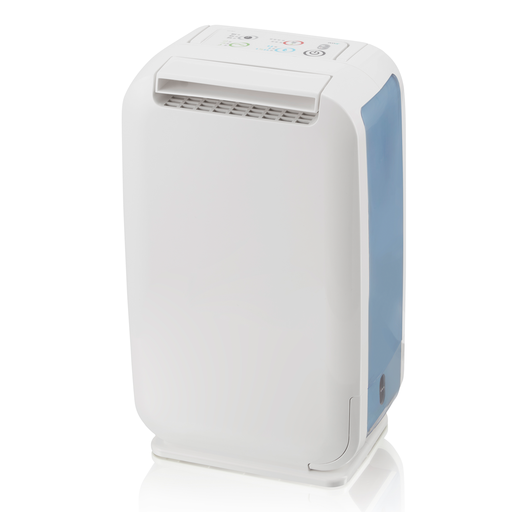
EcoAir DD1 Mini desiccant dehumidifier, 6 litres/day, 1.8L tank
Consider this model if you want a desiccant option for laundry in a cool lounge and can accommodate a 1.8L tank-emptying routine. Its title states extraction of up to 6 litres per day; that rating does not establish drying time beside your airer. Check the operating range, noise and power at the setting you intend to use.
View on Joybuy
 No image available
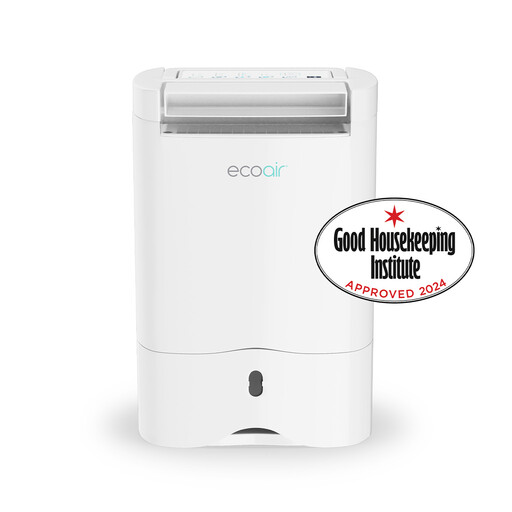
EcoAir DD3 Slimline desiccant dehumidifier, 10 litres/day, 3L tank
Consider this model if a 3L tank and laundry function suit your shared-room routine. EcoAir specifies a 1°C to 40°C operating range, timer and humidity control for the DD3 Slimline; its stated extraction is up to 10 litres per day, not a promised result for an airer load. EcoAir rates it at up to 670W on high mode, so check the intended setting and noise before use in the lounge.
View on Joybuy
 No image available
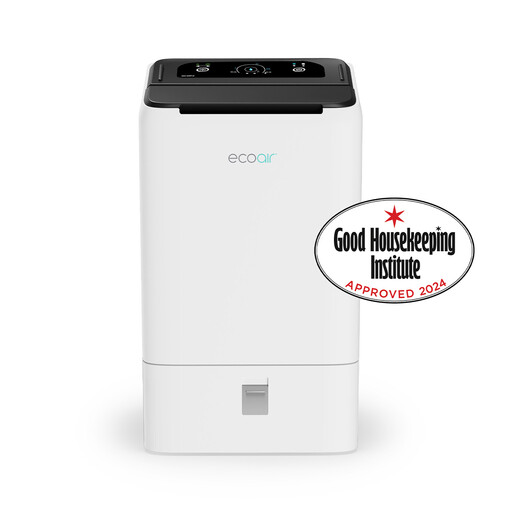
EcoAir DD2 Simple desiccant dehumidifier, 9 litres/day
Consider this model if you want a desiccant unit with a laundry mode for an indoor airer. Its title states extraction of up to 9 litres per day, which should not be read as a drying-time guarantee. Check tank capacity, operating range, noise and power at the intended setting to see how it fits your shared-lounge routine.
View on Joybuy
Common questions
Is a desiccant dehumidifier always the right choice for lounge laundry?
No. A desiccant model is worth considering when the lounge is cool or heated inconsistently; a compressor model remains an option when it stays warm. Meaco highlights reduced compressor efficiency in colder conditions, while EcoAir notes the generally higher energy consumption of desiccants. Compare the exact models' operating ranges, settings and noise.
Where should I put a dehumidifier beside a clothes airer?
Position it according to the model's instructions, with the required clearance around its air inlet and outlet and without blocking access through the lounge. Which? advises keeping most dehumidifiers away from walls and furniture; follow the appliance manual for the placement that applies to your model.
What upkeep should I expect when drying laundry regularly?
Plan to empty the tank unless the model supports continuous drainage and you have an appropriate drain route. Inspect and clean the filter as its manual directs; Which? notes that cleaning intervals differ between manufacturers and that a dirty filter can reduce efficiency.
Will a dehumidifier solve damp or mould in a rented home?
Not if the underlying cause is a leak, penetrating damp or another building defect. GOV.UK guidance for England, updated 1 April 2026, says landlords should identify and tackle the underlying issue promptly after it is reported. A dehumidifier can help manage moisture from washing, but report persistent damp or mould; check the applicable housing process locally if the property is outside England.


