Consider a desiccant dehumidifier if window condensation is a problem and the student room is often cold or only intermittently heated. If it stays warm, compare compressor models too; either way, check sleeping noise, electricity use and accommodation rules before buying. A portable unit cannot repair a leak or faulty ventilation.
Who needs to consider one?
Students in cold or lightly heated bedrooms
If water collects inside the window when the room cools down, operating temperature is an important part of the choice. Meaco positions its desiccant DD8L for temperatures below 10°C; check the range of the model you are considering rather than assuming all units have the same limits.
Sleep-sensitive students in small rooms
When the bedroom is also where the appliance will run, compare the exact model’s stated noise level, dimensions and tank arrangement. A headline extraction rate alone will not tell you whether its day-to-day use suits the space.
Renters and hall residents with recurring damp
If condensation comes with mould, a leak, failed heating or poor ventilation, report the problem to your landlord or accommodation provider. Check whether a personal electrical appliance is permitted before treating a dehumidifier as an additional measure.
What should you check before buying?
Desiccant dehumidifier
Consider it when: The bedroom is frequently cold or only intermittently heated; check the particular model’s operating-temperature range against the room.
Trade-off: Compare rated power and likely running time rather than assuming suitability for a cold room also means lower electricity use.
Compressor dehumidifier
Consider it when: The room stays heated through winter. An electriQ compressor-model manual describes heated spaces maintained above roughly 12–15°C as suitable conditions.
Trade-off: Check how the model performs at the temperatures your room actually reaches when the heating is off.
| Concern | What to check | Who this matters to |
|---|
| Cold-room operation |
Compare the model’s operating-temperature range with the room temperature; check for a target-humidity control. |
When my room cools between heating periods, I need a unit suited to those temperatures. Around 27% of consumers put cold-room operation first. |
| Sleep and small-room use |
Check the stated noise level, dimensions and full-tank shut-off; compare noise figures cautiously if measurement conditions differ. |
If the unit will run near where I sleep, disruption matters more to me than the headline extraction figure. For around 27% of consumers, sleep-friendly operation is the primary need. |
| Electricity and emptying |
Compare rated power by mode, tank capacity and whether permitted drainage is practical. |
I expect to run the unit regularly and want to manage electricity use and trips to empty the tank. Around 20% of consumers prioritise that routine upkeep. |
| Permission and damp causes |
Check accommodation appliance rules and report leaks, recurring mould or failed ventilation to the provider. |
If there is a persistent damp patch or I live in halls, I need to know both whether the appliance is allowed and whether the room needs a repair. Permission and the underlying cause come first for around 26% of consumers. |
What can go wrong with the choice?
-
Assuming every wet window calls for an appliance
Moist air can condense on a cold window, but recurring mould or a concentrated damp patch may point to a problem that moisture removal alone will not fix.
Record the affected areas with photos and dates, and report leaks, failed heating or ventilation, and recurring mould to your landlord or accommodation provider.
-
Choosing desiccant without checking the room temperature
A cold-room requirement supports considering desiccant technology, but it does not establish that it is the more economical choice in a heated room. Ebac’s own comparison favours compressor electricity use under normal UK home conditions; that is a manufacturer claim, not a result for every model or room.
If the bedroom normally stays warm, compare compressor and desiccant models using their operating ranges and rated power by mode.
-
Ordering before checking accommodation rules
Permission varies by provider. Wolfson College, University of Oxford, says dehumidifiers are not permitted in its accommodation unless supplied or authorised.
Ask your accommodation office or landlord for confirmation before ordering.
A unit that is not authorised may have to be removed rather than used in the room.
-
Comparing extraction figures in isolation
A litres-per-day rating is a stated capacity, not a promise that two models will remove that amount in your bedroom under different conditions.
Check the published test conditions where available, then consider operating temperature, noise, tank handling and power alongside capacity.
Brands to consider
Meaco
Its domestic desiccant range includes the DD8L, which Meaco positions for colder spaces.
- Meaco says the DD8L is suitable below 10°C and has a humidity-target sampling control.
- Those DD8L claims should not be assumed to apply to every Meaco model; compare the exact unit’s controls and operating conditions.
EcoAir
Its domestic desiccant models include the compact DD1 line and larger-capacity DD3 formats.
- EcoAir lists the DD1 Simple MK3 at 34 dB(A) and 6 kg, offering model-specific figures to check for bedroom use.
- Do not apply one DD1 model’s noise or handling figures to another EcoAir unit.
electriQ
Its desiccant products include domestic models with differing controls and features.
- The DESD8LW-V2 manual specifies indoor domestic use and a 220–240 V, 50 Hz earthed outlet.
- That manual’s electrical and use conditions do not establish how another electriQ model will sound or perform in a student bedroom.
Desiccant models on Joybuy
These desiccant models relate to moisture control in a student room. Match their operating conditions and day-to-day handling to your room, and confirm that your accommodation permits a dehumidifier.
 No image available
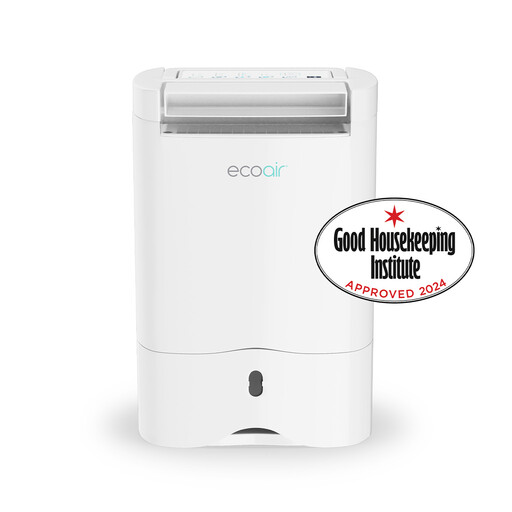
EcoAir DD3 Slimline Desiccant Dehumidifier, White
Consider this model if tank handling or indoor laundry is part of your decision: its stated features include a 3 L tank, laundry mode, full-tank shut-off and a continuous-drainage option.
Its advertised extraction capacity is up to 10 litres per day. Before choosing it for a cold room or use near your bed, check its operating-temperature range, numerical noise level and rated power.
View on Joybuy
 No image available
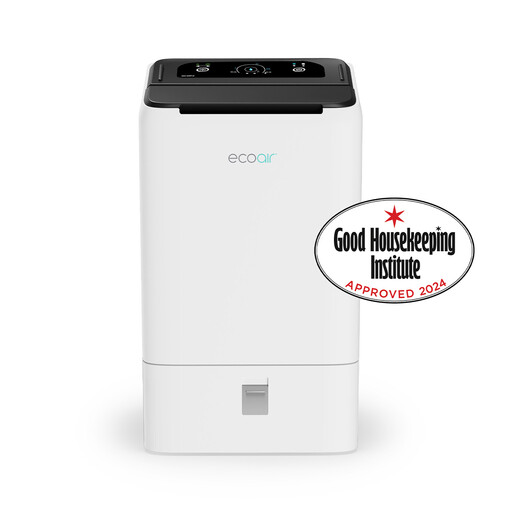
EcoAir DD2 Simple Desiccant Dehumidifier, White
This desiccant model is an option to assess for a student room where laundry drying also matters; its title specifies laundry mode and an extraction rating of up to 9 litres per day.
Check its operating-temperature range for a cold bedroom, along with its noise level, rated power and tank arrangement for everyday use.
View on Joybuy
Common questions
Will a dehumidifier stop window condensation on its own?
It can reduce airborne moisture, but it will not resolve every cause of a wet window. The Energy Saving Trust explains that condensation forms when moisture meets a cold surface; keep ventilation in mind and report suspected leaks or faulty heating rather than relying on an appliance alone.
Can I use a dehumidifier in university halls?
Check your own provider’s rules before buying. Wolfson College, University of Oxford, prohibits dehumidifiers in its accommodation unless supplied or authorised, but that rule does not determine what another hall permits.
What if mould or broken ventilation is present in a rented room?
Report the problem promptly and keep dated photographs. For private renting in England, GOV.UK identifies ventilation, heating, and the property’s structure and exterior among landlords’ repair responsibilities; the applicable housing route may differ elsewhere in the UK. A portable dehumidifier does not carry out those repairs.


