If the fan can sit close to the sofa, start with a compact personal model; if it must sit farther away, compare larger air circulators, as Meaco advises for sitting-room placement. Check noise at the setting you expect to use, available surface space and the cable route before deciding.
Who this is for
Sofa-side airflow users
If you can put a fan on a stable surface near the sofa, a compact model may meet your need for personal airflow. If it has to sit farther away, reach matters more; Meaco distinguishes between close-range and farther-away placement in its fan guidance.
Students who study or sleep nearby
If fan noise could interrupt revision, calls or sleep, look at the operating mode behind a quoted noise figure as well as the airflow you need. Which? assesses fan noise and wind speed separately in its testing.
Renters with limited space or sockets
If the fan must share a small surface or the nearest socket is away from the sofa, plan its position and cable route before choosing. Electrical Safety First advises checking plugs and cables for damage and avoiding overloaded or daisy-chained extension leads.
What matters when choosing
Decide where the fan can stand relative to the sofa, then check whether its noise, footprint and power arrangement work in that position. A speed count alone cannot answer those questions.
| Concern |
What to check |
Who this matters to |
| Airflow reach and direction |
Check the intended fan-to-sofa distance and whether the head can direct air towards the seat. |
If the fan must stand away from the sofa, I need to know that its airflow reaches where I sit. Around 36% of consumers put reach and direction first. |
| Noise during study or sleep |
Check which speed or mode a noise figure describes and compare independent noise and airflow tests where available. |
During revision, calls or sleep, I want moving air without a distracting sound at the setting I will actually use. Quiet operation is the primary concern for around 29% of consumers. |
| Surface space and portability |
Check the base footprint and height against the intended surface, and whether moving the fan suits your routine. |
When the sofa-side table also holds other things, I need a fan that fits and can be moved when necessary. Around 21% of consumers prioritise space and repositioning. |
| Plug and cable arrangement |
Check the plug and cable condition, the route to a socket and any extension lead’s marked rating; do not daisy-chain leads. |
If the socket is away from the sofa, I need to position the fan without an unsafe cable or overloaded lead. Safe power setup comes first for around 14% of consumers. |
Buying pitfalls
-
Choosing by the word “desk” without checking distance
A compact fan intended for close use may not suit a position across the room, while a larger circulator needs more surface space. Meaco’s guidance makes this placement distinction between its smaller fans and a larger sitting-room model.
Mark where the fan can stand and where you will sit, then compare models intended for that distance.
-
Assuming the quietest quoted figure applies at every speed
Dyson’s stated 29 dBA for the Cool CF1 applies to Quiet Mode; it does not describe every operating setting. Which? treats noise and wind speed as separate measures in its fan testing.
Check the mode attached to each noise figure and, where possible, compare noise alongside airflow at a setting you would use.
-
Joining extension leads to reach the sofa
Electrical Safety First warns that plugging one extension lead into another can overheat the plug at the wall socket.
Use a suitable single lead only within its marked rating, or move the fan to a position with a safer socket and cable route.
Brands to consider
Meaco
Meaco offers small personal fans as well as larger air circulators, making placement distance a useful way to compare its models.
- Meaco’s own guidance suggests the 260c and MeacoFan 360 for close placement and the larger 1056 for use farther away in a sitting room.
- That guidance is manufacturer advice, not a like-for-like airflow or noise test. Check the dimensions and intended position of the exact model.
Dyson
The Dyson Cool CF1 is a bladeless desk-fan option for consumers interested in its cleaning access and adjustable direction.
- Dyson lists 70-degree oscillation, manual tilt and a 1.8 m cord for the Cool CF1; its stated 29 dBA applies specifically to Quiet Mode.
- At 550 mm tall, the Cool CF1 needs a suitable surface. Its manufacturer specifications do not establish how its noise or airflow compares with other fans at equivalent settings.
Shark
Shark’s FlexBreeze HydroGo represents a portable misting-fan alternative to a conventional dry desk fan.
- John Lewis & Partners lists the HydroGo as a desk fan with five speeds and mains power.
- Consider whether filling and using a misting fan suits a position near sofa upholstery; the listing does not establish comparative airflow or noise.
Joybuy products for close-range use
These portable and compact fans are choices to consider when the fan can sit close to the sofa. For a position farther across the room, assess airflow reach and direction before treating a personal fan as a substitute for a larger air circulator.
 No image available
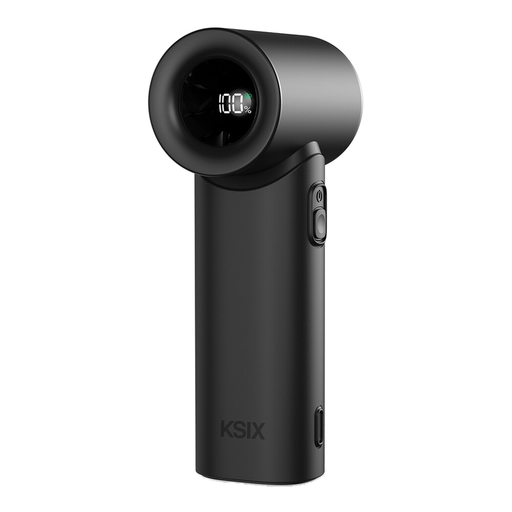
KSIX AirGo Turbo Portable Fan, Black
Consider this portable fan for personal airflow when it can be placed close to the sofa. Its listed features include five speeds and USB-C charging; check whether its airflow reaches your seat and whether its battery runtime suits the intended session.
View on Joybuy
 No image available
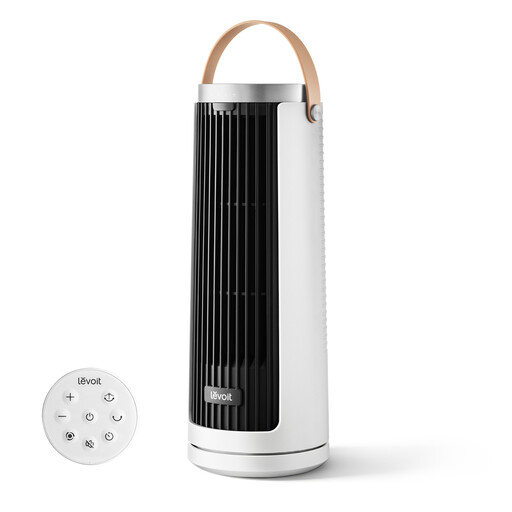
Levoit Windi Mini Plus Tower Fan
This portable tower fan is a close-range option if its base fits your intended surface. The product title lists USB Type-C recharging and multiple airflow modes; check its dimensions, runtime and noise at the mode you would use.
View on Joybuy
 No image available
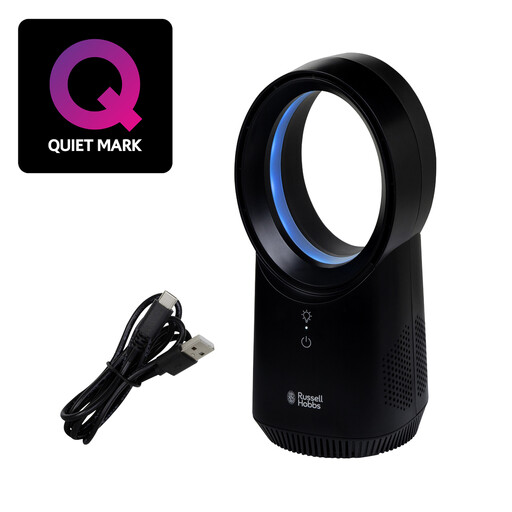
Russell Hobbs RHBLDLUSB25B Bladeless Desk Fan, Black
Consider this compact wireless model for nearby personal airflow if you want to move the fan between surfaces. The title specifies three speed settings and USB charging; check the base footprint, battery runtime and noise for your intended position.
View on Joybuy
 No image available
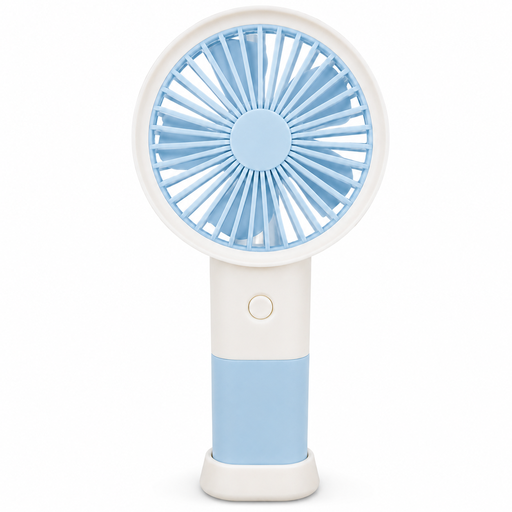
HHFBL Handheld Fan with Table Stand, Blue
The table stand makes this handheld fan worth considering for personal airflow beside the sofa, provided it stands securely on your chosen surface. It lists three speeds and Type-C charging; check the stand’s footprint, battery runtime and airflow at your seating distance.
View on Joybuy
Common questions
Is a small desk fan enough for a sofa?
A small desk fan is a sensible starting point when it can stand close to your seat on a stable surface. If it must sit farther away, compare larger air circulators and check how they direct air; Meaco describes this close-versus-far placement distinction in its own fan guidance.
Can I compare noise figures from different fans directly?
Only when you understand the settings behind the figures. Dyson’s 29 dBA figure for the Cool CF1 applies to Quiet Mode, while Which? assesses noise and wind speed separately; look for comparable operating settings and independent tests where available.
Can I use an extension lead for a sofa-side fan?
You can use a suitable extension lead if the combined connected load stays within its marked rating and the cable can be routed safely. Electrical Safety First warns against overloading leads or plugging one extension lead into another.
What plug should I check for in a UK student room?
Check that a mains-powered fan has a suitable UK plug and is compatible with the room’s supply. Electrical Safety First identifies the common UK plug as the square-pin 13-amp type and advises checking for BS 1363 marking; the University of Strathclyde describes UK supply as 220–240 V at 50 Hz.
What if the socket, plug or cable looks damaged?
Do not keep using the damaged setup. Electrical Safety First advises looking for cable cuts, loose parts and signs of overheating; report a concerning room socket to your landlord or accommodation provider rather than attempting an electrical repair yourself.


