Choose a magnifying task lamp if distinguishing the parts themselves is the main difficulty. Otherwise, look for adjustable light that reaches the sorting area without creating distracting reflections. For colour-coded parts, compare the exact model’s stated colour rendering index (CRI); for a shared study desk, also consider dimming, positioning and the space the lamp occupies.
Who needs which features?
Fine-detail craft sorters
If beads, findings or miniature parts are difficult to distinguish, directed light may need to be paired with hands-free magnification. The Health and Safety Executive notes that more detailed tasks generally require more light.
Colour-coded materials organisers
If you separate parts by subtle shades or finishes, compare the exact lamp’s stated CRI and check that its head can illuminate the tray where you make those decisions.
Shared-study desk users
When sorting trays sit alongside papers or a screen, consider the lamp’s footprint, mounting position and dimming controls. The Health and Safety Executive advises arranging desks and screens to avoid glare and bright reflections.
What matters when choosing?
Start with the obstacle that most affects your sorting: seeing individual details, distinguishing colours, lighting the whole work area or sharing the desk with screen work.
| Concern |
What to check |
Who this matters to |
| Very small details |
Decide whether you need a lens, then check its size, working position and mounting fit. |
If tiny components remain hard to distinguish under a directed light, I need hands-free enlargement while sorting them; around 30% of consumers put detail resolution first. |
| Similar colours |
Compare the exact model’s stated CRI and whether its light can be directed across the tray. |
When beads or other parts differ mainly by shade or finish, I want to judge them under light positioned over my work; colour discrimination is the first concern for roughly 30% of consumers. |
| Tray coverage and desk space |
Check the lit area, arm reach and, for a clamp lamp, desk-edge fit. |
If several trays need light but must retain their worktop space, I would weigh coverage against the lamp’s footprint; about 20% of consumers prioritise that balance. |
| Screen and craft work |
Look for adjustable brightness and a position that avoids screen reflections. |
When I move between sorting parts and using a monitor, I need light I can redirect or dim without bright reflections; that flexibility comes first for around 20% of consumers. |
Buying pitfalls
-
Choosing by wattage alone
Wattage describes electrical consumption, not how much light reaches a sorting tray or how widely it spreads.
For stated illuminance, compare lux alongside the measurement distance and consider whether the lamp can cover and be positioned over your work area.
-
Assuming any clamp will fit
A clamp needs a suitable, stable desk edge. Daylight Company specifies a maximum opening of 60 mm for its Magnificent Pro On Clamp; another model may differ.
Measure the usable edge, including any lip or obstruction, and check where the arm and cable will sit.
-
Expecting CRI to settle every colour match
A stated CRI helps identify a colour-focused specification, but it does not guarantee that every material will look the same under the lamp and in other lighting.
Use CRI as one comparison point and inspect important matches under the lighting in which the finished craft will be used.
-
Overlooking electrical-product alerts
The Office for Product Safety and Standards publishes UK product recalls and alerts that consumers can search.
Identify the trader and exact lamp model, check the supplied plug or adapter information, and consult current product-safety alerts where appropriate.
Brands to consider for this task
Daylight Company
Its task-lighting range includes table, clamp and magnifying lamps for different close-work layouts.
- Daylight Company states model-specific features such as dimming and adjustable arms; its Magnificent Pro On Clamp has a stated 1.75x lens.
- Compare the specifications of the particular model and mounting style rather than assuming every lamp in the range has the same coverage or magnification.
BenQ
Its Genie desk lamp is relevant when a study alternates between physical sorting and screen use.
- BenQ states that Genie has manual brightness and colour adjustment, ambient-sensor modes and coverage up to 90 cm.
- If enlargement of individual parts is the priority, check a magnifying lamp rather than treating wide coverage as a substitute for a lens.
Lepro
Its adjustable desk-lamp listing offers a folding format for buyers seeking manual lighting controls.
- Lepro specifies five colour modes and five brightness levels for the listed lamp.
- For colour-sensitive sorting, check the exact model’s CRI rather than inferring it from the available settings.
Joybuy product choices
These desk and clip lamps offer different ways to position a light around a study workspace. Choose according to the available desk space and the adjustments your sorting task requires; check model-specific lighting details if fine detail or colour matching is critical.
 No image available
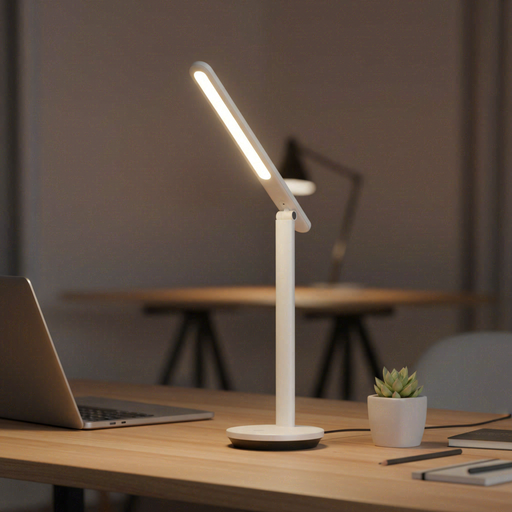
Yeelight LED Folding Desk Lamp Z1 Pro (White)
Consider this rechargeable, folding lamp when you need to reposition light on a study desk. Its title specifies adjustable brightness; for very fine parts or colour matching, check the illuminance at your working distance and the model’s CRI.
View on Joybuy
 No image available
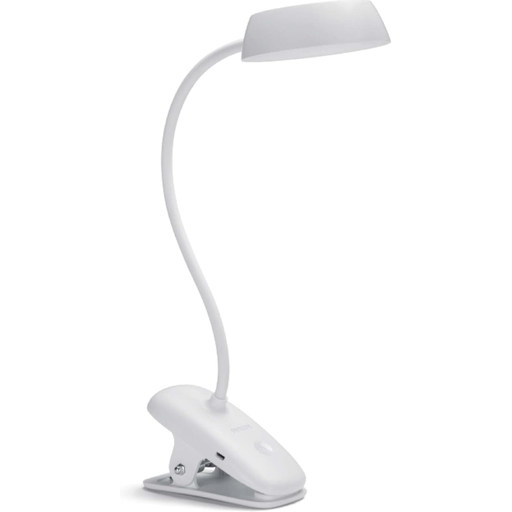
Philips Doughnut USB Rechargeable Desk Clip Lamp, 3W (White)
The clip format may suit a desk where trays need the worktop space. Check that the clip fits a stable part of your desk edge before ordering; the listing advises use in dry environments.
View on Joybuy
 No image available
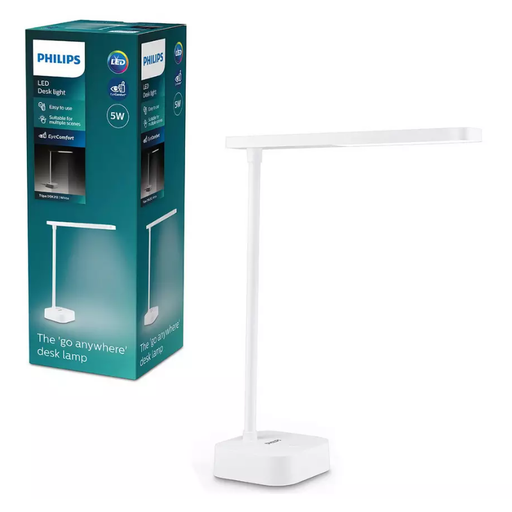
Philips Tilpa LED USB Rechargeable Table Lamp, 18W (White)
Its three brightness settings give you a choice of output for a desk sorting area. Check whether its positioning and lit area suit your trays; the listing says a USB charging cable is supplied but a power adapter is not included.
View on Joybuy
Common questions
How bright should a lamp be for sorting small craft parts?
Choose adjustable light that lets you see the parts across your actual work area; there is no single brightness figure that fits every tray and component. The Health and Safety Executive says more detailed tasks generally require more light. When comparing stated lux figures, check the measurement distance rather than treating figures measured at different distances as equivalent.
When is a magnifying lamp worth considering?
Consider one when individual parts remain difficult to distinguish after the work area is adequately lit. A lens focuses on close inspection, while a broad task lamp may be more convenient for several trays; Daylight Company states that its Magnificent Pro On Clamp has a 13 cm, 1.75x lens.
How can I keep a desk lamp from reflecting in my monitor?
Position the lamp to illuminate the sorting area without shining into the screen, then adjust its output as needed. The Health and Safety Executive advises arranging the desk and screen to avoid glare and bright reflections.
What if a lamp’s clamp or light spread does not suit my desk?
Check the seller’s change-of-mind return instructions before ordering, especially the handling and return-postage terms. GOV.UK says online traders must tell customers about cancellation up to 14 days after delivery; that is separate from remedies for goods that are faulty, damaged or misdescribed.


