
24/7 Customer Support

Free returns

Same-day & Next-day Delivery

Quality Guaranteed

Unlock Your Welcome Offers: FREE Delivery | Up to 80% OFF | Free 30-day JoyPlus trial
Download the APP
Spending hours working from home, studying for exams or getting lost in a good book can take its toll. If you often end your day with tired eyes, headaches or a feeling of fatigue, your lighting might be the culprit. Inadequate or harsh desk lighting can strain your eyes and hinder your focus. A well-chosen desk lamp, however, does more than just illuminate your space; it creates a comfortable and productive environment.
As the Joybuy Product Recommendation Officer, my role is to help you find practical solutions that fit your needs. This guide will walk you through the key features to consider when choosing a new desk lamp and present a few of our top recommendations for 2026, selected for their blend of design, functionality and user-focused features.
Navigating the options can be confusing. To simplify your search, focus on these three practical considerations.
The primary function of a task light is to make seeing easier, not harder. An eye-care desk lamp is designed to minimise visual fatigue. Look for models that specify flicker-free illumination, as invisible flickering is a common cause of eye strain and headaches.
Another important factor is the Colour Rendering Index (CRI), a scale from 0 to 100 that measures how accurately a light source reveals the true colours of objects. For reading and detailed work, a lamp with a high CRI (often noted as Ra90 or higher) will make text appear sharper and colours more natural. Some lamps also carry an RG0 blue light hazard exemption rating, indicating they emit low levels of blue light for greater comfort during prolonged use.
Your lighting needs change depending on the task and time of day. An adjustable desk lamp offers the flexibility to direct light exactly where you need it, reducing glare and shadows. Look for models with multi-axis arms, rotating heads or flexible necks.
Modern lamps also come with convenient features. A USB desk lamp can help reduce clutter by allowing you to charge your phone or other devices directly from its base. Touch controls and multiple brightness settings are also common, allowing you to easily switch from bright task lighting to a softer ambient glow.
The ideal study lamp or reading lamp should complement your workspace, not clutter it. Consider the lamp's footprint. If desk space is at a premium, a slim light bar or a clip-on model can be an excellent solution. For larger desks, a traditional lamp with a stable base and long reach might be more suitable. A modern desk lamp with a clean, minimalist aesthetic can integrate seamlessly into most contemporary home office or study environments.
Based on the criteria above, here are a few standout options that balance performance, design and user-friendly features.
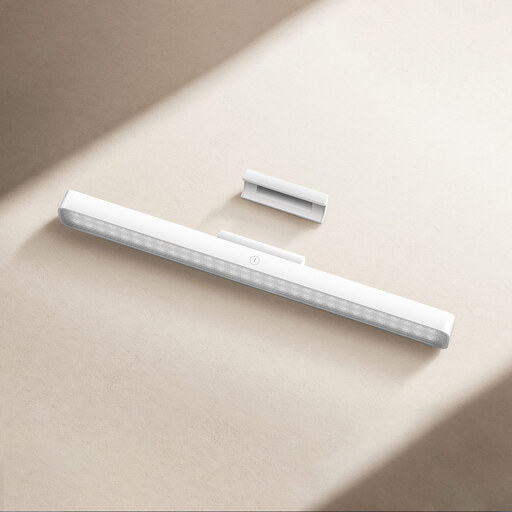


The right lighting can transform a workspace, and style is just as important as function. If our recommendations aren't quite what you're looking for or if you're specifically searching for a different aesthetic, why not explore our broader collection? We have a wide variety of options to suit any decor.
Discover more in our White lamp collection.
An LED desk light is the current standard for good reason. LED technology is highly energy-efficient, has a very long lifespan and produces minimal heat. For maximum comfort, look for models that offer adjustable brightness and, in some cases, adjustable colour temperature, allowing you to switch between cool, energising light and warm, relaxing light.
For focused tasks like reading, writing or studying, a light output between 450 and 1000 lumens is generally effective. However, the ideal brightness also depends on the ambient light in your room and your personal preference. This is why an adjustable desk lamp with multiple brightness settings is so useful, as it allows you to tailor the light level to your specific needs.
CRI stands for Colour Rendering Index. It measures how accurately a light source shows the true colours of objects compared to natural daylight. A lamp with a high CRI (often specified as Ra90 or above) renders colours more faithfully. For a reading lamp, this means black text on a white page will appear with higher contrast, making it easier to read and helping to reduce eye strain over long periods.