Who needs which features?

People who write for long sessions

If you regularly write notes, coursework or paperwork, aim for light that reaches the page without putting the source in your eye line or casting a strong shadow from your hand. RNIB advises placing task lighting between you and the work, with the shade below eye level.

Evening writers sharing a bedroom

If someone else may be resting while you write, prioritise a lamp you can direct towards the notebook and dim. NHS Every Mind Matters notes that a dark room can make sleep easier, so consider where the light falls beyond your desk.

People with a small writing surface

If a lamp base would crowd your paper, compare its footprint with the space you actually have. A clamp is another option only if the desk has a suitable edge and the required fitting is available.

What matters when choosing?

Wide-coverage LED task lamp

Consider it when: You spread paper across a larger desk or switch between handwriting and a screen.

Trade-off: Plan space for the lamp or a compatible clamp, and reduce and direct its output for evening use rather than assuming its maximum setting suits a shared room.

Compact integrated-LED lamp

Consider it when: Your writing surface is small and you need light concentrated near one notebook.

Trade-off: A compact head does not necessarily mean dimmable light; IKEA lists the KRUX driver as unsuitable for a dimmer.

Adjustable-arm lamp with a replaceable LED bulb

Consider it when: You want to reposition the light precisely and replace the bulb later.

Trade-off: Check the supplied bulb and dimming arrangement. Anglepoise’s Original 1227 Mini needs additional electrical hardware for dimming rather than offering built-in adjustment.

ConcernWhat to checkWho this matters to
Seeing the page clearly Check whether the head can direct light onto the writing area, and read the distance and area used for any illumination figure. If my hand shadows the page or I can see the light source, I need to change where the lamp sits before judging its brightness. Around 42% of consumers put paper visibility and glare control first.
Keeping light local Look for built-in dimming and a head or shade you can aim away from the resting area. When someone else is winding down, I want enough light to keep writing without lighting their side of the room. For around 33% of consumers, consideration for the other occupant is the primary need.
Fitting the surface Measure the available desk space; for a clamp, check the edge, clearance and whether the fitting is supplied. A base that takes up my writing space defeats the point of a desk lamp, while a clip must fit the furniture I use. Desk fit comes first for around 25% of consumers.

Buying pitfalls

  • Treating a brightness figure as the whole answer

    A lux figure measured at one distance or point does not tell you whether your hand will shadow the page or the source will be visible from your seat.

    Check the stated measurement conditions and coverage, then position the shade below eye level and assess the light from your usual writing position where possible.

  • Assuming a compact LED lamp will dim

    An adjustable head and an adjustable brightness setting are different features. IKEA specifies that the KRUX driver is not suitable for a dimmer.

    Check the exact model for built-in brightness controls before relying on it for late-evening writing.

  • Choosing a clamp without checking the desk

    A clamp saves surface space only when it fits an exposed desk edge. BenQ presents the clamp for its E-Reading Intelligent as an accessory, not a fitting to assume is in every package.

    Measure the edge and available clearance, and confirm the clamp’s compatibility and package contents.

  • Using a conformity mark to judge the beam

    CE or UKCA marking does not tell you how well a lamp directs light onto handwriting or how its controls work in a shared bedroom.

    Check applicable product-safety information separately from the lamp’s controls, dimensions and mounting arrangement.

Brands to consider

BenQ

Its E-Reading Intelligent is an example of a wide-coverage, adjustable LED task lamp for paper and screen use.

  • BenQ lists a 90 cm lighting width, adjustable brightness and colour temperature, and separate paper and screen modes for this model.
  • BenQ’s 1600 lux centre figure is specified at a height of 45 cm; it does not describe every position across a desk. Check the space and mounting arrangement before choosing it.

Anglepoise

The Original 1227 Mini is an adjustable-arm option for positioning light over the page and replacing the supplied bulb.

  • Anglepoise specifies a constant-tension spring mechanism and a replaceable E14 LED bulb for this model.
  • The supplied bulb is listed at 2700 K, and dimming requires additional electrical hardware rather than a built-in control.

IKEA

The KRUX LED work lamp is a compact example for a surface where the lamp’s base size matters.

  • IKEA lists a 13 cm base diameter and an adjustable light for the KRUX.
  • IKEA states that its driver is not suitable for a dimmer, an important restriction if you need to lower the light while someone else rests.

Joybuy products for this setup

These desk and table lamps offer brightness settings or a clip-on arrangement relevant to writing in a shared bedroom. Check beam direction and writing-area coverage for your own desk before deciding.
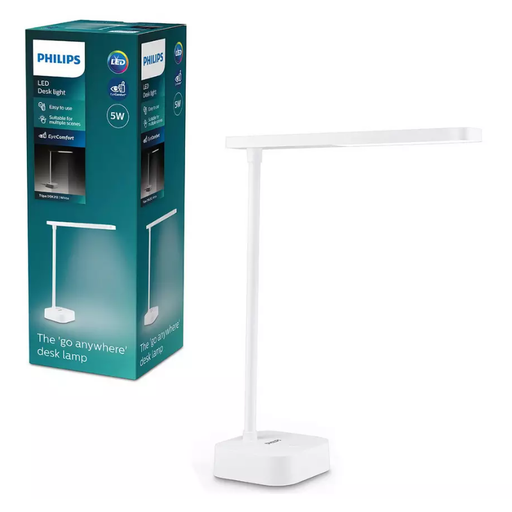
Philips Tilpa LED USB Rechargeable Table Lamp, 18W White

Philips Tilpa LED USB Rechargeable Table Lamp, 18W White

Consider the Tilpa if you want brightness options for evening writing: its name specifies three settings. It is USB rechargeable and rated at 18 W; that rating does not tell you how much light will reach your page. Check whether you can aim the light where you write and what you need to charge it.

View on Joybuy
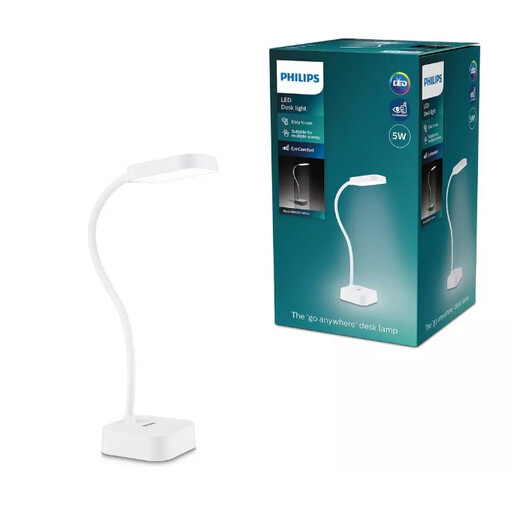
Philips Rock LED USB Rechargeable Table Lamp, 18W White

Philips Rock LED USB Rechargeable Table Lamp, 18W White

The Rock is another option when selectable brightness matters: its name specifies three settings. It is USB rechargeable and rated at 18 W, which does not establish illumination on paper. Check its dimensions and beam direction against your desk, and consider whether you need a replaceable light source.

View on Joybuy
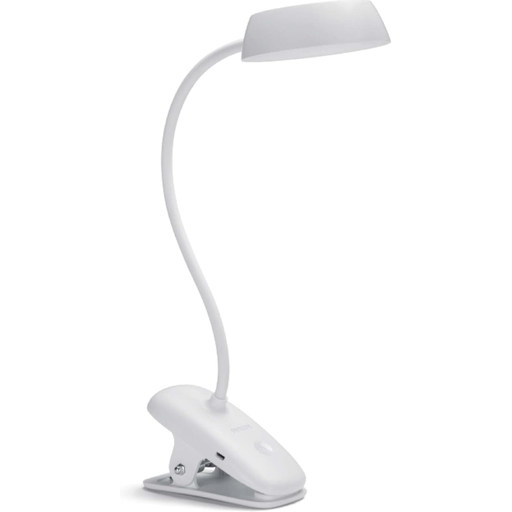
Philips Doughnut USB Rechargeable Desk Clip Lamp, 3W White

Philips Doughnut USB Rechargeable Desk Clip Lamp, 3W White

A clip-on lamp may leave more room for a notebook if your desk edge can take the fitting. This Doughnut model is USB rechargeable and rated at 3 W; confirm the light-source type, how it illuminates your writing area and whether its clip fits your desk.

View on Joybuy

Common questions

Where should I put a lamp when writing by hand?

Position it so light reaches the paper without shining into your eyes or putting your hand’s shadow across the words. RNIB advises placing task lighting between you and the task, with the shade below eye level; adjust the head from your usual seated position.

Do I need a dimmable lamp in a shared bedroom?

Dimming is useful if you write while someone else is settling down, but you also need to aim the light away from their sleeping area. NHS Every Mind Matters notes that a dark room can make sleep easier, so consider both the brightness setting and where the beam falls.

Can one lamp light both my notebook and computer screen?

Yes, if you can position it to light the notebook without creating a distracting reflection on the screen. Check the lamp from your normal writing and viewing positions; a paper-and-screen mode does not replace careful placement.

What safety information should I check for a desk lamp?

Check the product identification, instructions and relevant safety and conformity information for the lamp you are buying. For Great Britain, GOV.UK says CE marking continues to be recognised alongside or in place of UKCA marking where the relevant product rules allow it; do not use either mark as a measure of lighting performance. Northern Ireland has different applicable rules.