What matters when choosing?
Start with the area you need to illuminate, then check whether you can aim the lamp without glare. Measure the desk before deciding between a base and a clamp, and consider whether built-in controls or a replaceable bulb matter more to you.
| Concern |
What to check |
Who this matters to |
| Light across notes and detailed work |
Compare the stated lighting width or lux measurement conditions with your page position. Check colour rendering if your hobby involves judging colours. |
If I spread notes beside fine-detail or colour-dependent materials, I need light across the work rather than just at one bright point. Around 31% of consumers put clear detail lighting first. |
| Glare and shadows |
Check whether the head can be aimed away from your eyes and reflections, and whether brightness can be adjusted. |
When a lamp shines into my eyes or casts a shadow over the page, I want to change its position without losing useful light. Glare and comfort come first for around 31% of consumers. |
| Desk fit and reach |
Measure the desk edge, available clearance and distance to the notes; compare these with the exact model’s base, clamp and reach. |
On a desk crowded with hobby materials, I need the lamp to fit and reach the page without taking over the worktop. Around 23% of consumers prioritise space and positioning. |
| Controls and ownership |
Check whether the light source is replaceable, what controls are built in and how the lamp or charger will be powered. |
If I expect to change the bulb or use different light settings over time, I need to understand what the lamp allows before buying. Those ownership choices come first for around 15% of consumers. |
Manufacturer figures need their measurement conditions. For example, BenQ specifies the E-Reading Intelligent lamp’s 1,600 lux centre illuminance at a height of 45 cm; that centre reading does not describe the light level at every point on a desk. A published width, an adjustable arm and a suitable mounting position may be more useful checks when your notes share space with larger materials.
Brands to consider
These ranges illustrate different approaches to lighting a page and hobby materials. Compare specifications for the individual model, not the brand as a whole.
Daylight Company
Task-lighting models for reading and detailed work, with different mounting and adjustment options across the range.
- Daylight Company specifies 95+ CRI, an anti-glare diffuser and four output levels for Slimline 4. Its Lumi specifications include a 51 cm shade, 100 cm arm reach and three colour temperatures.
- Those features belong to different models. Check the exact lamp’s clamp, footprint and colour-temperature options rather than assuming they apply throughout the range.
BenQ
A wide-coverage desk-light option to consider when notes share a larger work area with other materials.
- BenQ specifies Ra≥95 and a 90 cm lighting width for the E-Reading Intelligent lamp, with desk-clamp and floor-stand accessories listed as options.
- Its stated 1,600 lux figure is centre illuminance at a 45 cm height, not a measurement across the entire desk. Check the mounting arrangement and available space.
Anglepoise
Balanced-arm task lighting for readers who want to position a shade and use a replaceable bulb.
- Anglepoise specifies constant-spring positioning and a replaceable E27 LED bulb for the Original 1227.
- The supplied bulb is specified at 470 lumens and 2,700 K, which may not suit every detailed task or preferred evening setting. The brand states that dimming requires additional hardware.
Joybuy desk lamps for reading notes
These rechargeable desk lamps offer different ways to place a light near printed notes, including a clip-on option. Check each lamp’s dimensions, reach and light coverage against your hobby-room setup before choosing.
 No image available
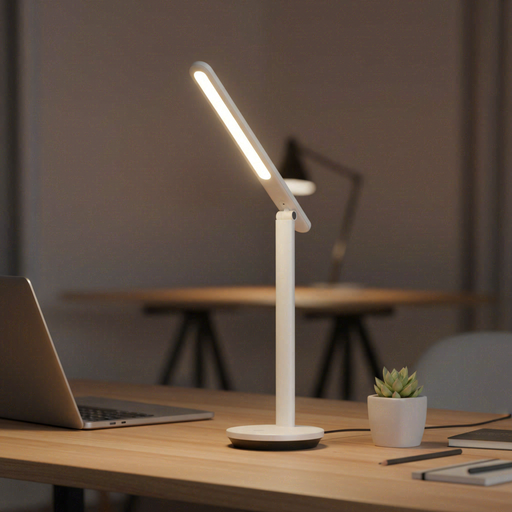
Yeelight LED Folding Desk Lamp Z1 Pro, White
Consider this folding lamp if you want to adjust brightness while reading notes and put the lamp away between hobby sessions. Its listing identifies a rechargeable design. Check its reach, footprint, lighting coverage and charging arrangement against your desk.
View on Joybuy
 No image available
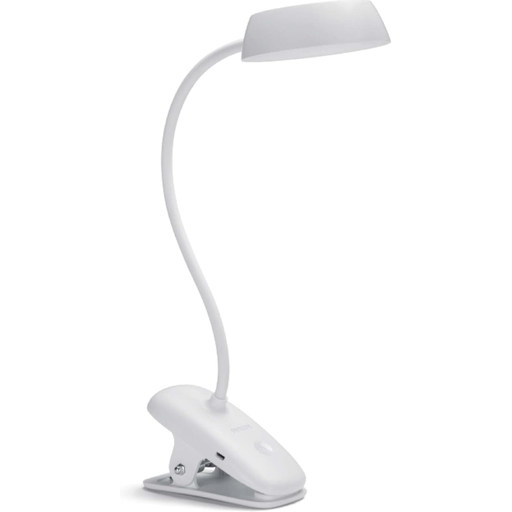
Philips Doughnut 3 W USB-rechargeable desk clip lamp, White
The clip design is worth considering if you want to keep more of the worktop free, provided your desk has a suitable edge. The listed 3 W is a power rating, not a measure of light on the page. Check the clip opening, reach, coverage and USB power arrangement; the product description specifies use in dry environments.
View on Joybuy
 No image available
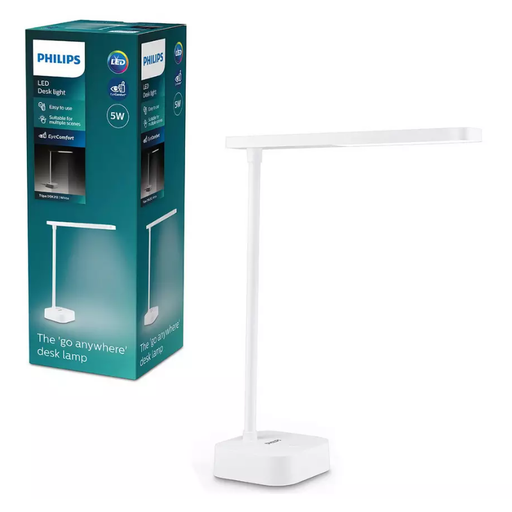
Philips Tilpa 18 W USB-rechargeable LED table lamp, White
Three brightness settings offer a choice when you move between reading notes and other desk activities. The listed 18 W does not tell you how much light reaches your page. Check the lamp’s dimensions, light coverage and charging arrangement; its integrated LED is described as non-replaceable.
View on Joybuy
 No image available
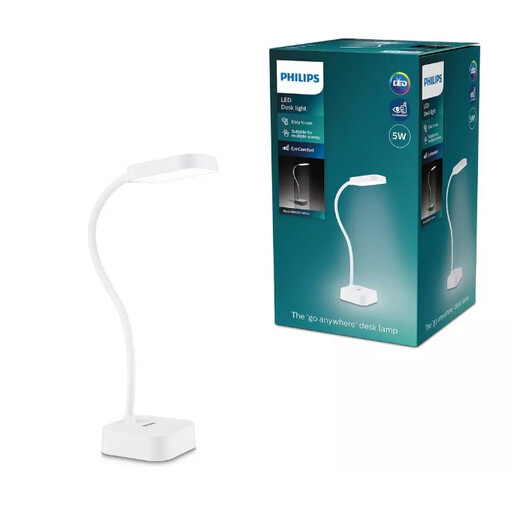
Philips Rock 18 W USB-rechargeable LED table lamp, White
This rechargeable table lamp has three listed brightness settings for changing the light level during desk use. Its 18 W rating is not a coverage or illuminance figure. Check its size, positioning and charging arrangement for your work area; its integrated LED is described as non-replaceable.
View on Joybuy
Frequently asked questions
Should I choose a clamp or a base for my hobby-room desk?
Choose a clamp if your desk edge can accommodate it and the arm has room to move; choose a base if the edge is obstructed and you can spare worktop space. Measure before buying: Daylight Company specifies different maximum clamp openings for Slimline 4 and Lumi, at 55 mm and 75 mm respectively.
Does a high CRI make printed notes more comfortable to read?
A high colour rendering index (CRI) alone cannot establish reading comfort. It may help you compare lamps for colour-sensitive hobby tasks, but also consider brightness control, reflections, surrounding room light and whether you can aim the lamp from your seated position.
What electrical checks matter before I use a desk lamp in the UK?
Check the exact lamp’s supplied power components and follow its instructions. For mains-powered lamps, Electrical Safety First advises checking for an appropriate UK 3-pin plug and fuse; it also advises against using a lamp with a damaged plug or cable. Keep cables tidy and the lamp clear of paper and other flammable materials.
Can I use the same electrical-product guidance throughout the UK?
Do not assume guidance for Great Britain also covers Northern Ireland: GOV.UK publishes separate electrical-equipment guidance for the two. If you are buying for Northern Ireland or importing a lamp directly, confirm the product-specific marking and supply arrangements with the seller.
What if more light still does not help me read my notes?
Increasing brightness is not necessarily the useful next step. If reduced vision persistently affects reading, consider advice from an optometrist or low-vision service. RNIB says a low-vision assessment can help identify lighting, magnifying devices and other equipment suited to the activities you find difficult.


