What matters when choosing?
Work out where the lamp can stand or attach in relation to your open score, then check its aim and controls against the way you use the bedroom.
| Concern |
What to check |
Who this matters to |
| Open-score coverage |
Check stated lighting or shade width and arm reach against both pages. Compare lux figures only at equivalent measurement distances. |
If I read a two-page score, I want both pages lit without moving the stand or lamp repeatedly. Around 36% of consumers put open-score coverage first. |
| Aim and glare |
Check whether the arm and head can direct light onto the score while keeping the shade below eye level, as RNIB advises. |
When the lamp sits close to my bed, direct light in my eyes or a head that will not hold position makes reading awkward. For around 29% of consumers, controlled aiming is the primary need. |
| Bedside light control |
Check for dimming and, if you want to change the light colour, selectable colour-temperature settings on the exact model. |
I need enough light for notation without leaving the bedroom brighter than I want it. Adjustable output comes first for around 21% of consumers. |
| Reading with reduced vision |
Consider glare, notation size and alternative reading formats as well as lighting; seek appropriate eye-care or low-vision advice if reading remains difficult. |
If notation is still hard to distinguish after I reposition the lamp, a different reading approach may matter more than extra brightness. Around 14% of consumers primarily need accessibility-led support. |
A Joybuy lamp to consider
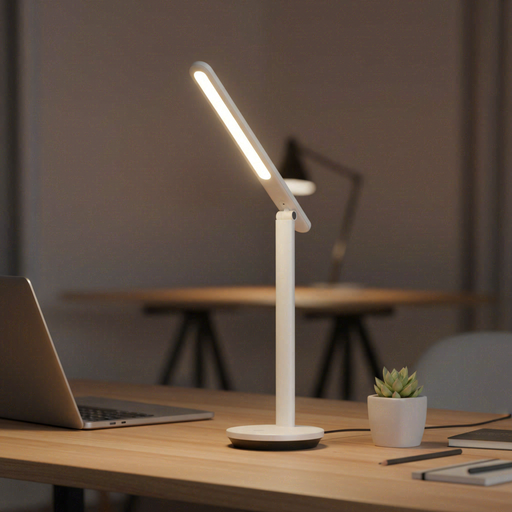
This folding, rechargeable desk lamp offers adjustable brightness for a bedside reading setup. Check its reach and light spread against your open score before choosing it.
 No image available
Yeelight LED Folding Desk Lamp Z1 Pro (White)
For bedside sheet-music reading, consider this lamp if adjustable brightness matters to you; check whether its light reaches both pages from your intended position.
Folding design and rechargeable operation. Confirm the charging requirements and whether an adapter is included.
View on Joybuy
Frequently asked questions
Where should I put a lamp for reading music beside the bed?
Place it between you and the score where practical, directing the light onto the pages rather than towards your eyes. RNIB advises keeping the shade below eye level to reduce glare.
Do I need a wide lamp head for a two-page score?
A wide head can help, but its reach and position matter too. BenQ states a 90 cm lighting width for its e-Reading Desk Lamp, while Daylight Company specifies a 51 cm shade and 100 cm arm for Lumi; check either arrangement against the size and position of your score.
Will a clamp lamp work beside my bed?
It can work if the furniture has a stable edge compatible with the clamp and a suitable path for the cable. Check the edge, clamp opening and available clearance rather than assuming a shelf or headboard will take the mounting hardware.
Should I choose warm or cool light for reading music at night?
Choose according to the light you need for the notation and the bedroom setting, rather than assuming one colour suits everyone. A lamp with dimming and selectable colour temperature offers more adjustment; the Anglepoise Original 1227 instead has a supplied 2,700 K bulb, with dimming requiring additional hardware.
What if a brighter lamp still does not make the notation clear?
Consider more than brightness if the music remains difficult to read. Larger-format material or another reading approach may help, and appropriate eye-care or low-vision advice can help you assess your individual needs.


