Open-score readers
If you read two-page or oversized paper scores, check the outer edges, centre fold and lower staves from your seated position. A bright spot in the middle need not light the whole spread.


For an open score, start with an adjustable desk lamp whose light can reach both pages, then check glare and brightness from your normal reading position. A compact clip light can free desk space, but its mounting fit and reach across the score matter more than its small footprint.
If you read two-page or oversized paper scores, check the outer edges, centre fold and lower staves from your seated position. A bright spot in the middle need not light the whole spread.
If you switch between music, books and a computer or tablet, you need a lamp you can aim and dim without reflecting light into the screen or your eyes.
If you regularly reposition a score or need straightforward controls for close reading, an adjustable head, stable support and repeatable brightness settings may matter more than a compact design.
Check the light across your widest open score before deciding whether dimming, mounting or repeatable controls should determine the lamp you choose.
| Concern | What to check | Who this matters to |
|---|---|---|
| Full-score coverage | Look for a stated coverage width or an adjustable head; check both page edges and the centre fold at your usual reading angle. | If my open score extends beyond a bright central patch, I need to see the outer notes without shifting the pages. Around 36% of consumers put full-score coverage first. |
| Glare and brightness | Check for dimming and aim the lamp away from your eyes and any screen; consider adjustable white-light settings if you use the desk in different lighting. | When I move between paper music and a screen, reflections or excessive contrast get in the way. Roughly 29% of consumers prioritise glare and brightness control. |
| Space and mounting | Compare the space taken by a base with the fit of a clamp or clip; check edge thickness, padding and stability when the head is extended. | With a score, books and a computer sharing my desk, I need the lamp to fit without obstructing the music. Around 21% of consumers make space and mounting their main concern. |
| Repeatable controls | Try the controls and head adjustment; check for a memory setting if returning to the same brightness matters to you. | If I adjust the light often for close reading, I want controls I can use consistently and a head that stays where I put it. About 14% of consumers put repeatable adjustment first. |
A bright centre can leave the outer pages, fold or lower staves difficult to see, particularly with a wide score.
Open your widest score at its normal angle and check the entire spread from your seat. A documented coverage width can help, but check how the lamp sits over your own desk.
A clip or clamp needs a suitable edge and stable support when its light is directed over the music.
Measure the desk or music-rest edge, check the mounting range and padding, and make sure the support remains stable with the lamp positioned over both pages.
Reflections and direct glare can make a score or nearby display harder to read even when the lamp is bright.
Adjust the head from your normal seat, keep its beam off the screen and reduce the brightness when the room already provides enough general light.
Wide-coverage e-Reading desk lamps for paper and screen use.
Compact desk lighting with adjustable brightness and white-light settings on the Ivory model.
Specialist close-work lighting represented by the Elumentis LED task lamp.
Installation-oriented task lighting with desk-mount, clamp and freestanding versions of A-Line/Desk.
Music-stand lights for readers who want light attached to a score rest rather than a primary desk lamp.
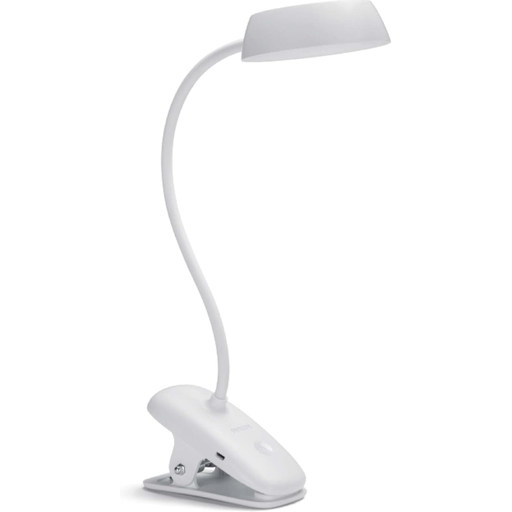
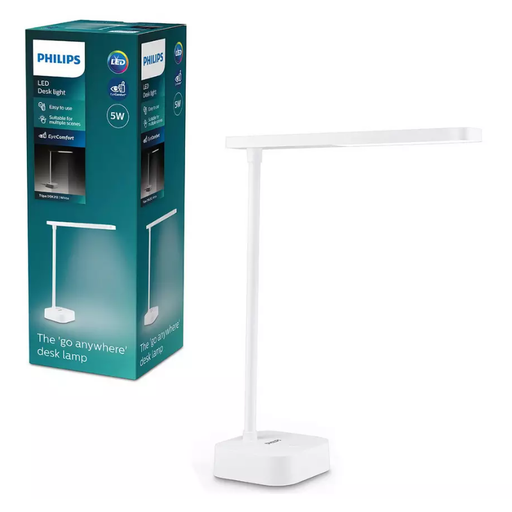
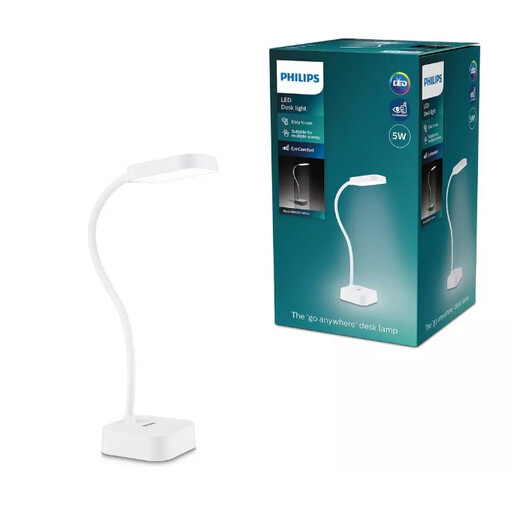
These Philips table and clip lamps offer brightness adjustment for a study desk. For reading an open score, check the light at both page edges and, for the clip model, confirm that your mounting edge is suitable.
 No image available
The clip-on design may suit a desk where a freestanding base would take up space; check that the clip fits securely and the light reaches both pages. Its description specifies step dimming and use in a dry environment.
 No image available
For desk reading where cordless placement and brightness adjustment matter, this lamp has a built-in battery and three brightness settings. Check its reach across your open score; the LED light source is non-replaceable, and the description specifies dry indoor use.
 No image available
For a study desk where rechargeable placement and brightness adjustment are useful, this lamp offers three brightness settings. Check both edges of your score at its usual reading angle; the LED light source is non-replaceable, and the description specifies dry indoor use.
Choose enough light to read the whole open score from your normal seat, rather than relying on a centre brightness figure alone. BenQ UK specifies 1,600 lux at the centre at 45 cm for its e-Reading Intelligent, but that figure does not describe illumination across every score position or desk setup.
It is useful if you want to change the appearance of the light as you switch tasks or room lighting, but it does not replace good placement and dimming. Philips Lighting UK lists 2700–4000–6500 K settings for Ivory, while Eschenbach Magnification UK lists 2700 K, 4800 K and 6400 K for Elumentis; neither set of options establishes one setting as right for every reader.
Position the head so it reaches both pages without shining into your eyes or reflecting off the screen. Philips Lighting UK advises placing a desk lamp opposite your dominant hand to reduce shadows when reading or writing; check that position against the way your score and screen sit on your desk.
A music-stand light can serve the score if its clip fits securely and its beam reaches both pages, but it may not light the rest of a study desk. Check the stand edge, stability and page coverage before choosing one instead of a desk lamp.
For a mains lamp supplied in Great Britain, check the product identification, plug, power supply and applicable conformity information before purchase. The Office for Product Safety and Standards explains that the Electrical Equipment (Safety) Regulations 2016 set requirements before electrical equipment is placed on the GB market; Northern Ireland has a separate regulatory route. At the end of the lamp’s life, Recycle Your Electricals advises recycling items with a plug, battery or cable through electrical-waste arrangements.