What matters when choosing?
Start with the size and position of the paper, then decide whether colour detail, glare control or moving the lamp takes priority.
Wide-coverage integrated LED lamp
Consider it when: Diagrams and notes regularly fill a wide, fixed desk. BenQ specifies a 90 cm lighting width for the E-Reading Intelligent.
Check before choosing: Allow for the lamp's footprint and compare its quoted illuminance at the stated height with your intended setup.
Adjustable arm with a replaceable bulb
Consider it when: You want to move the light around your writing position and select a bulb separately. The Anglepoise Type 75 Mini has a repositionable shade and a replaceable E27 LED bulb.
Check before choosing: Its specified supplied bulb is 2700 K, and dimming requires additional electrical hardware.
Foldable task lamp
Consider it when: Study moves between locations or storage space is limited. Daylight describes the Twist 2 as foldable and specifies three brightness levels and CRI 95+.
Check before choosing: Its published lux values are measured at 30 cm, not across every possible desk layout.
| Concern | What to check | Who this matters to |
|---|
| Coverage across diagrams |
Check the stated light spread, lamp reach and illuminance measurement distance against the area your papers occupy. |
When diagrams, notes and writing space are spread out, I want to see the working area without repeatedly moving the paper. Roughly 46% of consumers put coverage first. |
| Glare and colour detail |
Check whether the shade can sit below eye level, whether brightness adjusts, and whether the exact model states a CRI or Ra value. |
If coloured markings determine how I read a diagram, I need to distinguish them without light shining into my eyes or reflecting off the page. Around 36% of consumers prioritise glare control and colour detail. |
| Desk fit and portability |
Check base or clamp fit, cable arrangement and, if you will carry the lamp, its folded size and weight. |
With little desk space or several study locations, I need a lamp I can place and move conveniently. Approximately 18% of consumers make fit or portability their primary concern. |
Joybuy lamps for compact or flexible study
These clip-on, rechargeable or folding lamps are options to consider when desk space or flexible placement matters. For large or colour-coded diagrams, check each model's stated coverage and colour-rendering specifications before deciding whether it suits the work.
 No image available
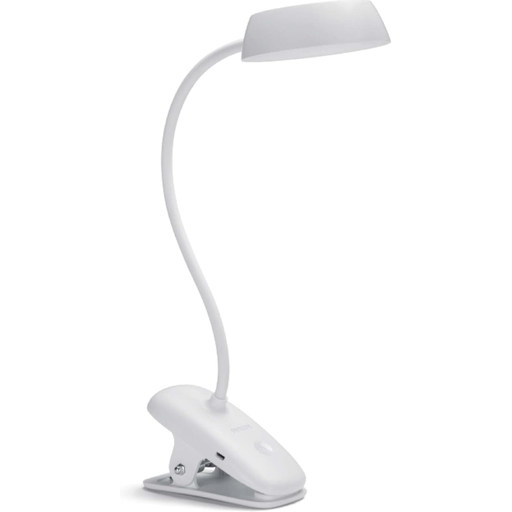
Philips Doughnut Clip Desk Lamp, USB Rechargeable, 3W, White
The clip-on design is worth considering when a lamp base would take up working space; check that the clip fits your desk.
The product name specifies USB-rechargeable operation and 3W. If your diagrams are wide or colour-coded, check the illuminated area and CRI or Ra figure, as well as charging arrangements for your intended study time.
View on Joybuy
 No image available
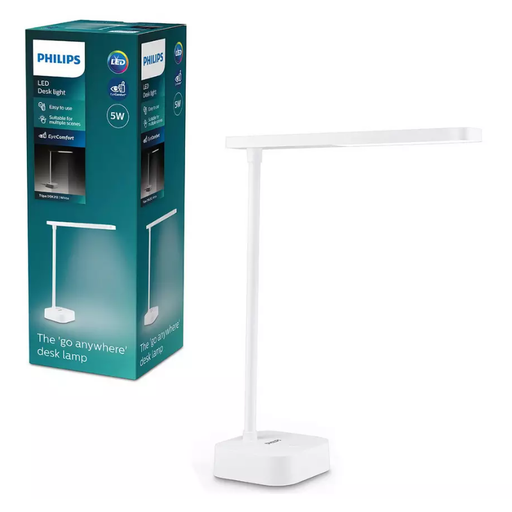
Philips Tilpa LED Desk Lamp, USB Rechargeable, 3 Brightness Settings, 18W, White
Consider this model if you want a rechargeable desk lamp with selectable brightness for changing study conditions.
Its product name specifies three brightness settings and 18W; wattage alone does not tell you how much of a diagram it lights. Check coverage, colour rendering and battery runtime against your work and study schedule.
View on Joybuy
 No image available
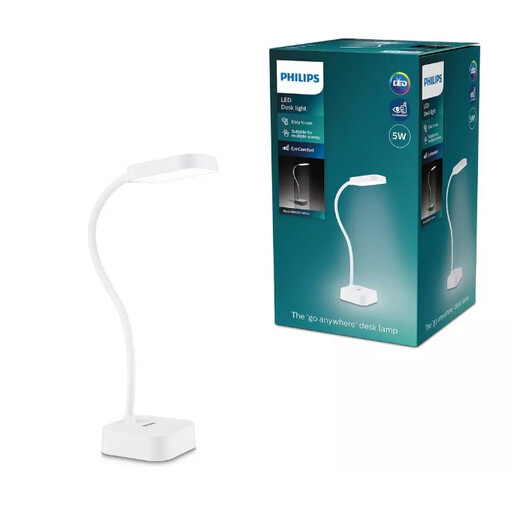
Philips Rock LED Desk Lamp, USB Rechargeable, 3 Brightness Settings, 18W, White
This rechargeable option may suit a study position away from a fixed power outlet, provided its working time fits your sessions.
The product name specifies three brightness settings and 18W. Check its desk dimensions, battery runtime, illuminated area and CRI or Ra figure before relying on it for detailed diagrams.
View on Joybuy
 No image available
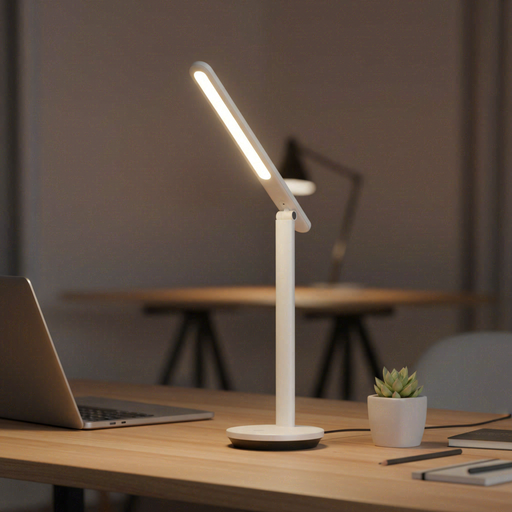
Yeelight Z1 Pro LED Folding Desk Lamp, Rechargeable, White
The folding design is worth considering if you need to put the lamp away or change where you study.
The product name specifies rechargeable operation and adjustable brightness. Check its dimensions and runtime for your workspace, then assess its stated coverage and colour rendering if small printed details matter.
View on Joybuy
Common questions
How should I position a desk lamp over paper diagrams?
Place the task light between you and the paper, with its shade below eye level, as RNIB advises. Aim it away from your line of sight and adjust it so your writing hand does not shadow the detail you are reading; keep general room lighting on as well.
Does a high CRI or Ra figure help with colour-coded diagrams?
A stated CRI or Ra figure is useful when comparing the colour-rendering specifications of exact models, but it does not guarantee how every printed colour will look on your paper. BenQ lists Ra≥95 for the E-Reading Intelligent and Daylight lists CRI 95+ for the Twist 2; also consider glare and where the light falls.
Can I compare desk lamps by their lux figures?
Only when the measurement distances and coverage conditions are comparable. Daylight states 1,000–2,000 lux at 30 cm for the Twist 2, whereas BenQ states 1,600 lux at a 45 cm height for the E-Reading Intelligent, so those figures alone cannot identify which better lights your paper layout.
What safety information should I check for a mains desk lamp in the UK?
Check the product's intended market, supplier details, supplied plug and instructions, and look for relevant official safety alerts if something raises concern. In guidance dated 31 March 2026, the UK Department for Business and Trade lists UKCA or CE marking for electrical equipment placed on the market in Great Britain; for Northern Ireland it lists CE, or CE together with UKNI where applicable. Those requirements concern the relevant market and do not, by themselves, establish that an individual lamp is safe.


