What matters when choosing?
Start with the paper and where the lamp can stand or attach. Then check the light at your drawing position: its adjustability, stated coverage and any measurement distance matter more than an output figure on its own.
| Concern |
What to check |
Who this matters to |
| Fine lines and shading |
Look for dimming and illuminance stated at a measurement distance. If you also judge coloured materials, check the exact model’s CRI or Ra specification. |
If I need to distinguish faint hatching from the paper, I want enough light without uncomfortable glare. Around 33% of consumers would put this fine-detail need first. |
| Page coverage and hand shadows |
Compare stated coverage with your paper size and drawing distance; check whether the shade can be placed clear of your drawing hand. |
On a broad pad, I do not want to move the page to see a dim corner or work in my own shadow. This would be the main concern for around 25% of consumers. |
| Reach and posture |
Check arm reach, head movement, mounting stability and cable length for your desk or board. |
If I change the angle of a sketchbook or board, I need the light to follow without making me lean towards it. Around 25% of consumers would prioritise positioning. |
| Compact-desk fit |
For a light bar, check monitor shape, thickness and the stated lit area; for a clamp, measure the usable desk edge. |
When I sketch beside a screen, the mounting point and lit area determine whether the lamp fits my workspace. Fit would come first for around 17% of consumers. |
Joybuy lamps for drawing desks
These lamps address two desk-based arrangements: a clamp lamp for a work surface with a suitable edge, and a folding lamp for sketching at a desk. Check their light at your intended drawing position before deciding between them.
 No image available
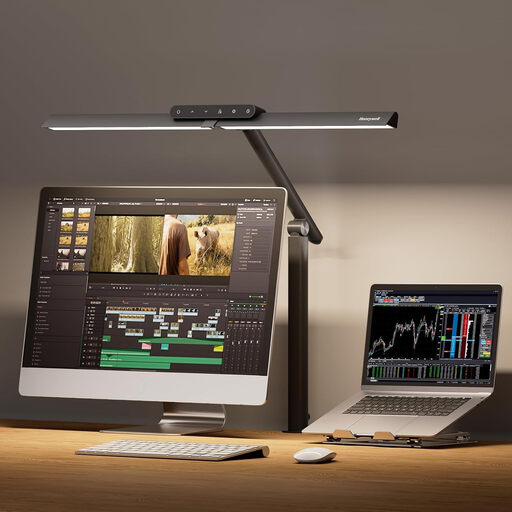
Honeywell HJ1 Sunturalux clamp desk lamp, black, UK variant
Consider this clamp lamp for sketching at a desk or workbench with a suitable mounting edge.
The product title lists 1200 lm, four colour modes and stepless dimming; the lumen figure does not establish how evenly it lights your page.
Check the edge against the stated 2.46-inch clamp limit, and confirm the plug arrangement for your location.
Joybuy
 No image available
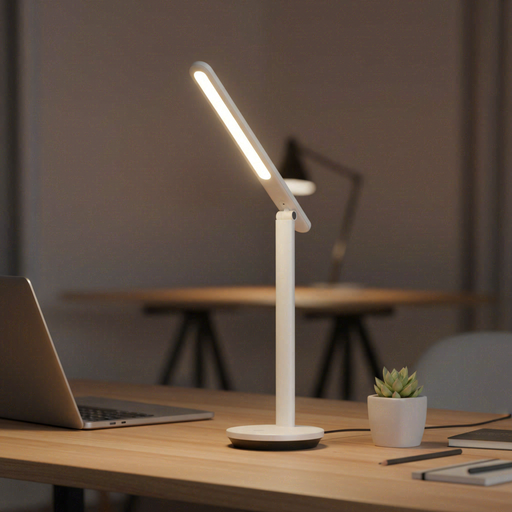
Yeelight Z1 Pro rechargeable folding desk lamp, white
Consider this model if you sketch at a desk and want a lamp you can fold between sessions.
Its product title states that it is rechargeable, foldable and has adjustable brightness.
Check that its lit area, operating time per charge and power arrangement suit your drawing setup.
Joybuy
Questions about drawing lamps
How bright should a lamp be for pencil sketches?
Choose adjustable light that lets you see fine marks at your usual drawing distance without uncomfortable glare. The Health and Safety Executive notes that detailed work generally needs more light; when comparing a maker’s lux figures, check the stated measurement distance rather than treating the figures as light levels across your whole page.
Do graphite sketches need a high-CRI lamp?
A high colour-rendering index is more relevant if you also judge coloured paper, inks or other coloured materials. For graphite alone, make sure you can control brightness, cover the drawing area and position the light to avoid glare and hand shadows; a CRI figure does not establish those conditions.
What should I measure before buying a clamp or monitor light?
Measure the usable mounting edge for a clamp lamp, or the screen’s thickness and shape for a monitor light. Daylight Company lists a 55 mm maximum clamp opening for the Techne 2, while BenQ gives separate flat- and curved-monitor compatibility ranges for the ScreenBar Halo. Check the exact model against your own mounting point.
What electrical-marking checks matter for a lamp in Great Britain?
For electrical equipment supplied in Great Britain, check the applicable product information and power arrangement rather than assuming one marking is required in every case. The Office for Product Safety & Standards identifies the Electrical Equipment (Safety) Regulations 2016 as applicable there, and Department for Business and Trade guidance updated in August 2026 says CE marking continues to be recognised alongside or in place of UKCA marking where applicable. Northern Ireland can have different requirements.
How should I look after a drawing lamp?
Follow the maker’s cleaning and light-source instructions, and check the cable, plug and lamp body for damage. The Health and Safety Executive advises stopping use of electrical equipment if its safety is in doubt and having a competent person carry out a more thorough check.


