Readers short on desk space
If printed notes and a notebook already fill the worktop, a clamp or clip-on lamp can leave more room for writing. Check that the desk edge will hold it securely; Daylight Company offers examples of both mounting formats.


Choose a clamp or clip-on lamp if keeping the worktop clear matters most and your desk has a suitable edge; choose a freestanding lamp if it does not. For longer sessions, check how the lamp is powered, then whether you can aim and dim the light without shining it into your eyes or reflecting it off the page.
If printed notes and a notebook already fill the worktop, a clamp or clip-on lamp can leave more room for writing. Check that the desk edge will hold it securely; Daylight Company offers examples of both mounting formats.
If you regularly read or annotate paper notes, look for a head you can aim, brightness you can adjust and a power arrangement that suits the length of your sessions. Daylight Company and BenQ specify different combinations of these features for their task lamps.
Consider the lamp alongside the way the material is presented. RNIB identifies lighting, larger print, magnifiers and other formats as possible reading supports; the useful combination depends on the person and task.
Start with the space available for mounting or a base, then check how the lamp directs light onto your notes and whether its power arrangement suits where you read.
| Concern | What to check | Who this matters to |
|---|---|---|
| Usable desk space | Check for a secure clamping edge, including clearance around drawers or raised lips, or measure the space a base can occupy. | I need room to spread out notes and write without working around a lamp base. Around 42% of consumers put preserving desk space first. |
| Light on the page | Check head movement, dimming and glare shielding; read any lux figure together with its measurement distance. | When I annotate paper for a long stretch, I want to direct the light onto it as conditions change. Controllable illumination is the primary need for around 33% of consumers. |
| Flexible placement | Check clip stability, stated battery runtime and charging needs, or whether a lead can reach a suitable socket. | If I move between reading spots, I need a lamp I can reposition without depending on a nearby socket. Around 25% of consumers place flexible use first. |
A stated lux figure does not tell you whether the lamp will reach your notes from its position on your desk. A clamp needs a suitable edge, while a base takes worktop space.
Measure the available space and check the arm’s reach and movement. Compare stated illumination only with its measurement distance in view.
A portable lamp can suit changing reading spots, but its battery may not last through a longer session. Daylight Company states a four-hour battery runtime for its Smart Clip-On Lamp.
Compare the stated runtime with your usual reading session and plan where you would charge the lamp; consider mains power if sustained use is your priority.
Recharging also takes time and may interrupt reading if the battery runs down.
Electrical Safety First warns that overloaded extension devices can overheat and advises against plugging one extension lead into another.
Position a mains lamp so its lead can reach safely. Use only one extension device per wall socket and do not daisy-chain extension leads.
Lighting is one possible reading support, not a substitute for considering the print itself or other aids. RNIB also identifies larger print, magnifiers and alternative formats.
If ordinary print remains difficult, consider those options and a low-vision assessment rather than relying on another lamp purchase.
Its task-lighting range includes clip-on, clamp and freestanding options relevant to a small reading desk.
Its E-Reading Intelligent is an articulated option to consider when notes occupy a wider area of the desk.
The Type 75 with Desk Insert is an articulated option for readers who want a replaceable bulb.
These options cover a rechargeable desk-clip lamp and two freestanding desk lamps. Choose between them by the space you can spare, where the lamp will sit and how you plan to power it.
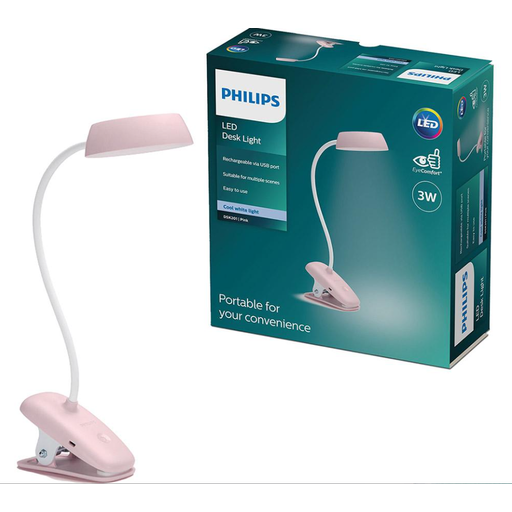 No image available
The clip-on format may suit a crowded writing surface if your desk has a secure place to attach it.
The product title specifies USB recharging and 3 W. Check the clip fit and battery runtime against your desk and reading sessions.
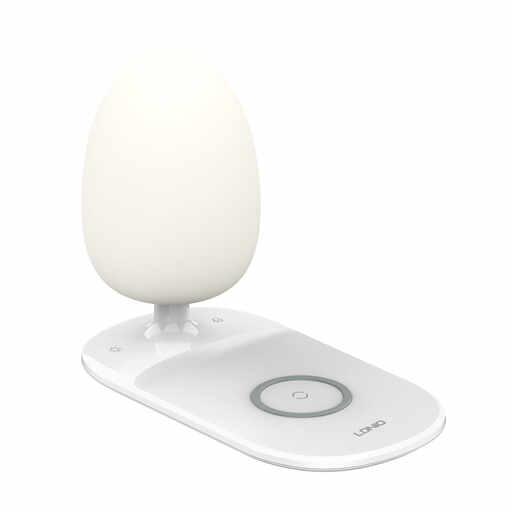 No image available
A freestanding lamp is an option when there is no suitable edge for a clip, provided its base leaves enough room for your notes.
The product title identifies a 1M variant. Check the base dimensions, light adjustment and power arrangement for your desk.
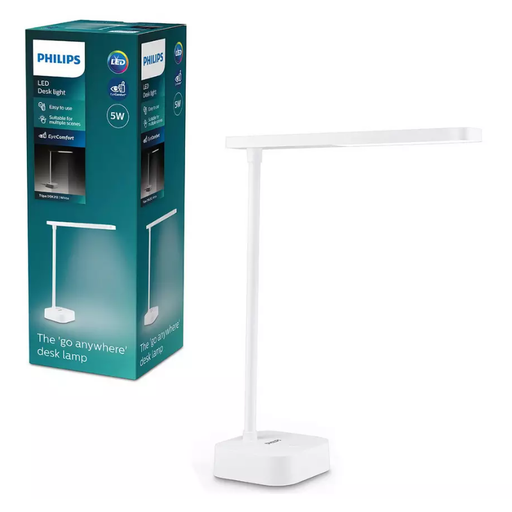 No image available
This freestanding rechargeable option may suit a desk with room for a base when you want to change brightness while reading.
The product title specifies three brightness settings and 18 W. Check the base dimensions and battery runtime; the product information says a USB power adapter is not included.
Choose a clip-on or clamp lamp if keeping your small desk clear is the priority and it has a stable, suitable edge. A base lamp avoids the need for that edge but occupies worktop space; check its footprint, aiming range and power arrangement.
No. Read a manufacturer’s lux figure with the distance at which it was measured: Daylight Company states figures for some models at 30 cm, while BenQ specifies 1,600 lux at 45 cm for the E-Reading Intelligent. Also check whether you can position and dim the lamp appropriately for your notes.
Consider reading supports beyond lighting. RNIB identifies options including larger print, magnifiers and alternative formats; a low-vision assessment can help you consider what suits the person and reading task.