Organic-first desk-lunch shoppers
If an organic-labelled custard is the priority, an ambient soya pack may suit you even if you originally searched for a tin. Check whether its larger size works with your plans for leftovers.


Choose an organic-labelled, ready-to-eat soya custard if the organic claim matters more than having a tin: the identified options come in larger 525–530g ambient packs. A ready-to-eat can is simpler when you want custard without workplace preparation, provided its ingredients and leftover-storage instructions suit you. Instant or powdered custard requires water or other ingredients and preparation facilities, so check what you can use at work before choosing it.
If an organic-labelled custard is the priority, an ambient soya pack may suit you even if you originally searched for a tin. Check whether its larger size works with your plans for leftovers.
A ready-to-eat custard suits a desk lunch when preparing a mix is impractical. Check whether the exact product can be served cold if you will not have heating equipment.
Compare the current ingredient and allergen information on the exact pack. A plant-based recipe, an organic claim and suitability for a particular allergy are different questions.
For a quick desk lunch, decide which requirement comes first: an organic claim, eating without preparation, ingredient suitability or a workable plan for leftovers.
| Concern | What to check | Who this matters to |
|---|---|---|
| Organic claim and pack format | Check the organic claim on the custard itself, then confirm whether its pack size and format suit your lunch. | If organic production is my priority, I can choose an ambient pack rather than insist on a tin. About 36% of consumers put the organic claim first. |
| Preparation at work | Check whether the custard is ready to eat or needs boiling water, milk or heating equipment. | When I have little time or equipment at my desk, I need custard I can serve straight away. Roughly 29% of consumers prioritise eating without preparation. |
| Ingredients and allergens | Read the current pack’s ingredients and allergen statement; do not equate organic or plant-based with allergen-free. | If I need to avoid a particular ingredient, the recipe and any precautionary allergen statement determine whether the exact pack works for me. Around 21% of consumers put ingredient suitability first. |
| Portions and leftovers | Compare pack size with what you will eat, and follow the product’s instructions after opening. | For one lunch, I need a way to keep any remaining custard as directed rather than leave an opened pack at my desk. About 14% of consumers make leftover management their main concern. |
The organic-labelled soya custards identified here are larger ambient packs, whereas the tinned examples are conventional custards. The packaging format alone does not establish an organic claim.
Check the claim on the exact custard first, then decide whether an ambient pack fits your desk-lunch routine.
A 400g can or a larger organic pack may last beyond one lunch. Opened-pack instructions vary: Ambrosia specifies refrigeration and use within three days for its Deluxe can, while M&S specifies two days for Silky Smooth Custard.
Check the label and arrange suitable refrigerated storage if you intend to keep the remainder.
Custard left over without suitable storage may have to be discarded.
The listed Provamel organic custard contains soya and wheat-derived ingredients. Ambrosia says its plant-based custard is made to a vegan recipe but also carries a precautionary milk statement.
Use the current ingredient list and allergen statement for the exact variant you plan to eat.
Bird's Instant Custard needs boiling water; its Original Custard Powder needs milk, sugar and heating. Neither works like a ready-to-eat pack at a desk without the necessary facilities.
If you cannot prepare custard where you eat, choose a ready-to-eat format instead.
Its ready-to-eat range includes a 400g Deluxe custard can and a separate plant-based custard.
Its Original Custard Powder and Instant Custard are preparation-dependent alternatives to ready-to-eat custard.
Tesco lists its own ready-to-serve custard alongside Ambrosia cans in its tinned-custard range.
M&S lists a 400g Silky Smooth Custard made with whole milk.
Sojade describes its 530g ambient soya custards as organic, vegan and long-life.
A UK retailer lists Provamel Organic Soya Custard in a 525g pack and describes it as dairy- and lactose-free.
These ready-to-serve custards offer a no-mix option for a quick desk lunch. If organic labelling is essential, check the claim on the exact pack before choosing one; the larger packs also call for a plan for leftovers.
 No image available
Consider this ready-to-serve custard if you want to avoid preparing a mix at work. The 400g pack may leave custard after one lunch; refrigerate any remainder and follow the pack’s opened-storage instructions. Check its label if an organic claim or milk ingredients affect your choice.
 No image available
This ready-to-serve strawberry-flavour variant suits a lunch without custard preparation. Plan how you will refrigerate any remainder from the 400g pack, and check the current ingredients and organic labelling if either matters to you.
 No image available
Consider this ready-to-serve option if you can use a 1kg pack across more than one serving. It needs refrigerated storage after opening; check the label for the exact instructions, ingredients and any organic claim. Do not assume this pack comes in a tin.
 No image available
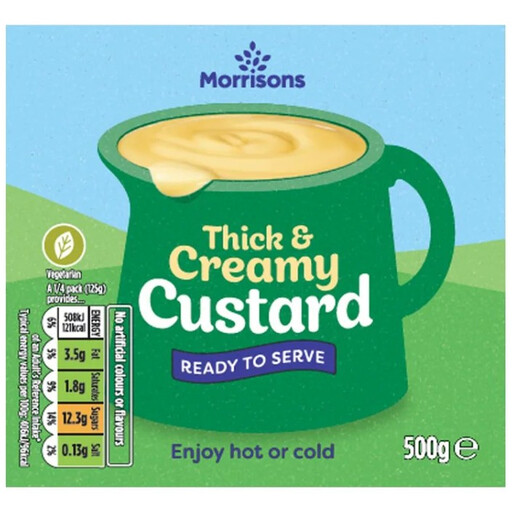
This 500g ready-to-serve custard is an option when you do not want to prepare a mix at work. Check whether the pack size suits your lunch and how you will refrigerate leftovers. Confirm any organic claim and ingredient requirements on the exact pack; do not assume it is a tin.
An organic claim must meet the applicable UK food-labelling rules, not merely describe a plant-based recipe or appear in a retailer’s organic range. The Department for Environment, Food & Rural Affairs says food labelled organic must meet organic-production requirements, including at least 95% organic agricultural ingredients for a product-level organic claim. Check the claim on the custard’s own pack.
No. Sojade describes its organic soya custards as long-life ambient products in 530g packs, and a UK retailer lists Provamel Organic Soya Custard in a 525g pack. If a metal tin is important to you, check the packaging of the particular organic product rather than assuming the formats are interchangeable.
Check the exact product’s serving directions. Ambrosia describes its Deluxe 400g can as suitable hot or cold; if you choose to heat a canned custard, follow its pack directions and transfer the contents to a suitable container rather than heating the can.
Follow the opened-pack instructions for the product you have. Ambrosia directs shoppers to remove remaining Deluxe custard from its can, refrigerate it and use it within three days; M&S directs shoppers to refrigerate its Silky Smooth Custard and eat it within two days. Food Standards Scotland advises checking labels for refrigeration and use-after-opening instructions.
Neither description establishes suitability for a particular allergy. The listed Provamel organic custard contains soya and wheat-derived ingredients, while Ambrosia’s plant-based custard carries a precautionary milk statement. Read the current ingredient and allergen information on the exact pack before deciding.