People reducing sugar at lunch
If you want a sparkling drink with your meal while reducing sugar, compare the exact regular and zero-sugar variants. Check sugars per 100ml as well as the volume you plan to drink.


For a quick desk lunch, choose a zero-sugar fizzy drink if reducing sugar is your priority, or an explicitly caffeine-free zero-sugar cola if you also want to avoid caffeine. A regular drink remains an option if you prefer its recipe, but check sugars per 100ml and the size of the can or bottle. Northumbria Healthcare NHS Foundation Trust notes that sugar-free fizz can still be acidic and contribute to tooth erosion, so it is not equivalent to water for that concern.
The useful starting point is whether sugar, caffeine or frequent exposure to acidic drinks changes your lunchtime choice.
If you want a sparkling drink with your meal while reducing sugar, compare the exact regular and zero-sugar variants. Check sugars per 100ml as well as the volume you plan to drink.
If you want cola flavour without caffeine, look for a variant explicitly named caffeine-free or no caffeine. Coca-Cola Great Britain and Pepsi UK list zero-sugar, caffeine-free cola variants; a zero-sugar name alone does not identify caffeine status.
Reducing sugar and limiting exposure to acidic drinks are different considerations. Northumbria Healthcare NHS Foundation Trust notes that sugar-free fizz can still contribute to tooth erosion, making water a different choice if you regularly sip a drink throughout the day.
Choose a flavour and recipe first, then check the exact variant’s nutrition and ingredient label against what matters for your lunch.
Choose it when: You want cola flavour without the sugar in a regular recipe.
Bear in mind: Standard zero-sugar colas can contain caffeine; Pepsi UK lists caffeine in Pepsi Max.
Choose it when: You want cola flavour while avoiding both sugar and caffeine.
Bear in mind: Check for the explicitly caffeine-free variant, such as Pepsi Max No Caffeine or Coca-Cola Zero Sugar Caffeine Free, rather than another drink in the same range.
Choose it when: You would rather have a lemon-and-lime or fruit-flavoured drink than cola.
Bear in mind: Flavour does not establish caffeine or sweetener content; check the particular can or bottle.
Choose it when: You prefer a particular sugar-containing recipe and have checked how much is in your serving.
Bear in mind: Regular recipes differ. Coca-Cola Great Britain lists 10.6g sugars per 100ml for Coca-Cola Original Taste, while Pepsi UK lists 4.5g per 100ml for Pepsi Classic.
| Priority | What to check | Your needs |
|---|---|---|
| Sugar and serving size | Compare sugars per 100ml, then check the volume of the can or bottle. Read the figures for the exact regular or zero-sugar variant. | I want to reduce sugar in the drink I have with lunch, rather than judge it by flavour or brand name. |
| Caffeine | Look for an explicit caffeine-free or no-caffeine designation. Check the ingredient statement if the variant name does not settle the question. | Cola sounds good with lunch, but I would prefer not to have caffeine. |
| Sweeteners and labelling | Read the current ingredient list for sweeteners and any phenylalanine statement. The Food Standards Agency identifies aspartame as a source of phenylalanine, which matters to people with phenylketonuria (PKU). | I need to know which sweeteners are in the particular drink before choosing it. |
| Frequent sipping | Consider how often you will sip the drink, not just its sugar figure. Northumbria Healthcare NHS Foundation Trust notes that sugar-free fizz can still be acidic and contribute to tooth erosion. | If my drink will sit on the desk all afternoon, I do not want to mistake zero sugar for no dental consideration. |
| Flavour and format | Decide between cola and a non-cola flavour, then check the individual can or bottle size and pack format. | A ready-to-drink portion suits a short lunch break, but I still want a flavour I will choose to drink. |
Pepsi UK lists caffeine in standard Pepsi Max but offers a separate Pepsi Max No Caffeine variant. The distinction is the exact product, not whether its name says zero sugar.
If caffeine avoidance matters, choose a can or bottle explicitly labelled caffeine-free or no caffeine.
The sugar figure changes with the recipe: Coca-Cola Great Britain lists 10.6g per 100ml for Coca-Cola Original Taste, while its caffeine-free Zero Sugar variant lists 0g per 100ml.
Compare sugars per 100ml and the volume you will drink, using the label for the exact variant.
Northumbria Healthcare NHS Foundation Trust notes that sugar-free fizzy drinks can still be acidic and contribute to tooth erosion.
If you tend to sip over a long period, consider water instead of treating a zero-sugar fizzy drink as equivalent.
The exact recipe matters when you are checking sugar, caffeine, sweeteners or a phenylalanine statement. Tesco advises customers to read the product label because food products can be reformulated.
Check the current can or bottle when it arrives, particularly if an ingredient or label statement affects your choice.
These ranges illustrate different recipe choices; check the precise variant rather than applying one drink’s label to an entire brand.
Coca-Cola Great Britain lists both Coca-Cola Original Taste and a zero-sugar, caffeine-free cola variant.
Pepsi UK lists a regular cola, Pepsi Max and a separate Pepsi Max No Caffeine variant.
Sprite offers a lemon-and-lime alternative to cola, including a Zero variant.
Dr Pepper is another flavour to consider if you do not want a standard cola or lemon-and-lime drink.
Tesco is a retailer reference for comparing pack formats and exact variants, rather than a single drink flavour.
These canned options cover regular cola, zero-sugar cola, an explicitly caffeine-free cola and non-cola flavours for a quick desk lunch. Choose by the exact variant and label information that matters to you.
 No image available
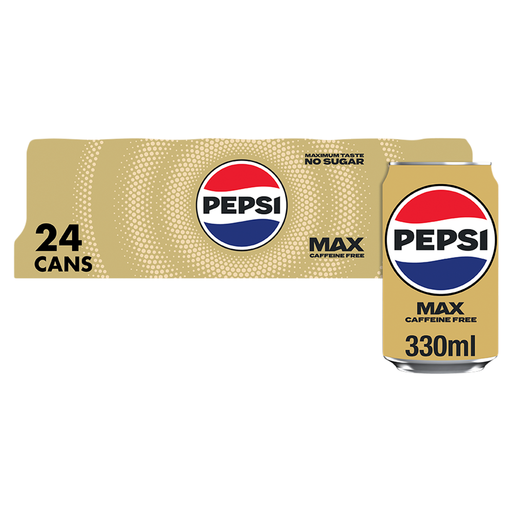
For a cola with lunch when you want to avoid both sugar and caffeine. Pepsi UK lists its no-caffeine Pepsi Max variant at 0g sugars per 100ml; this pack contains 24 individual 330ml cans. Check the current ingredient and phenylalanine statements if relevant to you.
 No image available
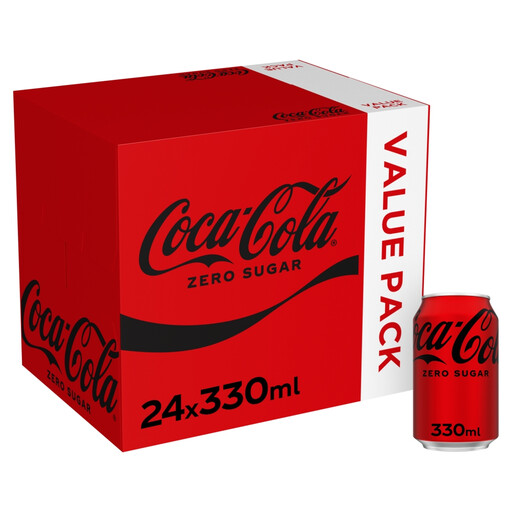
A zero-sugar cola option in 24 individual 330ml cans. This is not the separately named Caffeine Free variant: if avoiding caffeine is part of your decision, check the exact can label before choosing it.
 No image available
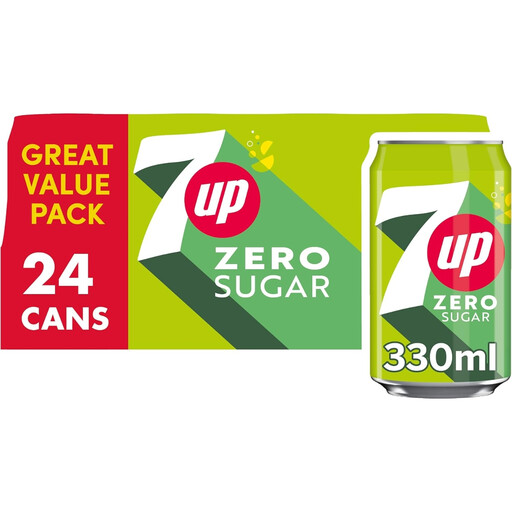
A lemon-and-lime Zero variant if you would rather have a non-cola drink with lunch. The pack contains 24 individual 330ml cans; check the current label for ingredients and any dietary statements relevant to you.
 No image available
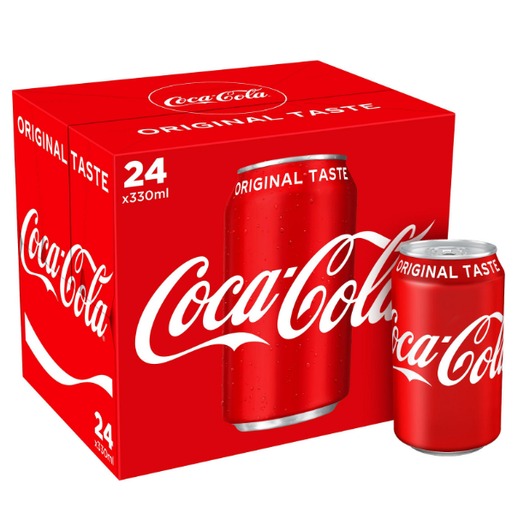
A regular cola recipe for a lunch where that particular flavour is your preference. Coca-Cola Great Britain lists 10.6g sugars per 100ml for Original Taste; this pack has 24 individual 330ml cans. Take the full can size into account when comparing it with a zero-sugar option.
 No image available
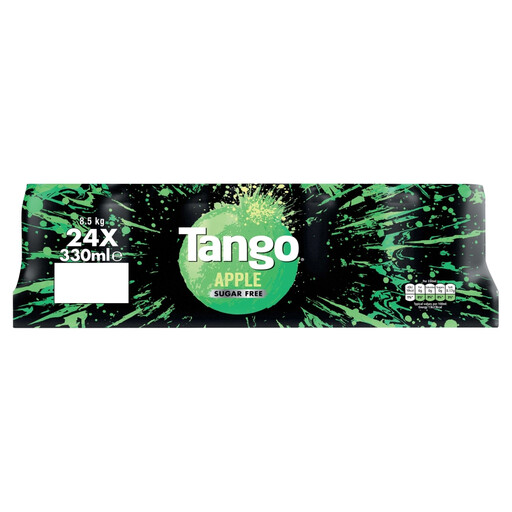
An apple-flavoured, sugar-free alternative to cola in 24 individual 330ml cans. If you also want to avoid caffeine, check the current can for an explicit caffeine-free statement rather than assuming the sugar-free name covers it.
A zero-sugar variant fits the specific aim of reducing sugar from your fizzy drink, but it does not resolve every consideration. Northumbria Healthcare NHS Foundation Trust notes that sugar-free fizz can still be acidic and contribute to tooth erosion, so consider how often you sip it as well as its nutrition label.
Choose a cola explicitly labelled caffeine-free or no caffeine. Coca-Cola Great Britain lists Coca-Cola Zero Sugar Caffeine Free, and Pepsi UK lists Pepsi Max No Caffeine; do not assume that another zero-sugar cola in either range has the same caffeine status.
Aspartame is a source of phenylalanine, so its presence can be relevant to a product’s label statement. The Food Standards Agency identifies aspartame as a possible risk for people with phenylketonuria (PKU); check the current product label and follow your clinical dietary advice if PKU affects your choice.
Use it to identify the variant, but read the label on the drink you receive before relying on its ingredients or nutrition figures. Tesco advises this because food products may be reformulated.