
24/7 Customer Support

Free returns

Same-day & Next-day Delivery

Quality Guaranteed

Unlock Your Welcome Offers: FREE Delivery | Up to 80% OFF | Free 30-day JoyPlus trial
Download the APP
A cluttered desk can often lead to a cluttered mind. When pens, papers and cables compete for space, finding what you need becomes a challenge, and maintaining focus can feel impossible. An effective desk organiser is more than just a container; it's a tool for creating an orderly environment that supports productivity. This guide will walk you through key considerations for choosing the right workspace organiser and present our recommendations to help you find a practical solution for your home office, study or classroom.
Finding the ideal desk tidy involves more than just picking one that looks good. To ensure it serves its purpose effectively, consider these practical points.
Before you start browsing, take stock of what you need to store. Are you drowning in pens and highlighters, or do you need a home for sticky notes, paper clips and charging cables? Some people require a simple pen pot, while others need comprehensive desk storage solutions with multiple compartments of varying sizes. Listing your daily essentials will help you identify an organiser with the right configuration for your items.
An office desk organiser should be built to withstand daily use. Materials like high-impact polystyrene plastic offer durability and are easy to clean, while metal mesh provides a sturdy, industrial look. Consider the overall aesthetic of your workspace. A sleek, minimalist design might suit a modern office, whereas a colourful organiser could brighten up a student's desk. The material should not only be robust but also complement your existing setup.
One of the biggest mistakes is buying a workspace organiser that is too large for the desk, which only adds to the clutter. Measure the area where you plan to place the organiser. A good desk tidy should maximise storage without consuming too much valuable surface area. Look for models with a compact footprint but a smart, vertical design to make the most of your space.
Based on functionality, design and user-friendliness, here are our recommendations for getting your desk in order.
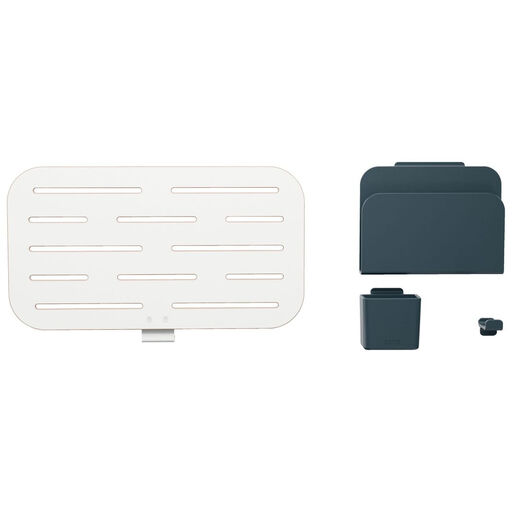
Why It Stands Out: The Leitz Ergo organiser brings a clever, modular approach to desk storage. Its pegboard-style design allows for a high degree of customisation, letting you arrange the various compartments to perfectly suit your workflow. This flexibility makes it an excellent choice for those with specific organisational needs.
Pros:
Who is it for? This organiser is ideal for creative professionals, students and anyone who enjoys tailoring their storage setup to their specific tools and accessories.
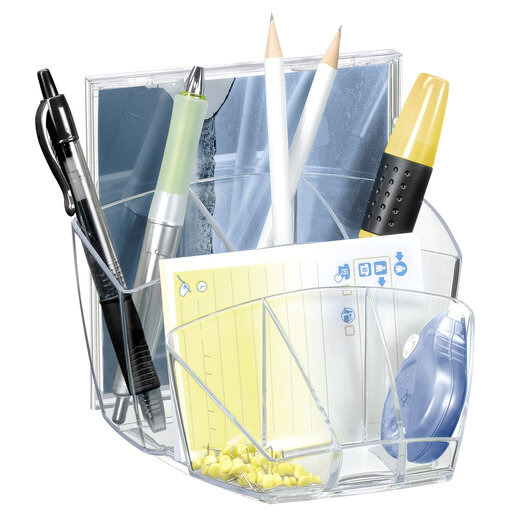
Why It Stands Out: The CepPro Desk Tidy is a highly functional, all-in-one solution. It features a generous number of compartments designed to hold everything from pens and scissors to notepads and business cards. Its clear, crystal-finish plastic construction allows you to see exactly what is inside each section, saving you time.
Pros:
Who is it for? Professionals and home-based workers who need to manage a wide variety of small stationery items and want a single, efficient unit to keep everything in its place.
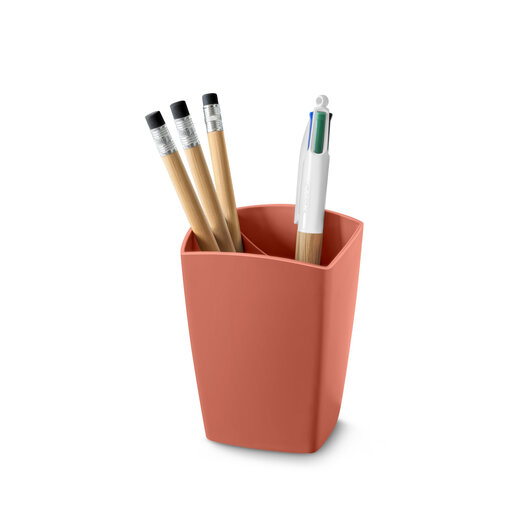
Why It Stands Out: Sometimes, simplicity is the most effective solution. This stationery holder offers a clean, minimalist design with two compartments, making it perfect for separating pens from pencils or taller items like rulers and scissors. Its stable base ensures it won't tip over, and the warm terracotta colour adds a subtle touch of style.
Pros:
Who is it for? This is an excellent choice for minimalists, individuals with limited desk space or anyone who primarily needs a simple and stylish pen pot to hold writing instruments.
If these specific models aren't quite what you're looking for, or if you're planning a complete workspace overhaul, there are many other options available. From monitor stands with built-in storage to complete modular systems, finding the right fit is key.
Explore our full range of products to create an efficient and comfortable setup by visiting our work from home desk category.
A well-organised desk reduces visual distractions and minimises the time spent searching for essential items. By having a designated place for everything, you can maintain focus on the task at hand, leading to a more efficient and less stressful workflow.
Start by decluttering and removing anything you don't use daily. Next, group similar items together—all writing tools in one section, all paper goods in another. Use a desk organiser with suitable compartments to house these groups. Finally, try to maintain the system by returning items to their designated spots after use.
Your desk organiser should hold the items you reach for most frequently. This typically includes pens, pencils, a highlighter, scissors, a ruler, sticky notes, paper clips and perhaps a charging cable for your phone. The goal is to keep these essentials within arm's reach to avoid interrupting your work.