Paper-first detail checkers
If you regularly compare dense print, annotations, tables or forms, you need to position the light over the page as your work moves around the desk.


If you mainly check printed pages, choose an adjustable task lamp that you can aim at the paper without shining into your eyes or towards a screen. A monitor light bar can preserve desk space when you study beside a compatible monitor, but its fit, power connection and illuminated area all need to suit your setup. Compare light measurements only when their distance and coverage are stated, and check whether the light source can be replaced.
If you regularly compare dense print, annotations, tables or forms, you need to position the light over the page as your work moves around the desk.
Switching between a display and printed material makes the page position, screen reflections and remaining desk space part of the same lighting decision.
In a compact bedroom or shared room, precise positioning matters when a lamp base would occupy space needed for books or coursework.
For paper-first work, start with where the lamp can put light on the page. If a monitor shares the desk, decide whether a compatible light bar would leave more usable surface; then check placement and light-source replacement for the exact model.
Choose when: Printed notes and forms are the main task and you want to redirect or dim the light as their position changes.
Trade-off: A conventional lamp occupies desk space; dimming alone does not establish how much of your page it will illuminate.
Choose when: Paper sits beside a compatible monitor and preserving desk surface is important.
Trade-off: The bar needs a suitable display and power connection, and its lit area must reach the paper.
Choose when: You need a long-reaching arm and want to replace a bulb rather than rely on a fixed light source.
Trade-off: Check that the base and arm fit your desk; bulb lumens alone do not tell you how brightly the page will be lit.
| Concern | What to check | Who this matters to |
|---|---|---|
| Light on fine print | Look for illuminance at a stated distance and the area lit at that level. Check whether you can aim and dim the light. | When small annotations or figures are the main task, I need light on the page at my reading position, not just a bright-looking lamp. Around 42% of consumers put direct, controllable page lighting first. |
| Screen and desk space | For a light bar, check monitor thickness and curvature, the power connection and whether the lit area reaches your documents. | If I work between a screen and handouts, I need room for both without making the display harder to view. Roughly 33% of consumers make screen-and-space fit their primary concern. |
| Placement and upkeep | Measure the space for the base or clip and cable; confirm reach and whether the bulb or LED source is replaceable. | With a narrow desk or a changing room layout, I want a lamp I can position and maintain rather than one tied to a single arrangement. About 25% of consumers prioritise fit and serviceability. |
Anglepoise specifies 470 lumens for the bulb supplied with its Type 75, while BenQ specifies 800 lux at 45 cm for ScreenBar Halo. Bulb output and illumination at a stated position measure different things, so those figures do not establish which lamp will light your page better.
Compare lux figures with their measurement distance and coverage where available. If you have only a lumen figure, consider whether you can assess the lamp at your intended reading position before relying on it for fine print.
A bar saves desk surface only if it fits the display. BenQ gives different monitor-thickness ranges for flat and curved screens for ScreenBar Halo, which also needs a power connection.
Measure thickness at the clamp point, check whether the screen is curved and identify where the power lead will connect.
Serviceability depends on the exact lamp: IKEA describes the LED source in KORVSNÖRE as replaceable, while Anglepoise specifies a replaceable E27 bulb for the Type 75.
Check the precise variant for replacement instructions and parts. For disposal, follow the product instructions and your local authority’s guidance for electrical items.
Compact desk-lamp options for paper-based study include NÄVLINGE and KORVSNÖRE; their controls differ.
Monitor-mounted lighting for study desks with a suitable display and documents in front of it.
An articulated desk-lamp option where reach and a replaceable bulb matter more than keeping the desk surface clear.
These monitor-mounted options are for desks where fine-print work happens beside a screen. Check the fit, connection and position of your paper before choosing a bar in place of a conventional desk lamp.
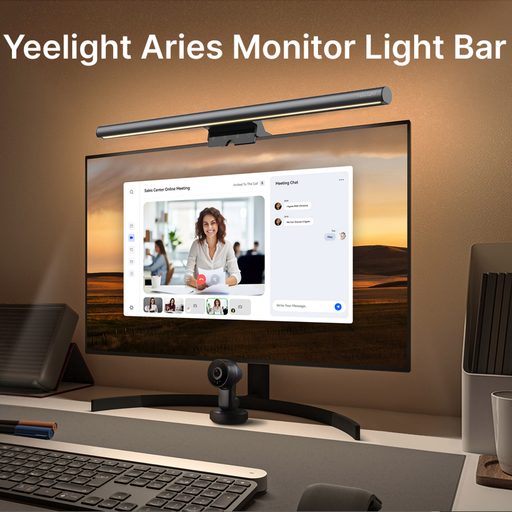 Image unavailable
Consider this dimmable bar if you study beside a monitor and want to adjust the light’s colour temperature. Check that its clip fits your display and that the beam reaches your paper at its usual position.
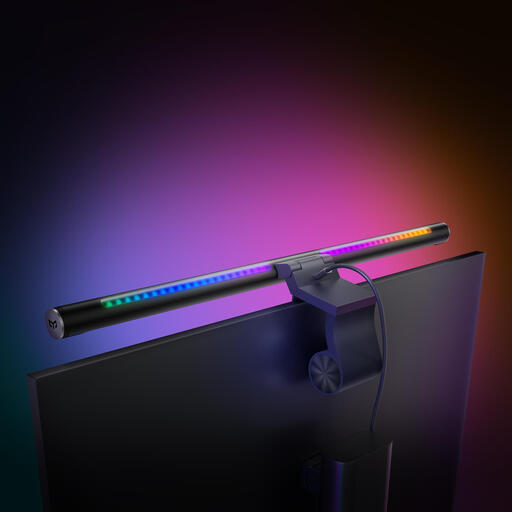 Image unavailable
This monitor light bar is an option for work that moves between a display and printed pages. Before buying, check its mounting and power requirements and whether the illuminated area reaches your reading position.
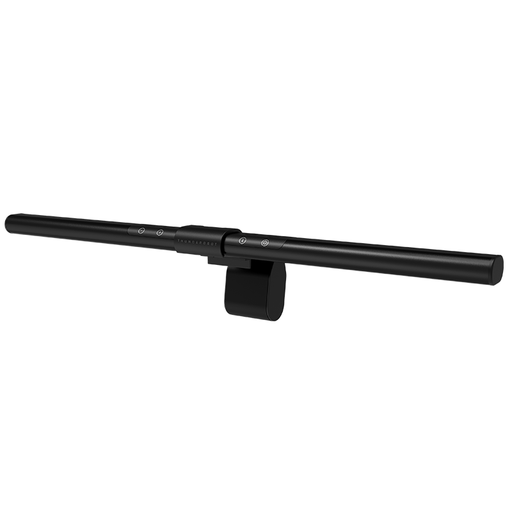 Image unavailable
The clip-on format suits consideration for a desk shared by a monitor and paperwork. Confirm display fit, power connection and where its light falls on the page; the stated ten-level dimming does not establish page coverage.
No: lumens describe light output, not how much light reaches your page. BenQ’s 800 lux at 45 cm for ScreenBar Halo and Anglepoise’s 470 lumens for the supplied Type 75 bulb cannot be ranked against each other as page illumination; look for a stated measurement distance and lit area where available.
Consider one when you read beside a compatible monitor and need to keep desk surface free. BenQ specifies that ScreenBar Halo fits flat monitors 0.7–6 cm thick and curved monitors 1.6–3.8 cm thick; check the exact bar you intend to buy against your own display, power connection and paper position.
It can on some models, but the method varies. Anglepoise specifies a replaceable E27 LED bulb for the Type 75, while IKEA describes KORVSNÖRE’s included LED source as replaceable; check the instructions and parts for the exact variant.
For a lamp intended for the Great Britain market, check its applicable marking and manufacturer or importer information rather than treating a listing as proof of compliance. UK government guidance says CE marking continues to be recognised alongside or in place of UKCA marking in Great Britain where the relevant requirements are met; Northern Ireland has different arrangements.