Long-session note readers
If you spend extended periods with textbooks, handouts or annotated notes, look for a lamp you can direct towards the page and keep in position as you work.


For regular reading of printed notes, choose a task lamp whose light you can aim at the page, rather than relying on a decorative lamp for room lighting. Check that it fits your desk and usual reading position; dimming is useful if lighting conditions change, while a compact base or suitable clamp helps when desk space is tight.
If you spend extended periods with textbooks, handouts or annotated notes, look for a lamp you can direct towards the page and keep in position as you work.
A compact base or a clamp can leave more room for books and paper. Check the actual footprint or desk-edge fit, as well as where the power cable will run.
If the same desk serves daylight revision and evening reading, adjustable brightness may be useful. You still need to position the light so it reaches your notes.
Start with where the light needs to fall on your notes, then check desk fit, brightness control and whether you also work beside a screen.
| Concern | What to check | Who this matters to |
|---|---|---|
| Light on the page | Check whether the head or arm can aim light at your usual reading position without shining towards your eyes. | When I move between handouts and a textbook, I need light to follow the printed page. Around 40% of consumers put directed page lighting first. |
| Desk space and power | Check base dimensions or clamp fit, the power connection and a safe route for the cable. | If books already fill my narrow desk, the lamp needs to fit without crowding the reading area. Desk space and placement are the main concern for around 30% of consumers. |
| Brightness control | Check whether the lamp dims and whether its light can still be aimed at the notes. | When I study in both daylight and the evening, I want to adjust brightness as the room lighting changes. Around 20% of consumers make that flexibility their priority. |
| Paper beside a screen | For a monitor-mounted light, check monitor fit and whether its position lights your notes. | If I read handouts beside a monitor, I need a position that works for the paper as well as the screen. Around 10% of consumers put this shared setup first. |
A decorative lamp can light the room without directing enough light towards the printed page.
Check whether its head or arm can aim light at your notes from your normal reading position.
USB power tells you how a lamp connects, not how much light reaches your notes. IKEA UK lists its JANSJÖ USB lamp at 10 lm and its NÄVLINGE work lamp at 220 lm; those figures describe different models, not their illumination at your page.
Compare the exact model’s stated output, direction and power requirements before choosing it for extended reading.
An unstable lamp or a cable across a walkway creates an avoidable hazard in a compact room.
Place the lamp securely, keep paper and bedding clear of it, route the cable away from walkways and stop using it if the plug or cable is damaged.
A monitor-mounted light is intended for a screen-and-desk arrangement; it may be less useful when you only read printed notes.
Confirm that it fits your monitor and that its position illuminates the part of the desk where you read.
IKEA UK offers compact desk-light options with different controls: NÄVLINGE has an adjustable arm and head, while KORVSNÖRE offers dimming and an adjustable head.
Anglepoise’s articulated task lamps are worth considering if you frequently move the shade between reading positions.
BenQ has desk-clamp and monitor-mounted lighting options for study spaces where surface area or screen placement affects the choice.
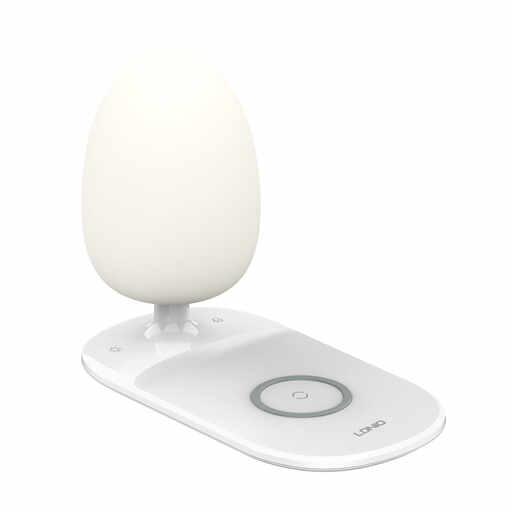
This desk-lamp option is relevant if you want to position light over printed notes and need to check how its power cable fits your study space.
 No image available
Consider this lamp if repositioning the light is important at your study desk. Before buying, check that its brightness and coverage suit printed notes, confirm the required USB-C power arrangement and plan a safe route for the cable.
For regular reading, start with a task lamp that can direct light onto the page. A decorative lamp can provide room lighting, but its shade and fixed position may not put light where you read.
Dimming is useful if you use the same desk under changing daylight and evening lighting. If conditions are fairly consistent, an adjustable lamp without a dimmer may still suit your reading position.
It can, provided its power source suits your setup and its light reaches the page adequately. Check the exact model’s stated output and direction rather than assuming that all USB lamps provide similar task lighting.
Put it in a stable position, keep paper and bedding clear, and route its cable away from walkways. Electrical Safety First advises checking that a lamp has a standard UK three-pin plug; stop using a lamp if its plug or cable is damaged.