What to check before buying
Settle software and audio-hardware compatibility before choosing an enclosure, then plan the screen for the window position. Storage and connections determine whether the resulting setup can accommodate your projects and peripherals.
Compact Mac desktop
Consider it when: Your DAW, plug-ins and interface are confirmed for macOS and you want a small computer with a separately chosen display. Apple lists multiple-display support for Mac mini.
Trade-off: The monitor and any dedicated audio drive need their own plan; confirm the connections and capacity of the exact configuration.
Configurable Windows tower
Consider it when: You need Windows-compatible tools or expect to add internal storage or PCIe hardware. Lenovo lists those options for the ThinkStation P3 Tower.
Trade-off: Allow space for the tower and a separate monitor; installed components and available connections depend on the build you order.
All-in-one desktop
Consider it when: An integrated computer and screen matter more to you than choosing each independently.
Trade-off: Check the panel finish, brightness and positioning carefully: an integrated screen gives you less freedom to replace only the display if glare is a problem.
| Concern | Buying checks | Who it matters to |
|---|
| Screen glare and readability |
Check the monitor’s anti-reflective finish and whether its stand or mount lets you change its position relative to the window. |
I need to read cues beside daylight without committing to a screen position that produces distracting reflections. Around 31% of consumers put screen readability first. |
| Audio-software compatibility |
Match your DAW release, plug-ins and interface driver to the computer’s operating system; check the DAW publisher’s RAM requirements. |
If my existing audio tools cannot run together on the chosen system, other specifications will not resolve that problem. Compatibility comes first for around 31% of consumers. |
| Project and audio storage |
Compare internal capacity with your library needs and check how you would provide a dedicated audio drive if your DAW requires one. |
I need room for cue versions and sound libraries, with a workable recording-drive arrangement where required. Storage is the primary concern for around 23% of consumers. |
| Expansion and connections |
Check display outputs and ports for your devices, plus the internal storage or PCIe options of the exact build. |
My setup may gain displays, drives or specialist hardware, so I need connections and expansion I can plan around. Around 15% of consumers prioritise this flexibility. |
Joybuy desktops for cue-writing setups
These Windows desktops can form the computer part of a cue-writing setup. Choose the monitor for the bright-window position separately, and check your DAW, interface and audio-drive plan against the exact desktop before buying.
 Image unavailable
Stormforce Cyclone Intel Core i7, 32GB RAM, 2TB SSD, RTX5080
Consider this Windows 11 desktop if the stated 32GB RAM and 2TB SSD fit your project-storage plan.
Choose a separate monitor for the window position. Confirm the offered display outputs, your audio-device compatibility and how you would provide a dedicated drive if your DAW requires one.
View on Joybuy
 Image unavailable
CyberPowerPC JOYB1013, Ryzen 7 9800X3D, RTX 5080 16GB, 32GB DDR5, 2TB SSD
This Windows 11 Home desktop is an option if 32GB DDR5 memory and a 2TB NVMe SSD suit your planned projects and libraries.
Plan for a separate monitor. Check your DAW and interface against the system, and confirm a dedicated audio-drive arrangement if needed.
View on Joybuy
 Image unavailable
Stormforce Defiance Ryzen 7 5700X, 32GB RAM, 2TB SSD, RTX5070
Consider this Windows 11 desktop when its stated 32GB RAM and 2TB SSD meet your memory and internal-storage needs.
Check the separate display’s glare treatment and positioning, then confirm DAW and interface compatibility and any required dedicated audio drive.
View on Joybuy
 Image unavailable
CyberPowerPC JOYB1010, Core Ultra 7 265KF, RTX 5070 12GB, 32GB DDR5, 1TB SSD
This Windows 11 Home desktop offers stated 32GB DDR5 memory and a 1TB NVMe SSD; compare that capacity with your cue projects and sound libraries.
Choose the monitor separately for the window position. Check software and interface compatibility, plus a dedicated audio-drive plan if your DAW calls for one.
View on Joybuy
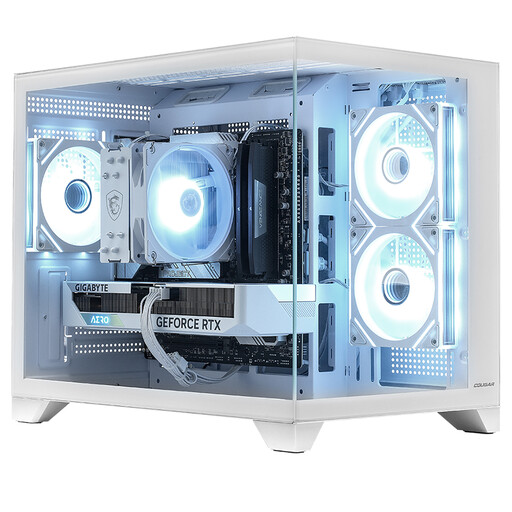 Image unavailable
Stormforce White Ryzen 5, 16GB RAM, 1TB SSD, RTX5060Ti
Consider this Windows 11 desktop if its stated 16GB RAM and 1TB SSD fit your chosen DAW and project-storage plan.
Avid lists 16GB RAM for Pro Tools, but that alone does not establish a complete Pro Tools setup. Check software and interface compatibility, the audio-drive arrangement and a separate monitor suited to the window.
View on Joybuy
Frequently asked questions
How much RAM should I start with for sound-effect cue writing?
Start with the requirement for your particular DAW and plug-ins. Avid lists 16GB RAM for Pro Tools computer systems, but you should check the requirements of another DAW with its publisher rather than treating that figure as universal.
Does Pro Tools need a separate audio drive?
Avid specifies one or more drives dedicated to Pro Tools audio recording and playback. Its guidance lists APFS or HFS+ Journaled formatting on Mac and NTFS on Windows; check the requirements for your Pro Tools version and planned drive connection.
Will a brighter monitor solve glare from the window?
Brightness alone does not settle the glare question: check the screen finish and whether you can reposition the monitor. Apple describes both an anti-reflective coating and an optional nano-texture finish for Studio Display, with the latter intended for bright light sources.
Can I assume a Mac mini or Windows tower works with my audio interface?
No; confirm the interface’s driver for the exact operating system and check your DAW release and plug-ins too. Avid’s Pro Tools compatibility guidance depends on supported operating systems, hardware and software dependencies, rather than the desktop’s form factor alone.
What should I do with an old desktop or monitor when replacing it?
Ask the retailer or your local authority which electrical-equipment take-back or recycling route is available to you. GOV.UK explains that UK Waste Electrical and Electronic Equipment rules support recovery, reuse and recycling; its guidance primarily addresses producer and distributor obligations, not a single return process for every consumer.


