What to check before buying
Start with where your course runs its code—on your desktop or remotely—then compare installed components and the upgrades you may need.
| Concern | What to check | Who this matters to |
|---|
| Local notebooks and analysis |
Check the installed processor, RAM, SSD capacity and operating-system compatibility with your course tools. |
If I run notebooks, data preparation and CPU-based models on the same desktop, I need room for those tools and local files. Around 38% of consumers put this study-work need first. |
| Local CUDA work |
Check the exact NVIDIA GPU, graphics memory and compatibility of the intended PyTorch or CUDA installation. |
When my projects require GPU work on my own machine, I need the hardware and software to work together. That is the primary concern for around 37% of consumers. |
| Future expansion |
Check the exact chassis, available memory and storage connections, PCIe slots, and support for planned components. |
If my local projects grow, I want to know whether I can add capacity without changing the whole desktop. Around 25% of consumers place that upgrade path first. |
Joybuy desktop choices
These choices include NVIDIA-equipped Windows towers and a compact NVIDIA DGX OS desktop. Match the operating system, installed components and upgrade options to your course and intended local work.
 No image available
Lenovo Legion T7 34IAS10 — Core Ultra 7 265K, RTX 5070 Ti, 32GB, 1TB
Consider this tower if you want a Windows desktop for local study and plan to check its options for later upgrades.
The listed configuration has an Intel Core Ultra 7 265K, 32GB RAM, a 1TB SSD, an RTX 5070 Ti and Windows 11 Home. Confirm the available expansion slots and compatibility with any intended CUDA coursework.
View on Joybuy
 No image available
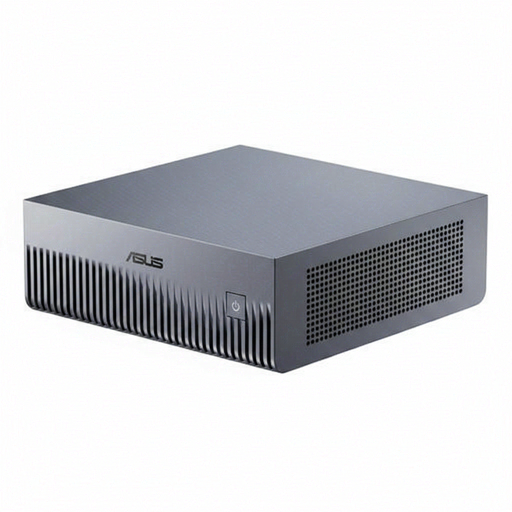
ASUS Ascent GX10 — NVIDIA GB10 Grace Blackwell, 128GB, 1TB
Consider this compact system only if your intended study software suits its NVIDIA DGX OS and Arm environment.
It is listed with 128GB unified memory and a 1TB NVMe SSD. Its integrated memory is not user-upgradeable, so check both software compatibility and the storage upgrade path before choosing it.
View on Joybuy
 No image available
CyberPowerPC JOYB1010 — Core Ultra 7 265KF, RTX 5070 12GB, 32GB, 1TB
This Windows desktop is relevant if you study with local notebooks and want to assess an NVIDIA GPU for compatible projects.
It is listed with 32GB DDR5, a 1TB NVMe SSD and Windows 11 Home. Check your intended GPU software setup; a monitor, keyboard and mouse are not included.
View on Joybuy
 No image available
Stormforce Cyclone — Core i7, RTX 5080, 32GB, 2TB
Consider this Windows tower if you keep substantial project files locally and can accommodate its size and weight.
The listed configuration has 32GB RAM, a 2TB SSD, an RTX 5080 and Windows 11. Check your intended CUDA software compatibility and the precise internal upgrade options; the tower is listed at 22kg.
View on Joybuy
 No image available
CyberPowerPC JOYB1013 — Ryzen 7 9800X3D, RTX 5080 16GB, 32GB, 2TB
This Windows desktop is an option for local study with a larger installed SSD and projects that may call for compatible NVIDIA GPU work.
It is listed with 32GB DDR5, a 2TB NVMe SSD and Windows 11 Home. Check the intended CUDA software setup and internal upgrade options; a monitor, keyboard and mouse are not included.
View on Joybuy
Common questions
Do I need an NVIDIA GPU to study data science?
No, not for every course. PyTorch offers a CPU installation route, so a CPU-and-memory-focused desktop can suit notebooks and CPU-based exercises. Choose a CUDA-capable NVIDIA GPU when your modules or projects call for compatible GPU work on your own desktop.
Can I run CUDA on a Windows desktop?
Yes, if the hardware and software meet the requirements for your intended CUDA setup. NVIDIA’s Windows installation guidance calls for a CUDA-capable GPU and compatible Windows and development tools; check the versions required by your course software before choosing a configuration.
Should I choose a compact desktop or a tower?
A compact desktop can suit you when its installed configuration meets your needs and space matters more than internal expansion. If you expect to add RAM, storage or graphics hardware, compare the exact tower’s slots, connections and component support before buying; HP, Dell and Lenovo offer workstation ranges with differing formats and options.
What safety information should I check for a desktop delivered to Great Britain?
Check the exact model identification and seller-provided safety information for delivery to Great Britain. GOV.UK’s electrical-equipment guidance addresses products placed on the Great Britain market and distinguishes Northern Ireland, so use information applicable to your destination rather than assuming the same guidance covers both.
What should I do with an old desktop when replacing it?
Look into retailer take-back arrangements or your local authority’s electronics-recycling service rather than putting the desktop in ordinary household waste. GOV.UK’s waste electrical and electronic equipment guidance addresses recovery, reuse and recycling of electrical equipment.


