Local results reviewers
If you mainly open, clean, plot and compare results in tools such as MATLAB or R/RStudio, start with software compatibility and enough memory for your ordinary projects. Maximum core count need not drive the choice.


Choose a desktop that runs your analysis software, instrument utilities and peripherals first, then size its RAM and storage for the results you actually work with. Extra CPU cores or a dedicated GPU are worth considering when your workflow can use them; a Mac desktop is an option only after you confirm that the complete workflow supports macOS.
If you mainly open, clean, plot and compare results in tools such as MATLAB or R/RStudio, start with software compatibility and enough memory for your ordinary projects. Maximum core count need not drive the choice.
Large result files, image sets or several applications open together make peak RAM use and space for active files more important. Check whether a desktop can accommodate the capacity your work needs now and as projects grow.
If your scripts or packages use parallel processing or compatible GPU computation, processor and graphics choices may affect the purchase. MathWorks notes that the benefit of more CPU cores varies by MATLAB application; Posit says ordinary R work does not automatically benefit from additional cores.
For local results checking, establish software and device compatibility before sizing memory and storage. Assess computing acceleration and expansion against the work you expect to run.
| Concern | What to check | Who this matters to |
|---|---|---|
| Software and device compatibility | Confirm the required software versions, operating system, instrument utilities and peripheral connections. | If my analysis package or laboratory device will not work with the desktop, its other specifications cannot solve that problem. Around 36% of consumers put compatibility first. |
| RAM and local data capacity | Check peak memory use with a typical large project open, plus space for active results and other applications. | When I load and plot larger files while other tools are running, I need enough memory and storage to keep working with them. For around 29% of consumers, capacity is the primary concern. |
| CPU parallelism and GPU capability | Check whether representative scripts use multiple cores and whether a required package supports the proposed GPU. | If my analysis genuinely runs in parallel or uses GPU computation, I want hardware matched to that software. Acceleration comes first for around 21% of consumers. |
| Expansion and data handling | Check the required upgrade connections, backup arrangements and procedures for any sensitive research data. | If projects are likely to grow, I need a workable path for more capacity without neglecting backups and data handling. Around 14% of consumers prioritise those longer-term needs. |
MathWorks says MATLAB speed-up varies by application, while Posit notes that ordinary R work does not benefit from extra cores unless suitable parallel libraries are used.
Run a representative analysis or establish which parts of it can use additional cores before choosing a high-core-count workstation.
An application can start with less memory than a large dataset and several concurrent programs need. MathWorks warns that insufficient physical memory can slow MATLAB when the system relies heavily on virtual memory.
Observe memory use while loading, transforming, plotting and exporting an ordinary large project, then allow for the other applications you keep open.
Driving displays and performing GPU computation are different tasks. A graphics card only helps a compute task when the relevant software and hardware are compatible.
Check the exact package or toolbox, graphics-card model and driver requirements before making GPU capability a purchase priority.
Experiment results may still be needed after the new desktop is installed. The Information Commissioner’s Office advises regular backups and says personal data must not be left on computers before disposal.
Verify that needed results can be restored, follow your organisation’s retention and security procedures, and remove personal data appropriately before the old machine leaves your control.
These product lines illustrate different desktop routes; choose a configuration against your software, dataset and expansion requirements rather than the brand name alone.
The HP Z desktop range includes preconfigured Windows workstation options for local analysis.
Precision tower workstations are a route to consider when a validated workflow calls for configurable processing or internal expansion.
ThinkStation towers are relevant when future internal expansion is a substantial part of the plan.
Mac Studio offers a compact desktop route for a research workflow confirmed to run on macOS.
These Windows desktops are options to examine for checking results locally. Compare their stated memory and storage with your projects, and confirm software and instrument compatibility before choosing one.
 No image available
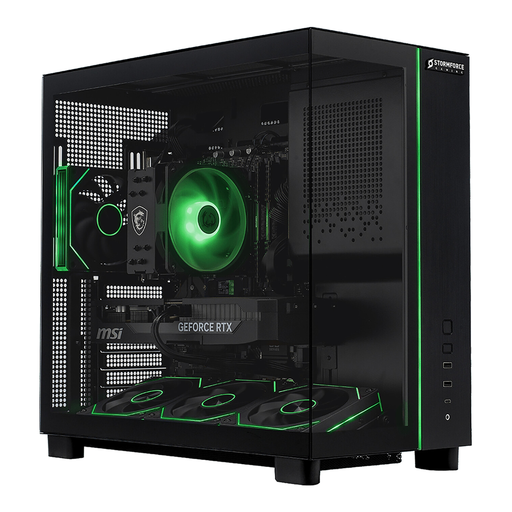
Consider this Windows desktop for local results work if its software and device compatibility checks out.
 No image available
This Windows desktop is worth comparing with your local dataset and application requirements.
 No image available
Consider this Windows desktop for local review once its configuration has been checked against your results workflow.
Choose RAM for your largest ordinary project and concurrent applications, not just the software minimum. MathWorks lists 8GB as the minimum and 16GB as recommended for MATLAB on Windows, while Posit notes that larger R datasets can require more memory. Check peak use during loading, analysis and plotting before settling on a capacity.
Only when the work can use them. MathWorks says gains from additional cores vary by MATLAB application, and Posit notes that ordinary R work is single-threaded unless suitable parallel libraries are used. Test a representative script before making core count the deciding specification.
Not for every results-checking task. Displaying plots and accelerating computation have different requirements; confirm that your particular toolbox, package and GPU are compatible before choosing a desktop for GPU computing.
Yes, if your complete workflow supports macOS. Check the exact versions of your analysis packages, instrument utilities, drivers, plug-ins and licence arrangements; a Mac Studio’s memory options do not establish compatibility with a Windows-only laboratory tool.
Verify that needed results are backed up and recoverable before replacing or disposing of the machine. If it holds personal data, follow your organisation’s handling procedures: the Information Commissioner’s Office says personal data must not be left on computers before disposal.