What matters when choosing
Start with the course’s operating-system requirements and the space needed for a separate screen and keyboard. Then compare the exact configuration’s connections and scope for future projects.
| Concern |
What to check |
Who this matters to |
| Screen and input layout |
Match the desktop’s display output to the monitor input, and leave room to position the screen and separate keyboard. |
I want to follow lessons without craning towards the screen or raising my shoulders at the keyboard; around 40% of consumers put workstation positioning first. |
| Software compatibility |
Check the supplied operating system and any course-specific editors, tools or peripherals. |
If my course requires a particular operating system, I need its tools to run before other features matter; roughly 30% of consumers make platform compatibility their primary concern. |
| Expansion and connections |
Check documented memory and storage options, plus the ports needed for planned peripherals. |
As my projects and files grow, I want to know whether the computer can accommodate them; around 20% of consumers prioritise expansion. |
| Future workload |
List the tools you expect to run locally and compare their requirements with the purchased configuration. |
I may move beyond introductory lessons into more demanding local work, so I would assess that workload before choosing extra hardware; about 10% of consumers put this headroom first. |
Joybuy desktop choices
These desktops cover Windows and macOS learning setups, alongside a specialist NVIDIA DGX OS system. Choose against your course requirements and the screen and peripherals you plan to use; a compact case alone does not settle either question.
 No image available
HP M02-0005na OmniDesk, Ryzen 5 8500, 8GB RAM, 1TB SSD
A Windows 11 Home desktop to consider if your Python course calls for Windows. Check its connections against your planned monitor and confirm what workstation accessories are supplied.
The title lists an AMD Ryzen 5 8500 processor, 8GB RAM and a 1TB SSD. Confirm the exact processor variant before ordering, as the product information also identifies it as a Ryzen 5 8500G.
View on Joybuy
 No image available
Apple Mac mini (2026), M6 12-core CPU and GPU, 24GB RAM, 512GB SSD
A compact macOS choice if your course tools work on macOS and you can provide a separate monitor, keyboard and mouse.
This Silver variant is listed with 24GB RAM and a 512GB SSD. Check its display connections against the monitor you intend to position at your desk.
View on Joybuy
 No image available
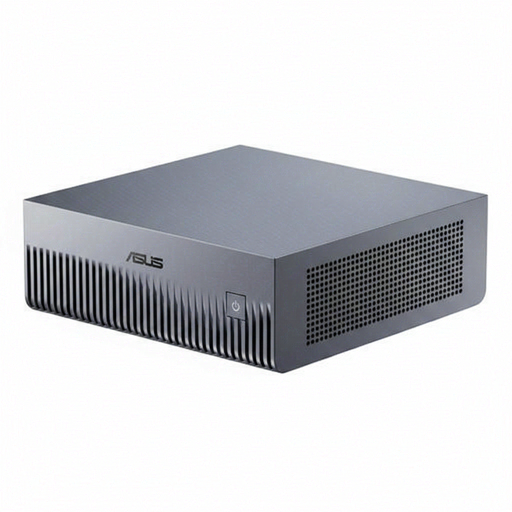
ASUS Ascent GX10, NVIDIA GB10, 128GB unified memory, 1TB SSD
This specialist NVIDIA DGX OS desktop warrants consideration only if your intended tools support that environment; its hardware is not, by itself, a reason to choose it for introductory Python.
The title specifies a GB10 Grace Blackwell processor, 128GB unified memory and a 1TB NVMe SSD. Check the supplied power equipment against the system’s requirements before ordering.
View on Joybuy
 No image available
SOYO Y5Pro Mini PC, i5 8250U/8350U, 8GB DDR4, 256GB SATA SSD
A small Windows 11 option if you want to keep the computer’s footprint down while using a separately positioned monitor.
The title gives two possible Intel Core i5 processor variants; confirm which one is supplied. Check whether the monitor, keyboard and mouse are included and whether the listed memory and storage meet your planned tools’ requirements.
View on Joybuy
 No image available
FIREBAT F1 Mini PC, Ryzen 5 7640HS, 24GB LPDDR5, 512GB SSD
A compact desktop to assess if its operating system supports your course and required Python tools. Confirm that operating system before choosing it.
The product title lists an AMD Ryzen 5 7640HS, 24GB LPDDR5 RAM and a 512GB PCIe 4.0 SSD. Check the supplied monitor and input devices separately.
View on Joybuy
Common questions
Do I need a gaming desktop to learn Python?
Not as a general requirement for learning Python. The Python Software Foundation offers downloads for Windows, macOS and Linux/Unix, but the hardware you need depends on the course and tools you will run. Check those tools’ requirements before choosing additional graphics or other hardware.
What should I arrange first at a standing desk?
Start with the monitor, keyboard and mouse positions. The Health and Safety Executive advises placing the screen top about eye level and the screen roughly an arm’s length away; check that the desktop can connect to the monitor you choose.
Should I choose macOS or Windows for a Python course?
Choose the operating system required by your course or other essential tools. Python Software Foundation downloads are available for both macOS and Windows, but that does not establish compatibility for every editor, package or peripheral your course may specify.
Does a standing-desk workstation need an assessment for employed work?
An employer workstation assessment is relevant when the Health and Safety Executive’s display-screen-equipment conditions apply. Its guidance covers workers who use display-screen equipment daily as part of normal work for continuous periods of an hour or more, including when a workstation is set up or changed; that employer duty should not be assumed to apply in the same way to personal study.


