Desk-based project archivists
You finish projects at one workstation and want an accessible local library with room for future work, rather than a drive that travels every day.


Choose a desktop HDD for a growing video-project library that stays at one workstation; choose a portable SSD if you regularly move projects or edit from the drive. Neither is a complete archive on its own: keep an additional copy of important footage on a separate device, and disconnect archive storage when it is not in use.
You finish projects at one workstation and want an accessible local library with room for future work, rather than a drive that travels every day.
You move large projects between locations or edit from portable storage. The drive's connection and your computer's ports matter alongside its size and stated durability.
You need an additional, separately stored offline copy of valuable footage, not just one drive attached to your computer. The National Cyber Security Centre advises keeping backup storage disconnected when it is not in use.
Decide how much completed work the archive must hold and whether the drive needs to travel, then plan a separate copy before relying on either a desktop HDD or a portable SSD.
| Concern | What to check when buying | Who this matters to |
|---|---|---|
| Archive capacity | Total the source footage, project files and deliverables you intend to keep; allow room for future projects and compare displayed usable space. | If completed projects keep accumulating, I need a library that will not fill up after the next archive. Around 33% of consumers put capacity and headroom first. |
| Offline copies | Plan another copy on a separate device, where to store it and how you will check that a project can be restored. | For footage I cannot recreate, I need a loss of one drive or computer to leave another copy intact; roughly 27% of consumers prioritise archive resilience. |
| Portable transfers | Compare the drive's capacity with your travelling projects and check the computer port and cable needed for any stated speed. | When I move projects between locations or edit away from my desk, carrying the drive and transferring files matter most. About 20% of consumers make portable use their primary concern. |
| Restore workflow | Confirm the intended computers, connections, file system and power requirements; try opening a copied project before depending on the archive. | If I may need to reopen a project on another computer, I want to avoid a connection or formatting surprise. Around 20% of consumers put compatibility and a straightforward restore first. |
One failed, lost or stolen drive can take the only copy with it. The National Cyber Security Centre describes a more resilient approach using three copies on two devices, with one copy offsite.
Keep an additional copy of important projects on a separate device and store it safely away from the working drive.
Connected USB storage can be affected by malware on the computer; the National Cyber Security Centre has reported ransomware incidents involving connected backup drives.
Connect the drive to copy, check or restore files, then safely disconnect and store it when finished.
A quoted transfer rate may depend on the computer, cable and connection. For example, Samsung conditions the T7 Shield's stated maximum sequential speeds on USB 3.2 Gen 2 and UASP support.
Check the requirements for the exact SSD and the workstation you will use rather than assuming the advertised maximum will be your editing speed.
Seagate explains that an operating system may report a lower capacity because it uses a different measurement standard; formatting also uses space.
Check displayed usable capacity against the projects you will retain, with room for the archive to grow.
Seagate's UK Expansion Desktop range is positioned for fixed-location backup and archiving, with listed capacities up to 30 TB. Its One Touch Hub range adds front-facing ports and file-mirroring software.
Samsung's UK T7 Shield portable SSD range includes 1 TB, 2 TB and 4 TB options for carrying project copies or working away from a fixed archive.
Western Digital's external-drive ranges are relevant when comparing portable and desktop storage for a local archive.
These desktop HDD, portable HDD and portable SSD choices suit different ways of keeping video projects locally. Choose by archive size, where you will use the drive and the separate-copy routine you can maintain.
 No image available
Consider this for a portable project copy when you need 4 TB of nominal capacity. The title specifies USB Type-C and USB 3.2 Gen 2; check your computer's connection and the drive's displayed usable space before moving an archive.
 No image available
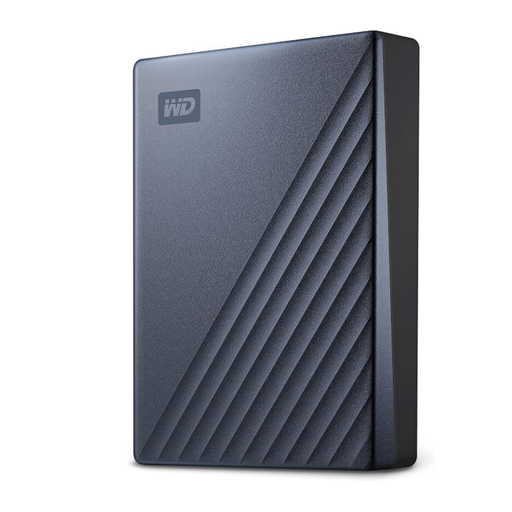
Consider this for a portable local library if 5 TB of nominal capacity fits your projects. Confirm the connections and file-system requirements for the computers on which you intend to reopen them.
 No image available
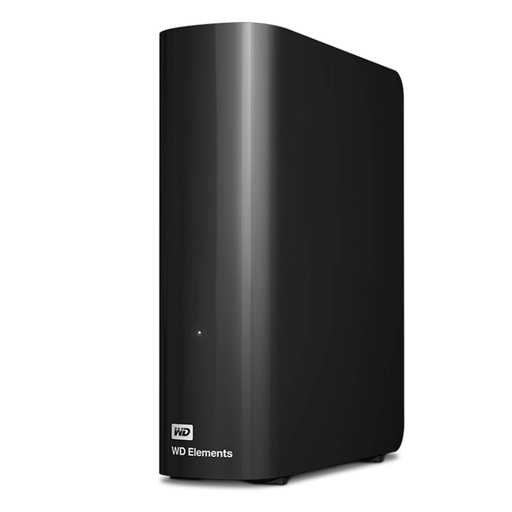
Consider this for a desk-based library when 10 TB of nominal capacity suits your completed projects. Check its power, connection and formatting requirements for your workstation, and keep important footage on another device as well.
 No image available
Consider this for a portable copy when 2 TB of nominal capacity leaves enough room for the projects you intend to carry. Check computer compatibility and the transfer performance relevant to your workflow before using it for editing.
 No image available
Consider this for a portable project library when 4 TB of nominal capacity meets your needs. The title specifies USB 3.0; confirm the connection and file-system workflow for the computers that will read the archive.
One drive can hold an archive, but it should not be the only copy of important footage. The National Cyber Security Centre describes a resilient approach using three copies on two devices, with one offsite; keep a separate backup offline when it is not needed.
Disconnect a backup drive when you have finished copying or checking files. The National Cyber Security Centre warns that malware can affect connected storage and has reported ransomware incidents involving connected backups.
The displayed figure can differ because the operating system may measure capacity differently from the advertised decimal figure. Seagate also notes that formatting and other functions use some space, so size your archive against displayed usable capacity.
Not necessarily: maximum speeds depend on the drive and its connection to the computer. For Samsung's T7 Shield, the stated maximum sequential speeds require a USB 3.2 Gen 2 host and cable with UASP enabled; check the conditions for the exact model you choose.
Remove personal information securely before selling or disposing of the drive, as the UK Information Commissioner's Office advises. For disposal in the UK, check the applicable electrical-equipment recycling route with your local authority or retailer rather than putting the drive in ordinary waste.