What matters when choosing?
Start with the Linux distribution and software you intend to use, then decide how much local lab capacity and physical expansion your home-office setup calls for.
| Concern | What to check | Who this matters to |
|---|
| Linux setup confidence |
Match the exact configuration to Canonical’s Ubuntu certified-hardware listing, or confirm which Linux system is supplied preloaded. |
I want to start learning Ubuntu without spending the first sessions resolving device-support problems. Around 33% of consumers put setup confidence first. |
| Local-lab capacity |
Plan installed RAM and available SSD space for the virtual machines, containers and files you expect to keep, rather than treating Ubuntu’s baseline as a lab specification. |
If I will run local services and keep lab images, I need room for that work beyond the desktop installation. For around 27% of consumers, lab capacity is the primary concern. |
| Desk footprint |
Check where the computer, its power supply and cables will fit, alongside the connections your desk setup needs. |
My home-office desk is limited, so I need the computer to fit without making everyday use awkward. Desk space comes first for around 20% of consumers. |
| Later expansion |
Check the chosen configuration’s memory options and available drive and PCIe slots; an advertised maximum does not mean every option is fitted. |
I may add storage or experiment with hardware as my Linux projects change, and I do not want the chassis to rule that out. Around 20% of consumers prioritise the upgrade path. |
Compact desktops on Joybuy
These compact desktops are options for a home-office desk. The ASUS model lists NVIDIA DGX OS; the other listed configurations come with Windows, so check your intended Linux distribution, course tools and hardware support before choosing one for Linux study.
 No image available
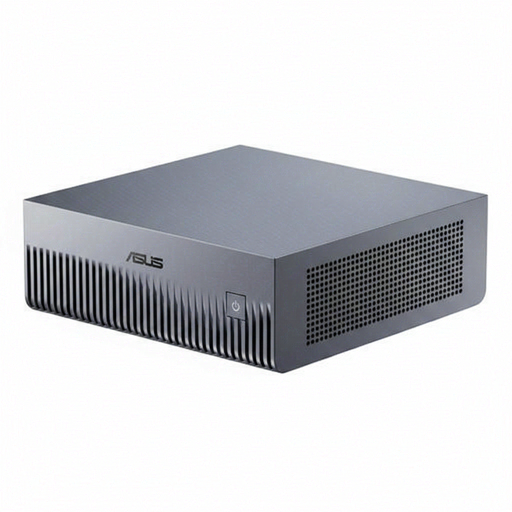
ASUS Ascent GX10 1TB, NVIDIA GB10 Grace Blackwell
Consider this configuration if your Linux learning includes local AI development using NVIDIA DGX OS; check that your intended distribution and course tools suit its architecture.
Listed with 128GB unified memory and a 1TB NVMe SSD.
View on Joybuy
 No image available
SOYO S4PLUS, Ryzen 7 H 255, 24GB RAM, 512GB SSD
This compact configuration may suit a desk where memory for planned local labs matters; confirm support for your Linux distribution, wireless hardware and graphics before installing it.
Listed with 24GB LPDDR5 RAM, a 512GB PCIe 3.0 SSD and Windows 11.
View on Joybuy
 No image available
SOYO S5Air, AMD Ryzen 5 7535HS, 16GB RAM, 512GB SSD
This mini desktop is an option for a limited home-office desk if its stated memory and storage fit your learning plans; check Linux wireless and graphics support for the exact configuration.
Listed with 16GB LPDDR5 RAM, a 512GB NVMe SSD and Windows 11 Pro.
View on Joybuy
 No image available
SOYO M5, AMD Ryzen 4300U, 16GB RAM, 512GB SSD
This mini desktop offers a compact configuration for ordinary desk-based study, provided you confirm that its wireless, graphics and other hardware work with your intended Linux distribution.
Listed with 16GB LPDDR4 RAM, a 512GB SSD and Windows 11.
View on Joybuy
 No image available
Lenovo IdeaCentre Mini PC 01IRH10R, 91B2000XUK
This compact desktop may fit a home-office Linux setup if its exact hardware and the tools you need support your intended distribution; do not assume support from other Lenovo models.
Listed with an Intel Core 5 processor, 16GB RAM, a 512GB SSD and Windows 11 Home.
View on Joybuy
Common questions
Should I look for an Ubuntu-certified desktop?
Yes, if you want a clearer indication that the computer’s hardware will work with Ubuntu. Canonical says certified devices are tested to work with Ubuntu, but you should match the exact configuration rather than relying on a shared model-family name.
What specifications does Ubuntu Desktop need before I plan local labs?
Canonical lists a 2 GHz dual-core processor or better, at least 6 GB RAM and 25 GB of free storage for comfortable use of Ubuntu Desktop 26.04 LTS. Work out the capacity needed for your own virtual machines, containers and files separately; those baseline figures are not a home-lab specification.
What should I prepare to install Ubuntu myself?
Prepare installation media on an 8 GB or larger USB drive that you can erase, and back up existing files before changing a computer’s installation. Canonical’s installation guidance warns that making the media erases the USB drive; check the target disk carefully during installation.
What should I do with an old desktop when replacing it in the UK?
Arrange an appropriate electrical-equipment recycling route rather than treating the old computer as ordinary rubbish. UK government guidance on the Waste Electrical and Electronic Equipment Regulations 2013, as amended, describes obligations for producers, distributors and online marketplaces; check your retailer’s or local authority’s collection options and deal with personal files before handing over the computer.


