Library event coordinators
People preparing schedules, invitations, budgets and attendee communications while moving between shared documents, browser tabs and meeting tools.


For a library planning desk with limited space, start by comparing compact desktops that can run the team’s document, browser and meeting software with a separate monitor. An all-in-one puts the display in the same unit; a tower is worth considering if future hardware additions are a priority. Whichever format you choose, check the exact configuration and the peripherals needed to make it a complete workstation.
People preparing schedules, invitations, budgets and attendee communications while moving between shared documents, browser tabs and meeting tools.
Teams using a reception desk or compact back office, where the computer, monitor, cables and meeting equipment all need a workable place.
People preparing event pages, booking information, emails or downloadable documents who also need to check how that content works for its audience.
Consider it when: The planning desk is short on space and you want to choose the monitor separately.
Trade-off: Check the exact model’s display connections and internal expansion options before settling on a small enclosure.
Consider it when: An integrated computer and display suit a reception point or shared planning station.
Trade-off: The built-in screen limits your choice of display, so check its size, adjustment and repair options.
Consider it when: You expect to add storage, graphics hardware or other components later.
Trade-off: Allow room for both the tower and a separate monitor, and confirm that the chosen model has the expansion you need.
For a library event workstation, identify the task that would matter most if you had to prioritise one aspect of the setup. Then check the complete configuration, not just the desktop’s shape.
| Concern | What to check | Who this matters to |
|---|---|---|
| Planning multitasking | Check installed memory, SSD capacity and compatibility with the applications your team runs together. | If I move between schedules, spreadsheets, email and event materials, I need the computer to keep up with that work; roughly 33% of consumers put planning multitasking first. |
| Online meetings | Confirm the camera, microphone, audio, ports and network connection needed for your meeting software. | When I coordinate remotely with speakers or colleagues, I need a complete call setup, not just a computer; around 27% of consumers prioritise online meetings. |
| Accessible communications | Check the intended display and input devices, plus the tools used to review event pages and documents. | If I prepare information for the public, I need to review whether people can use the published content; roughly 20% of consumers make accessible communications their primary concern. |
| Workspace and upkeep | Compare the space needed for the full setup and check repair, upgrade and energy-management options for the exact model. | With a crowded desk or plans to keep the workstation adaptable, I need its layout and upkeep to work for the team; around 20% of consumers put workspace and upkeep first. |
Microsoft lists 4 GB of RAM and 64 GB of storage among the Windows 11 minimum requirements. Meeting an operating-system minimum does not establish how a desktop will handle your planning applications together.
Check the installed memory, storage, processor and organisation-approved software against the team’s actual document, browser and meeting workload.
A computer may still need a monitor, camera, microphone, speakers or headset. Microsoft’s Teams requirements identify camera and audio devices for meeting use.
List the complete workstation before ordering, then check which peripherals are included and how they connect.
Any required camera, microphone, speakers or headset may need to be obtained separately.
An integrated display reduces the number of separate units, but it also ties the workstation to that screen and can constrain later changes.
Compare the display, adjustment and repair options with a compact desktop and separate monitor before deciding.
Accessibility depends on the published page, app or document and how it is prepared and checked, not on the desktop model alone.
Where public-sector website or app requirements apply, include keyboard use, readable content and assistive-technology checks in the publishing workflow. GOV.UK describes the relevant principles as perceivable, operable, understandable and robust.
Lenovo’s ThinkCentre M Series small-form-factor range is a reference point for a compact business desktop with a separate monitor.
Dell Pro Micro models are worth comparing where a small desktop can share a desk with separately chosen display and meeting equipment.
HP’s ProDesk and EliteDesk business ranges offer formats to compare if the team is deciding between a separate desktop and an integrated display.
These all-in-one and mini desktops suit different ways of setting up a library event-planning desk. Compare each one with the monitor, software and meeting equipment your team needs.
 No image available
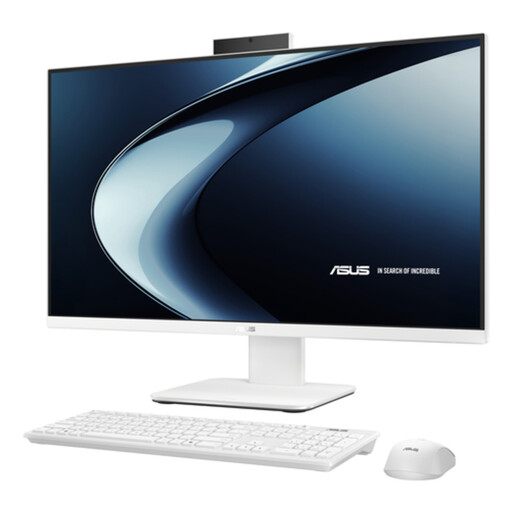
Consider this for a planning station where an integrated display is preferable to a separate monitor.
The listed configuration has an Intel Core i7-13620H, 16 GB DDR5 memory, a 512 GB SSD, a Full HD display and Windows 11 Home. The product information also describes a camera and speakers; check microphone provision, included input devices and screen adjustment for your setup.
 No image available
Consider this mini desktop when desk space is limited and you want to arrange the display separately.
The listing states AMD Ryzen 7 7735HS, 16 GB memory and 512 GB SSD storage, and claims triple-display support. Check the operating system, display connections and the monitor and meeting peripherals needed for your workstation.
 No image available
Consider this compact option if the planning desk needs a separate display and a wired-network connection.
The listed configuration includes Windows 11 Pro, 16 GB LPDDR5 memory and a 512 GB NVMe SSD. Its description lists Ethernet, HDMI, DisplayPort and USB-C connections. Check the exact wireless configuration, monitor arrangement and meeting peripherals before ordering.
 No image available
Consider this mini desktop for a space-limited planning station where a separate screen can be chosen to suit the work.
The listing specifies 16 GB LPDDR4 memory and a 512 GB SSD, and claims support for three 4K screens. Confirm the operating system, the connections required for your displays and the equipment needed for calls.
 No image available
Consider this compact desktop for document and browser work at a desk where peripheral connections matter.
The listing specifies an Intel Core 5, 16 GB memory, a 512 GB NVMe SSD and Windows 11 Home; its description lists six USB-A ports and one USB-C port. Confirm the display outputs and the monitor and meeting equipment for your intended setup.
A compact business desktop is a practical starting point when you can choose a separate monitor and need to preserve desk space. Compare an all-in-one if an integrated display matters more, or a tower if you plan hardware additions; check each model’s actual connections and expansion options.
Not as a complete buying specification. Microsoft lists 4 GB of RAM and 64 GB of storage among the Windows 11 minimum requirements, but those figures do not establish suitability for your combination of documents, browser tabs and meetings. Check the software your organisation uses and the exact installed configuration.
Check the camera, microphone, speakers or headset, as well as the desktop’s ports and network connection. Microsoft’s Teams guidance identifies camera and audio devices for meeting use; confirm which items come with the particular computer.
No: accessibility depends on the digital service and its content, not the computer model. If event information is published through a public-sector body’s website or app, check the applicable requirements and build content and accessibility testing into the publishing process. GOV.UK describes public-sector website and app accessibility in terms of content being perceivable, operable, understandable and robust.
It can be a useful procurement check, particularly for a workstation used regularly. Look for an energy-efficiency certification covering the exact configuration and confirm which sleep settings the organisation permits; a certification or saving claimed for another model does not establish this computer’s energy use.