Bright-window readers
If you spend long sessions reading PDFs and annotations beside daylight, start with reflections and where the screen can sit. The Health and Safety Executive advises arranging the desk and display to avoid glare.


Start with screen placement: the Health and Safety Executive advises arranging a workstation to avoid glare and bright reflections. An all-in-one suits a compact desk if its exact display and operating system meet your needs; a separate desktop and monitor gives you more freedom to position or later change the screen. Check your reference manager and institutional software before choosing either setup.
If you spend long sessions reading PDFs and annotations beside daylight, start with reflections and where the screen can sit. The Health and Safety Executive advises arranging the desk and display to avoid glare.
If you move between database results, PDFs, notes and a citation manager, consider the screen arrangement alongside compatibility with the applications you use.
An all-in-one keeps the computer and display in one unit, which may suit a fixed study desk. Accept that changing the display independently is less straightforward than it is with a separate monitor.
Decide how much freedom you need to position and change the screen, then check the exact display and software configuration. Neither an anti-glare label nor a brightness rating replaces control of light from the window.
Consider it: When you want the computer and display together on a compact desk; check the exact model if an anti-glare finish matters.
Trade-off: The built-in screen is less flexible to replace than a separate monitor, and you still need to manage window reflections.
Consider it: When independent screen placement or changing the monitor later matters more than having one integrated unit.
Trade-off: You need room for both components and must choose a suitable monitor separately.
| Concern | What to check | Who this matters to |
|---|---|---|
| Window reflections | Check the exact screen finish and whether you can angle the display away from direct window light or use blinds. | If daylight reflects across the documents I am reading, I need a position where the text remains visible. Around 40% of consumers put reflection control first. |
| Research workspace | Check screen size and resolution, plus the outputs needed if you plan to use another monitor. | When I compare a paper with notes and citations, I need a screen arrangement that lets me manage those materials together. Around 30% of consumers prioritise that workspace. |
| Desk space | Check the screen and stand footprint and where peripherals will sit. | My permanent study desk has limited room, so keeping the main equipment together matters more to me than changing the display later. Roughly 20% of consumers make a compact setup their primary concern. |
| Software continuity | Confirm the operating system and compatibility with your reference manager, PDF tools and institutional services. | If my research depends on particular applications or a university VPN, I need those tools to work before I change platforms. For around 10% of consumers, software continuity comes first. |
Direct daylight can still reflect from a display. The Health and Safety Executive advises arranging the desk and screen to avoid glare and bright reflections.
Look at the desk’s actual position relative to the window before choosing a screen, and consider whether you can reposition it or control the light with blinds or curtains.
The display and computer form one unit, so changing the screen independently is less straightforward than with a separate desktop and monitor.
Check whether the built-in screen size, stand adjustment and operating system will suit your expected study setup.
Manufacturer configurations can differ in display finish, memory, storage, operating system and connections. A family name alone does not identify the version you will receive.
Compare the full model or part number with the exact specification before you choose, particularly if you need a specific screen finish or video output.
Lenovo’s IdeaCentre all-in-one range includes configurations relevant to a compact Windows desk near a bright window.
The 24-inch iMac is an integrated desktop to consider if macOS fits your research applications.
Dell offers compact desktop configurations for buyers who would rather choose and position a monitor separately.
HP has a 23.8-inch all-in-one listing with an anti-glare panel for buyers considering an integrated screen.
These integrated desktops are options to consider for a literature-review desk near a bright window. Compare their exact displays and configurations with your available space and research software; a separate desktop-and-monitor setup remains an alternative if independent screen placement matters more.
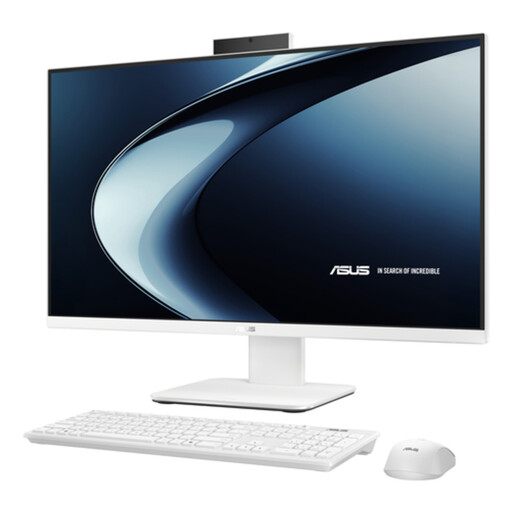 No image available
Consider this all-in-one if you want an integrated 27-inch screen for reading and organising research at a fixed desk.
The named configuration has a Full HD display, Intel Core i7-13620H, 16GB DDR5 RAM, a 512GB SSD and Windows 11 Home.
Check the screen’s finish, brightness and stand adjustment for your window position, and confirm that your research applications work with Windows 11 Home.
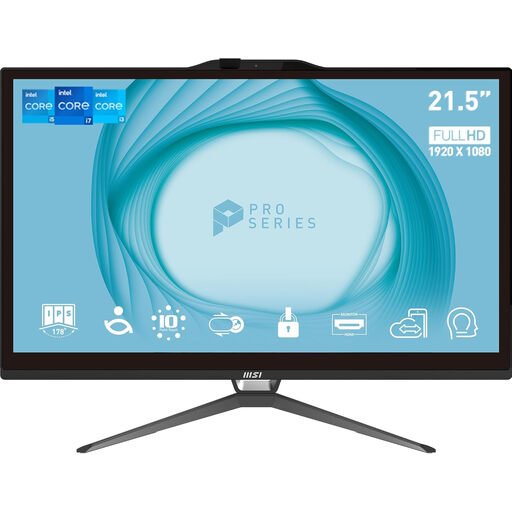 No image available
This integrated desktop may suit a study desk where a 21.5-inch touchscreen fits the available space.
The named configuration has an Intel Pentium Gold G7400, 4GB RAM, a 128GB SSD and Windows 11 Pro.
Assess whether that memory and storage fit your document and browser workload. Check the exact display finish, brightness and compatibility with your reference manager and institutional tools.
No: brightness alone does not remove bright reflections. The Health and Safety Executive advises arranging the desk and screen to avoid glare, so check screen placement and whether blinds or curtains can control intrusive daylight.
It can apply to employees using display screen equipment as part of their normal work, including at home. The Health and Safety Executive says employers must assess workstations for workers who use it daily for continuous periods of an hour or more; that duty is not a certification of a particular desktop for private use.
Contact the seller and keep your order record; a manufacturer’s voluntary warranty is not the only route for a faulty product. GOV.UK describes repair or replacement remedies under the Consumer Rights Act 2015, and section 23 of the Act requires an applicable repair or replacement to be provided within a reasonable time and without significant inconvenience.
Check an appropriate electrical-equipment collection or take-back route rather than putting it in ordinary household waste. GOV.UK explains that UK waste electrical and electronic equipment rules aim to promote recovery, reuse and recycling; ask your retailer or local authority which arrangements accept your equipment.