For local database development, start with the memory, SSD capacity and software compatibility your workload needs, then choose a desktop format that fits the desk. A compact x86 PC suits a Windows or Linux workflow when its exact configuration meets those needs; a Mac mini makes sense for a compatible macOS and Apple-silicon workflow, while a tower is worth the space when internal expansion matters. Limited sockets require planning for the whole workstation, not just the computer.
Who is this setup for?
Developers with little desk space
If you run PostgreSQL, MongoDB or containers at a crowded desk, a compact computer may be easier to place. Check its selected memory and SSD configuration rather than assuming a small enclosure means limited capacity; Lenovo lists configurable options for its ThinkCentre M90q Gen 5 Tiny.
Database users planning for growth
Several databases, virtual machines or frequent imports can make memory, available storage and backups more consequential than enclosure size alone. PostgreSQL’s documentation highlights the importance of monitoring disk use and backing up data worth retaining.
Developers already using macOS
A Mac mini can keep a macOS workstation compact. Docker provides an Apple-silicon installation path, but check the architecture requirements of your database images, extensions and other tools before choosing that route.
What should you check before buying?
Compact x86 desktop
Choose when: You need a small Windows or Linux desktop and want to assess memory or SSD changes on the exact model.
Trade-off: Internal expansion depends on the configuration; Lenovo’s stated access to memory and storage on the M90q family should not be assumed for every Tiny or Micro PC.
Mac mini
Choose when: Your work is macOS-based and your required database images and development tools work on Apple silicon.
Trade-off: Docker’s Apple-silicon support does not establish compatibility for every image, native extension or dependency.
Expandable tower
Choose when: Your intended memory, storage or add-in requirements call for more internal expansion than a compact model offers.
Trade-off: A tower takes more physical space and does not, by itself, reduce the number of mains sockets needed for the workstation.
For local database work with limited sockets, decide which requirement matters most to your setup before comparing individual configurations.
| Concern |
What to check |
Who this matters to |
| Memory headroom |
Check installed RAM and upgrade options on the exact model against the databases, containers and development applications you expect to run together. |
If databases and development tools must stay open together, I need enough memory for that combined workload; around 36% of consumers put memory headroom first. |
| Storage and recovery |
Allow for database growth, container files and a separate backup destination; check the internal SSD size and plan a restore test. |
When my datasets grow, I need room for working files and a way to recover valuable data; storage and recovery come first for around 29% of consumers. |
| Desk space and sockets |
Count the powered items in the finished workstation, check device and extension-lead ratings, and allow space for ventilation. |
If desk room and accessible sockets are tight, I need the whole setup to fit without overloading a lead; roughly 21% of consumers prioritise space and socket use. |
| Expansion and compatibility |
Confirm required operating systems, processor architecture, images and extensions, alongside any planned internal upgrades. |
If my work relies on particular tools or future add-in hardware, I need to establish those requirements before choosing a format; about 14% of consumers make expansion or compatibility their primary concern. |
Common buying mistakes
-
Choosing the smallest SSD because the database is local
Database files, indexes, container images and backups can compete for space. PostgreSQL warns that a full disk holding write-ahead log files can cause a database server shutdown.
Allow for current data and expected growth, plan backup capacity separately, and monitor free space after setting up the database.
-
Treating spare extension-lead sockets as spare electrical capacity
An extension lead has a rating regardless of how many outlets it provides. Buckinghamshire Fire & Rescue Service warns against overloading leads or connecting one extension lead to another.
Check the lead and equipment ratings, avoid daisy-chaining, and assess everything powered from that wall socket.
-
Counting only the computer when planning sockets
A compact desktop still forms part of a workstation that may include a powered display, backup drive and network equipment. Its small enclosure does not remove those devices’ power needs.
List the equipment you intend to connect and check where each item will be powered; leave the computer’s ventilation openings unobstructed.
-
Choosing Apple silicon before checking the software stack
Docker supports installation on Apple-silicon Macs, but that alone does not establish that a particular database image, extension or development dependency will work as required.
Check the architecture support of your actual images and tools before buying. If a required component depends on x86, assess an x86 desktop or a validated alternative.
Relevant desktop brands
Lenovo
Lenovo’s ThinkCentre Tiny range is relevant when a small x86 desktop needs configurable memory and SSD storage.
- Lenovo UK lists ThinkCentre M90q Gen 5 configurations including 32GB DDR5 memory and a 1TB PCIe Gen4 SSD.
- Lenovo describes tool-less memory and SSD access for the M90q family, but check the selected generation and configuration before relying on particular upgrade or port options.
Apple
Apple’s Mac mini offers a compact macOS route for a development stack that works on Apple silicon.
- Apple lists a 12.7cm by 12.7cm enclosure and 2.5Gb Ethernet for the Mac mini.
- Docker’s Apple-silicon installation path does not confirm that every database image, extension or dependency supports the buyer’s intended workflow.
Dell
Dell’s OptiPlex Tower line is relevant when internal expansion takes priority over a compact enclosure.
- Dell’s cited OptiPlex Tower configurations list memory options up to 128GB and up to three PCIe slots.
- Those figures do not describe every OptiPlex model; check the exact tower and its available placement space.
Joybuy desktops for local database work
These choices cover Windows towers for buyers considering a larger desktop and Mac mini configurations for a compact macOS setup. Compare each machine with your software, storage needs, desk space and the power requirements of the complete workstation.
 No image available
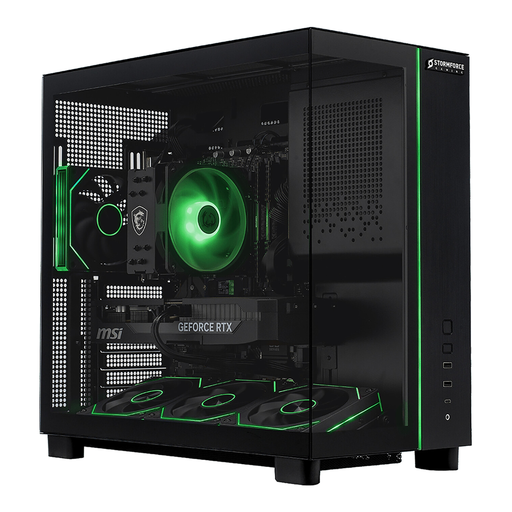
Stormforce Defiance Ryzen 7, 32GB RAM, 2TB SSD
Consider this tower if you want to assess a 32GB Windows desktop for databases alongside development tools and have room for its enclosure.
- Listed with 32GB RAM, a 2TB SSD and Windows 11.
- Check placement, ventilation clearance and the electrical ratings of the complete workstation.
- If graphics capability matters to your work, confirm the card: the product title and accompanying description identify different RTX 5070 variants.
View on Joybuy
 No image available
Stormforce Cyclone Core i7, RTX 5080, 32GB RAM, 2TB SSD
This tower is an option to assess if you need a Windows desktop and can accommodate a full-size case.
- Listed with 32GB RAM, a 2TB SSD and Windows 11.
- Check available floor or desk space, ventilation clearance and the ratings of all equipment sharing the socket.
View on Joybuy
 No image available
CyberPowerPC JOYB1013 Ryzen 7 9800X3D, RTX 5080, 32GB RAM, 2TB SSD
Consider this Windows tower if its stated memory and storage suit your local database workload and you have space for a larger desktop.
- Listed with 32GB DDR5 memory, a 2TB NVMe SSD and Windows 11 Home.
- Check Ethernet and upgrade requirements against the exact configuration if they are important to your setup.
- Allow for tower placement and check the electrical ratings of the complete workstation.
View on Joybuy
 No image available
Apple Mac mini (2026) M6, 16GB, 256GB SSD
This compact macOS configuration is worth assessing if your database images and development tools work on Apple silicon.
- Listed with a 12-core CPU, 12-core GPU, 16GB memory and a 256GB SSD.
- Check memory and storage against your datasets, containers and separate backup plan before choosing this configuration.
- Include the display and any other powered equipment when planning sockets.
View on Joybuy
 No image available
Apple Mac mini (2026) M6, 24GB RAM, 512GB SSD
This compact macOS configuration offers more listed memory and SSD capacity than the 16GB and 256GB Mac mini shown here; check whether your workload needs that difference.
- Listed with a 12-core CPU, 12-core GPU, 24GB RAM and a 512GB SSD.
- Verify support for your exact Apple-silicon database images, extensions and development tools.
- Plan separate backups and account for the display and other powered equipment.
View on Joybuy
Questions about local database desktops
How much RAM do I need for local databases?
Choose RAM for the database work and other applications you expect to run at the same time, rather than using one minimum for every setup. PostgreSQL gives 25% of system memory as a starting value for its shared_buffers setting on a dedicated server with at least 1GB RAM; that is database-tuning guidance, not a desktop RAM requirement.
Can a desktop and monitor share one wall socket?
They can share a suitably rated extension lead if the connected equipment stays within its rating. Check every device and the lead itself; Buckinghamshire Fire & Rescue Service advises against overloading extension leads or plugging one lead into another.
Do I need backups for a database kept on my desktop?
Back up local databases containing data you need to retain. PostgreSQL documents several backup approaches; choose one that fits your setup, keep adequate space for the copies and test that you can restore them.
Can a Mac mini run Docker-based local databases?
A Mac mini can be used for container development when the required software supports its Apple-silicon architecture. Docker provides an Apple-silicon installation path, but check your particular database images, extensions and other dependencies before choosing a Mac mini.
Why does electrical planning matter for a local database?
Electrical planning affects both safe socket use and how you protect data during interruptions. PostgreSQL’s reliability documentation notes that volatile write-back caches can pose a risk during power failure; maintain recoverable backups and follow the equipment manufacturer’s guidance rather than treating extra sockets as the only consideration.


