What matters when choosing?
Mac mini
Consider it when: Your DAW, alignment plug-in and interface software support macOS, and an available Mac mini configuration meets your storage and connection needs.
Trade-off: Select memory and internal storage with your future workload in mind rather than expecting conventional tower-style internal expansion.
Configurable Windows tower
Consider it when: Your workflow requires Windows or you have a defined need for internal drives or other expansion.
Trade-off: A workstation specification does not establish audio-interface latency or how much noise the finished configuration will make in your study.
Audio-specialist desktop
Consider it when: You want a supplier to configure a desktop around your named DAW, interface and recording workflow.
Trade-off: Scan 3XS describes testing with DAW software and hardware, but its quiet-operation and low-latency claims are supplier claims; request details for the exact build.
For consumers aligning multitrack takes in a quiet study, decide which of these needs takes priority before comparing individual configurations.
| Concern |
What to check |
Who this matters to |
| Software compatibility |
Confirm the supported OS and versions of your DAW, alignment plug-in and required plug-in format; check existing licences and projects. |
I need my existing sessions and alignment plug-in to work in the same DAW after changing computers; roughly 31% of consumers would put software compatibility first. |
| Project growth |
Compare the chosen memory and SSD capacity with your projects, then check whether the exact model permits the internal expansion you plan to use. |
If my projects and attached hardware are likely to grow, I want a desktop I can configure for that plan; around 31% of consumers would make future headroom their primary concern. |
| Quiet-study fit |
Ask for acoustic information for the exact configuration and check whether it contains mechanical drives. |
A distracting computer at my study desk would interfere with how I use the room; about 23% of consumers would prioritise quiet-study suitability. |
| Recording interface |
Verify interface-driver support and an appropriate direct connection; assess buffer settings for recording or live monitoring. |
When I record as well as edit, I need the interface to work reliably while monitoring; roughly 15% of consumers would put that recording setup first. |
Joybuy desktop choices
These listings cover Windows desktop towers and Mac mini configurations to consider for multitrack editing. Match any model to your DAW and interface first, then check its connections and suitability for your study.
 No image available
Lenovo Legion T7 34IAS10 — Core Ultra 7 265K, 32GB, 1TB SSD, RTX 5070 Ti
Consider this Windows 11 Home tower if your DAW, plug-ins and interface software support that setup and you want the stated memory and storage configuration. Check acoustic information for this exact model before placing it in a quiet study.
View on Joybuy
 No image available
Stormforce Cyclone — Intel Core i7, 32GB, 2TB SSD, RTX5080, Win 11
The stated memory and SSD capacity may suit a Windows editing setup that needs project storage. Confirm your DAW and interface support, and check how this exact tower will fit your study’s noise requirements.
View on Joybuy
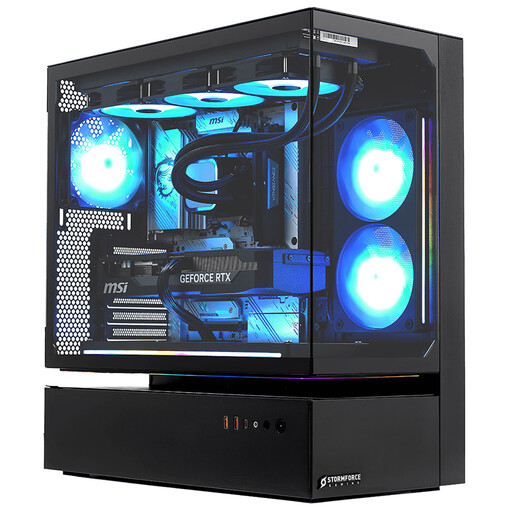 No image available
Stormforce Cyclone — AMD Ryzen 7, 32GB, 2TB SSD, RTX5080
Consider the stated memory and SSD capacity against your current sessions and storage plans. Confirm the installed operating system, your audio software and interface compatibility, and the tower’s acoustic suitability before choosing it.
View on Joybuy
 No image available
Apple Mac mini (2026) M5 Pro — 15-core CPU, 16-core GPU, 24GB, 512GB SSD, Silver
This compact macOS configuration is relevant if your exact DAW, alignment plug-in and interface software support it. Check that its connections meet your setup, whether you need separate peripherals, and its acoustic suitability for the room.
View on Joybuy
No image available
Apple Mac mini (2026) M6 — 12-core CPU, 12-core GPU, 24GB, 512GB SSD, Silver
For a macOS-compatible editing workflow, compare this configuration with the ports and storage your sessions require. Confirm the exact plug-in and interface versions, any peripherals you need and the study’s noise requirements.
View on Joybuy
Common questions
Do I need low latency just to align recorded takes?
Not to the same degree as when monitoring a live performance: for editing existing takes, confirm stable DAW and plug-in operation first. If you also record or monitor through an interface, buffer settings matter; Focusrite explains that lowering the buffer reduces latency but leaves the CPU less processing time.
Can I choose between macOS and Windows by preference alone?
Only after checking your exact DAW, alignment plug-in format and audio-interface software against the operating system. Synchro Arts says that although VocAlign offers several plug-in formats, only some work with a particular DAW; support for one application does not establish support for every plug-in or driver.
Should I connect a USB audio interface through a hub?
For Focusrite interfaces, the manufacturer advises a direct computer connection because USB hubs can cause audio-device problems. Check the connection guidance for your exact interface model and ensure the desktop has an appropriate port available.
What if a desktop bought online is faulty or does not suit my study?
Faults and a change of mind are different issues: GOV.UK says a seller must offer a full refund for goods that are faulty, misdescribed or do not do what they are meant to do. If the desktop works as described but does not suit your room, check the applicable cancellation and return terms before ordering, particularly for a configured build.


